
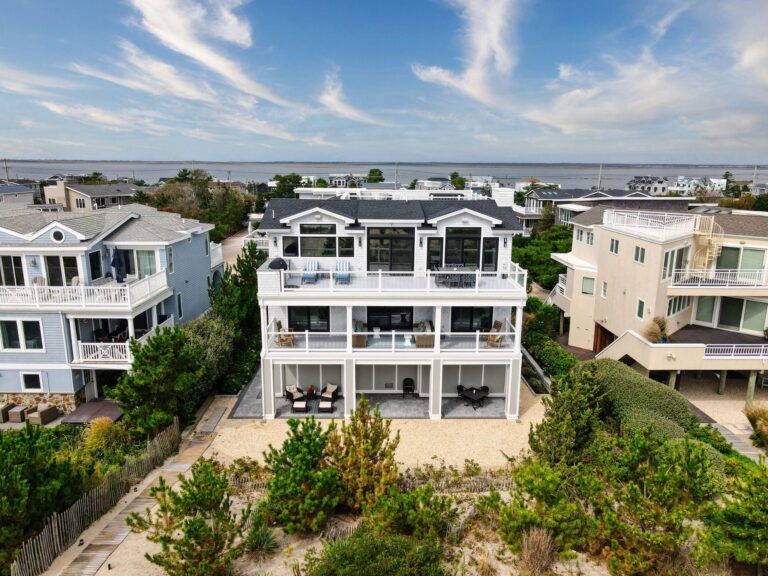
On a barrier island where a single storm can redraw the map, the definition of a luxury home is shifting from how it looks to how long it lasts. Long Beach Island has spent the last decade becoming one of New Jersey’s most expensive stretches of coast. The homes going up there now are taller, tighter, and built to ride out weather that the earlier generation of beach houses was never designed to face.
Michael Ziman, owner and President of Ziman Development, has watched that change up close. He has been building on the island since before Hurricane Sandy, and he says the math of the market did most of the work.
“The market in itself, with the pricing of land, has kind of put our entire island into this luxury market,” Ziman said. Entry prices that once sat near one or two million dollars now start around four to five million and climb past ten million, he added, and buyers have grown more knowledgeable along with the price tags.
When the Whole Island Becomes a Luxury Market
Most of Ziman’s clients are on their second or third build. They arrive asking about steam ovens, separate cold storage for reds and whites, home automation, and the kind of finishes they have seen at trade shows or in a neighbor’s house.
That sophistication runs deeper than appliances. Buyers who can spend five million on a second home tend to ask harder questions about how that home will hold up. Ziman says answering those questions has become a core part of the job.
Building Higher Than the Codes Require
Living through Sandy in 2012 reset how Ziman approaches every project. “That put climate change front and center for me,” he said. “That changed my whole mindset on how we build.”
His standard formula is to lift the first floor and tuck the garage underneath, putting the foundation around nine feet in the air on long piles. Federal flood codes set a minimum, and Ziman treats that number as a floor rather than a target. He often builds three to eight feet above it.
That puts many of his homes closer to a 500-year or 1,000-year storm standard than the 100-year benchmark the codes assume. New Jersey is now moving to require new and substantially rebuilt coastal homes to sit four feet above FEMA base flood elevation, a proposal that drew enough pushback to trigger another round of public comment. Ziman shrugs at the debate. “We’re already doing this and exceeding it,” he said.
Height is only the start. Ziman favors deep overhangs and covered decks on the northeast face of a house, where nor’easters and passing hurricanes tend to drive wind and rain hardest. The overhang gives the weather something to hit before it reaches the glass.
From there, his crews flash and seal every penetration, add flood vents on the lower level, and use breakaway walls below the living space. The idea is to let the floodwater pass through rather than tear the house apart.
Sustainability as the Quiet Upsell
Ziman calls himself one of the few developers who would also claim the title of environmentalist. His sustainability push tends to arrive through the back door, framed around the two things every shore buyer wants anyway: low maintenance and lower bills.
Salt air chews through natural materials like cedar, so he leans on products built to last. Many of them happen to be made from recycled content, including deck boards spun largely from old water bottles and composite siding that mimics wood without the upkeep. “I’ve been able to kind of align certain aesthetic choices with not only what looks really good, what lasts really well, and is sustainable,” he said.
The pitch usually comes down to payback. On one project, a higher efficiency heating and cooling system penciled out to a seven-year return, which Ziman described to the client as a guaranteed double-digit yield. He compares the shift to the early days of Tesla, when buyers came for the looks and the speed and treated clean energy as a bonus. “It’s good, it works, it looks great. Oh, and it’s sustainable, too.”
Roughly ten to fifteen percent of his clients walk in asking for green features by name. The rest get there once the numbers are in front of them.
What Buyers Actually Ask For
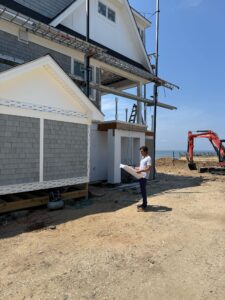
Demand for resilience has grown since Sandy, though Ziman thinks most buyers still know less than they should. Their questions tend to start small. Can you get flood insurance? Did this block flood last time? How high is the house above the flood line?
Those questions open the door to a longer conversation about elevation certificates, flood vents, and the features that quietly lower a premium. Ziman treats education as part of a developer’s responsibility, alongside building past current code and tracking what the next code will require.
His own commitments run further. He points to a tree-planting pledge that has supported the planting of 250,000 trees since 2020 and to a newer partnership aimed at removing tens of thousands of pounds of plastic from the ocean.
The Next Decade on a Finite Island
Ziman does not expect the look of the high-end home to change much over the next ten to fifteen years. He expects the principles behind it to spread. When he adopts a new material or method, he says, a dozen or more local builders tend to follow.
What he does see shifting is who buys and how. As prices climb and lock more people out, he is watching families pool resources into clusters of homes, building multigenerational compounds where siblings and parents settle within a few doors of each other.
The island itself sets the ceiling. Its beachfront is heavily protected by state and local zoning, with strict building lines that cap how much can be built and where. For Ziman, that constraint is the point. He is building by the beach because he wants it to still be there for the next generation, and on Long Beach Island, the homes most likely to last are those designed for the worst day rather than the best.