
Healthcare is undergoing a subtle but significant shift. For decades, most healthcare conversations focused on diagnosing disease and treating symptoms after they appeared. Today, patients are increasingly looking for ways to support resilience, recovery, performance, and long-term health before a crisis occurs. At the same time, the rise of biohacking, longevity medicine, and personalized wellness has created new opportunities and new questions around safety, oversight, and clinical credibility.
Hyperbaric oxygen therapy (HBOT) sits at the intersection of those trends. Once primarily associated with specialized medical applications, HBOT is now drawing attention from athletes, executives, patients recovering from illness, and individuals seeking to optimize health and performance. As interest grows, however, so does the need for thoughtful clinical leadership.
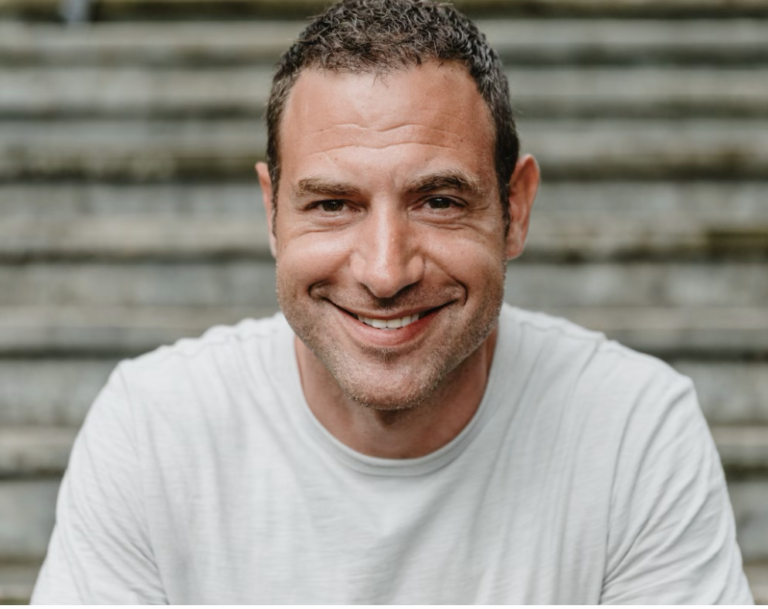
Few people have had a closer view of the field’s evolution than Dr. Jason Sonners. As Chief Clinical Officer of MD Hyperbaric, Dr. Sonners brings more than two decades of experience as a hyperbaric clinic operator and educator. Throughout his career, he has held leadership positions with organizations dedicated to advancing hyperbaric medicine and expanding awareness of its potential applications. Today, he helps guide clinical strategy, protocol development, and physician collaboration across MD Hyperbaric’s growing network of medical-grade hyperbaric centers.
At a time when healthcare is shifting toward prevention, recovery, and personalized care, Dr. Sonners believes the future will belong to organizations that can balance innovation with clinical rigor. We spoke with Dr. Sonners about where recovery medicine is headed, how HBOT is reshaping conversations around healing, and what it takes to scale science-backed care without compromising standards.
With the rise of the biohacking movement and elective wellness treatments, how do you see the role of traditional medical supervision evolving?
I think the biohacking movement has done something very important for the health industry: it has moved people from a disease-care mindset into a performance, prevention, and recovery mindset. But the challenge is that many of these tools are being used without enough clinical structure.
Hyperbaric oxygen therapy is a perfect example. HBOT is not simply “more oxygen.” It is pressure, oxygen concentration, time, frequency, patient selection, contraindication screening, safety monitoring, and outcome tracking.
Is there a future where medical-grade recovery protocols like HBOT become a standard, preventative part of primary care rather than just a reactive treatment?
For MD Hyperbaric, that is where the opportunity exists. We are not trying to turn HBOT into a casual spa service. We are building a medically focused, patient-pay, off-label healing and recovery model where people can access regenerative and performance-oriented care, but inside a safe clinical framework.
I do believe this type of care can become part of a more preventative medical model. Not as a replacement for primary care, and not as a guaranteed treatment for everyone, but as a structured way to support oxygen delivery, mitochondrial function, vascular repair, inflammation regulation, and cellular resilience before people reach a crisis point.
The future is not biohacking versus medicine. The future is medically supervised and directed optimization and recovery care. Biohacking has opened the door for a more proactive model of healthcare, but we still need healthcare providers and proper guidance to build the guardrails.
As hyperbaric oxygen therapy continues expanding beyond traditional applications, how is it reshaping the broader conversation around recovery and healing?
HBOT is helping redefine recovery because it forces us to look deeper than the diagnosis. A postsurgical patient, a concussion patient, a chronic pain patient, a Long COVID patient, an athlete, and someone with chronic inflammatory illness all look and present very differently. While many of them may share common physiology: impaired oxygen delivery, mitochondrial stress, inflammation, poor tissue repair, vascular dysfunction, and reduced cellular energy, their resin for these issues, their safety considerations, and their protocol will all likely be very different.
Many patients are faced with big, diagnosed, and misunderstood health concerns, and while in some cases their lab work may seem pretty normal, they still do not feel well or recovered. They are fatigued, inflamed, cognitively impaired, painful, or unable to return to normal life. That is where a medically focused recovery model becomes so important.
At MD Hyperbaric, the conversation is not “HBOT cures this condition.” The more accurate conversation is that HBOT may help support the biological terrain required for repair. In long COVID, for example, the published conversation is not just about the virus; it is about immune dysregulation, endothelial and clotting abnormalities, mitochondrial dysfunction, neurologic signaling, and reduced recovery capacity. HBOT is being explored because it may support oxygen availability, mitochondrial respiration, angiogenesis, anti-inflammatory signaling, cerebral blood flow, and neuroplasticity.
As recovery becomes a more central part of healthcare, what shifts are needed to better support whole-body healing and multi-system recovery?
That changes the healthcare conversation from “What disease do you have?” to “What systems are failing to recover?” More importantly, “What are the root causes of these symptoms?”
To support this shift, healthcare needs better patient selection, clearer off-label communication, medically supervised protocols, outcome tracking, and more collaboration between physicians, hyperbaric clinicians, rehab providers, functional medicine, and performance medicine.
Recovery is not one tissue, one organ, or one symptom. It is a whole-body process. Recovery is more than just getting past the injury or illness with symptom relief. It is restoring the cellular capacity to live, work, think, heal, and perform again.
As you look to expand the MD Hyperbaric model nationally, what is the biggest intellectual challenge in maintaining a high-end, research-backed clinical standard while democratizing access for a wider population?
The biggest challenge is making sure that increased access does not lead to diluted levels of care. HBOT is growing quickly, and that is good, but growth without standards can damage the field. The chamber itself is not the full product. The real product is the clinical system around the chamber.
For MD Hyperbaric, scaling nationally means we have to standardize the things that protect quality: intake, screening, contraindication review, informed consent, protocol selection, technician training, physician oversight, emergency procedures, patient education, documentation, and outcomes tracking. Especially in a cash-based, off-label model, credibility matters. We have to be clear about what is FDA-approved, what is off-label, what is evidence-informed, what is emerging, and what we are still studying.
The intellectual challenge is balancing standardization with personalization. If everything is generic, you lose the clinical brain. But if everything is improvised, you lose consistency, safety, and scale. So the goal is to standardize excellence, not standardize mediocrity.
How do you keep the HBOT science from getting lost in the scale?
The way we keep the science from getting lost is by making research, education, and clinical reasoning part of the operating model, not an afterthought. Every center should be delivering oxygen under pressure, but also delivering proper screenings, teaching and educating their communities, tracking outcomes and responses, and offering top-notch clinical decision-making.
That is how we democratize access without turning HBOT into a commodity.
A chamber on its own may be able to scale fast, but to do this right, clinical decision-making, safety aspects, protocol development, and science have to scale deliberately and consistently.
Looking Ahead
What emerges from Dr. Sonners’ perspective is a vision of healthcare that is neither purely traditional nor purely wellness-driven.
Instead, he sees a future in which prevention, recovery, performance, and resilience are supported within a clinically supervised framework that prioritizes safety, outcomes, and evidence-based decision-making. As interest in hyperbaric oxygen therapy continues to grow, the industry’s challenge may not be expanding access. Instead, the challenge lies in ensuring that access is accompanied by the protocols, oversight, and clinical rigor necessary to support meaningful patient outcomes.
For MD Hyperbaric, that distinction is central to its growth strategy. The goal is not simply to scale chambers. It is to scale the science, education, and clinical systems that make those treatments effective in the first place.