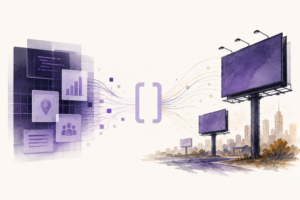

What if AI didn’t just follow orders but invented its own helpers to get the job done? That’s the reality Emergence AI has just brought to life with the launch of a platform where AI agents autonomously spawn other agents and multi-agent systems in real time.
The breakthrough hinges on Emergence’s orchestration platform, a meta-agent that goes beyond coordination to generate new agents on the fly. Give it a task, like migrating a complex dataset, and it scans its Agent Registry. If no agent fits, it codes one, defines its sub-goals, tests the outcome, and refines it until it is ready to carry out the task. It even proactively creates variant agents for related tasks, anticipating future needs. This isn’t just automation, it’s AI designing its own tools.
“Recursive intelligence paves the path for agents to create agents, and it does not stop there,” says Satya Nitta, Co-founder and CEO of Emergence AI, as stated in the company’s announcement. He sees this as a stepping stone to a bigger vision: “We envision creating more complex agents and, ultimately, truly powerful and intelligent systems with this capability.”
For enterprises, the impact is immediate. The platform targets data-heavy challenges like ETL pipeline creation, data transformation, and analysis, tasks that typically demand teams of engineers. Now, the orchestrator assembles custom agents that integrate with business logic and compliance requirements, slashing complexity.
Emergence’s system stands out for its flexibility. It syncs with existing AI ecosystems–GPT, Claude, Llama, and the like—while supporting frameworks like LangChain and Autogen. An SDK lets businesses onboard their own agents without deep expertise, and the Agent Registry stores them, enabling learning and reuse over time. It’s a cohesive bridge between legacy systems and modern tech, ready to scale.
Agents with long-term memory, self-improvement loops, and planning capabilities hint at a future where AI creates itself. Still, Nitta, who was also the former Global Head of Cognitive Sciences at IBM Research, a department he founded, emphasizes: “Our systems allow creativity and intelligence to scale fluidly, without human bottlenecks, but always within human-defined boundaries.”
Practically, this means faster, smarter solutions for businesses. A retailer could optimize supply chain analytics overnight. A bank could cut weeks off of a data migration. Workflows become agents themselves, stored for redeployment, making manual agent design less necessary. It’s a system that grows with its users, not ahead of them.
As the AI race continues to accelerate–with model advancements and agentic coding now converging–the boundary between tool and creator is blurring. Nitta reflects on Emergence’s broader goal: “While still in its early stages, we are committed to rapidly advancing this challenging AI capability, with a strong focus on ensuring it is reliable, safe, and verifiably aligned with its intended goals.”