Until recently, buying fitness equipment for the home involved a fairly clear compromise. Commercial machines offered durability, stability, and the kind of workout experience people expected from a gym, but they were often too large, too expensive, and too impractical for residential spaces. Home equipment solved those problems by becoming lighter, smaller, and more affordable, even if that sometimes meant giving up some of the qualities that made commercial machines appealing in the first place. But that balance has started to change.
As home exercise has become a permanent part of many people’s routines, consumers increasingly expect equipment to do more than simply fit into a spare room or basement. They want machines that feel substantial, remain stable during longer workouts, and hold up over years of regular use. In response, manufacturers have begun introducing what is often described as “light commercial” equipment, a category that attempts to bring gym-level construction and performance into residential settings without requiring the space or budget of a professional fitness facility.
The shift reflects a broader change in how people think about home fitness. During the early growth of at-home exercise, convenience often came first. Equipment needed to fold away, occupy minimal space, and carry an accessible price tag. Today, many buyers approach fitness equipment more like a long-term purchase, prioritizing durability, workout quality, and the feeling of using a machine that inspires regular use.
FED Fitness recently expanded into this space with its Commercial Series, a lineup designed to bridge the gap between traditional home equipment and commercial gym machines. Rather than focusing exclusively on compact designs or entry-level pricing, the series emphasizes sturdier construction, higher capacities, and the type of workout experience typically associated with larger fitness facilities. The approach becomes particularly clear when looking across the lineup as a whole.
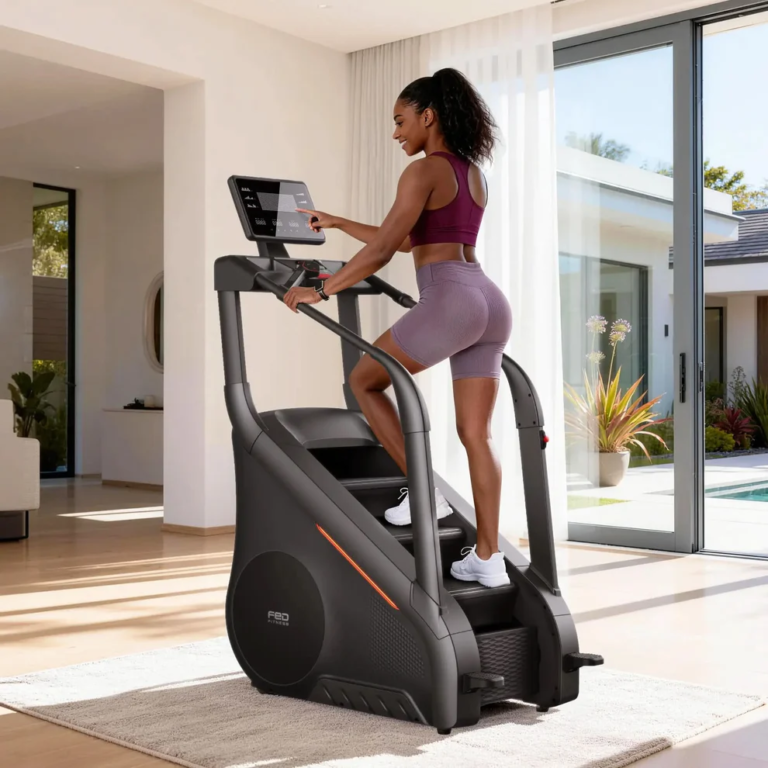
The SC2 Stair Climber Machine Ultra addresses one of the most demanding categories in fitness equipment. Stair climbers have long been associated with commercial gyms because they place significant stress on frames, motors, and support systems. The SC2 uses a floating pedal design intended to create a more natural stride while offering twenty-five speed levels ranging from twenty to 164 steps per minute. The machine supports users up to 397 pounds and incorporates a reinforced frame and dual infrared emergency stop system designed to provide greater stability during workouts.
The company’s EM4 Suspension Elliptical Machine Ultra follows a similar philosophy. Suspension-style ellipticals have traditionally appeared in higher-end fitness centers because of the smoother movement they can provide and the additional engineering required to support the motion system. The EM4 brings that style of training into a residential setting while maintaining the substantial feel that many users associate with commercial equipment.
The EM3 Front-Drive Elliptical Machine Ultra offers another example of how these distinctions are beginning to blur. Front-drive ellipticals have long been popular in gyms because they provide a familiar stride pattern and allow for a more compact footprint than some rear-drive designs. Bringing that format into a residential product reflects the growing expectation that home users should have access to the same workout styles available in commercial facilities.
Even the RE3 Recumbent Exercise Bike Ultra demonstrates how the category has evolved. Recumbent bikes have traditionally appealed to users seeking lower-impact exercise, rehabilitation support, or longer endurance sessions. Commercial-grade versions often emphasize comfort, stability, and durability because they are expected to handle repeated use throughout the day. Applying those same principles to residential equipment reflects the broader movement toward products designed for long-term ownership.
Perhaps the most significant change is not the equipment itself but the expectations surrounding it. Consumers increasingly evaluate fitness machines the same way they evaluate other major household purchases. Questions about longevity, stability, and daily usability often carry as much weight as speed settings or workout programs. A machine that feels solid, remains comfortable during extended sessions, and continues performing consistently over time may ultimately provide more value than one that simply offers the longest list of features.
This shift has helped create a category that sits comfortably between traditional home equipment and commercial installations. The goal is not to recreate an entire gym inside the home or to convince consumers to dedicate an entire room to fitness equipment. Instead, it is to deliver many of the qualities that make commercial machines appealing while adapting them to the realities of residential living.
As home fitness continues to mature, the distinction between gym equipment and home equipment may become increasingly difficult to define. What matters less is where a machine is used and more whether it delivers the experience people expect when they commit to exercising regularly. For many households, the future of home fitness may not involve smaller machines or lighter equipment. It may involve bringing the feel of the gym home without bringing the gym itself.