“In AI, the difference between success and failure isn’t the model; it’s the motion.”
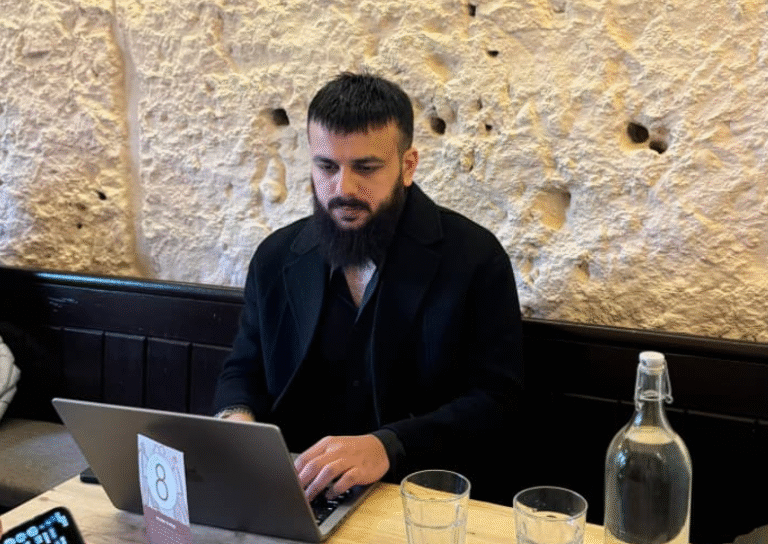
—Waleed Najam
In 2025, launching an AI company is more accessible than ever. The technology is easy to find, open-source models are everywhere, and funding is plentiful. Yet, the main hurdle is gaining traction. It’s not only about having a brilliant idea; it’s about attracting interest, encouraging use, and establishing trust.
The landscape has changed. AI is no longer an uncharted territory; it’s becoming a fundamental part of our infrastructure. The startups that succeed are not necessarily those with the most sophisticated algorithms. Instead, they are the ones that have a straightforward go-to-market strategy, execute quickly, and create a system that transforms users into loyal supporters.
That’s exactly where Waleed Najam steps in.
As an 8-figure entrepreneur and growth operator, Waleed has spent the last decade building and scaling high-performance businesses in eCommerce, digital marketing, and now AI. What sets him apart isn’t just his track record. It’s his methodology, a clear, practical GTM playbook made for AI-native founders who want to move fast, build real communities, and grow without burning out.
Why Does This Playbook Matter Right Now?
Because in a world where every startup is just another AI tool, distribution is the real moat. Execution is everything. The winners in 2025 will be the ones who validate early, scale content without burning cash, activate communities, and build systems that don’t rely on day-to-day hustle.
This isn’t a theory. It’s the exact playbook Waleed and his team are using right now to build traction-first AI startups that last.
Phase 1: The Foundation: Mindset, Constraints & Early Validation
Before writing a single line of code, launching ads, or building content, every founder needs to take a step back and lock in three key things: clear constraints, early market validation, and a sharp understanding of who they’re building for. This is exactly where Waleed Najam starts.
Here’s how Waleed lays the groundwork with clarity and intention.
Constraint-Led Thinking
Waleed works with limitations on purpose, not due to a lack of resources, but rather because limitations provide insight. They compel founders to concentrate solely on what genuinely makes a difference.
Here’s how he approaches it:
- Timebox Everything: No feature or campaign gets endless time. Experiments are capped at two to four weeks. This keeps teams out of analysis paralysis and forces fast learning.
- Only Build What Matters: If a feature doesn’t solve a real user pain or impact a key metric, it doesn’t make it into the product. Most early-stage AI founders waste months building things no one needs. Waleed avoids that completely.
- Cap Budgets Per Channel: Whether it’s paid ads, influencer collaborations, or software tools, every dollar has a specific job. This creates a habit of asking “What’s the ROI?” before spending anything.
Validate Before You Build Anything
With new AI tools launching daily, Waleed avoids the mistake of building a feature-heavy product with no proof of demand. Instead, he tests the market with lightweight, low-cost strategies before writing code.
- Landing Pages and Pre-Commit Flows: Create a clear landing page with your offer. Ask visitors to join a waitlist, sign up for a demo, or even prepay. If they don’t act, it’s a signal to revise.
- Cold Outreach and Manual Demos: Reach out to 50 to 100 potential users. Show mockups, demo the experience manually, and ask them straight up: would they pay for this? Listen closely to what they say, and even more closely to what they don’t.
- Concierge MVPs and Smoke Tests: If your product is meant to automate something, try doing it manually first. For example, if it’s an AI content tool, deliver the content manually. See if the user cares how it’s done or if they just want the result. If they’re willing to pay for the outcome, you’re onto something.
Know Exactly Who You’re Building For
Most early-stage founders cast the net too wide. They try to serve “anyone in marketing” or “small businesses everywhere.” Waleed takes a much tighter approach by creating a focused, data-backed Ideal Customer Profile (ICP).
He considers three specific traits very important:
- Urgency: Does this person or business have a real, immediate problem you’re solving?
- Ability to Pay: Can they afford to pay now without endless convincing?
- Willingness to Adopt: Are they open to trying a new tool or changing their workflow?
The most important part? Your ICP isn’t static. It evolves as your product matures. But starting narrow gives you the clarity you need to get real traction from day one.
Phase 2: Core GTM Mechanisms: 100 People, Content Flywheels & Triggers
Once the problem is validated and the ideal customer is clearly defined, the next move isn’t to launch ads or chase virality. It’s to build momentum with intention, the kind that doesn’t disappear after launch day.
This is where Waleed Najam’s go-to-market strategy hits its stride. He doesn’t believe in overnight hype or throwing money at reach. He believes in community-led growth, layered storytelling, and systems that scale.
Here’s how Waleed creates traction that feels organic, authentic, and impossible to ignore.
Working With Influencers (Without Going Broke)
Before Waleed ever thinks about ads or launch announcements, he builds what he calls a “100-person circle.” It is a hand-picked group of small creators who already talk to the exact audience he wants. These are not celebrities or big tech personalities. They are people with maybe five hundred to two thousand followers. But those followers actually care about the topic.
He does not treat them like influencers. He treats them like insiders.
He gives them early access so they can try the product before anyone else. He shares use-cases, templates, and examples tailored to their niche so they can actually apply the product to their own work. Most importantly, he makes them part of the story instead of just asking them to post about it.
When you do that, something very powerful happens. They start creating content on their own. And because each one of them has a different audience and a different voice, you do not get one type of content. You get a hundred different takes on the same product.
A YouTuber might record a walkthrough. Someone on LinkedIn might write a breakdown thread. A Notion creator might build a workflow using the tool. A real estate coach might share a before-and-after example. A community owner might post their experience inside their private group. Each one adds a different angle and speaks to a different part of the market.
This creates three big advantages:
- You get the distribution without paying for it: Their content becomes your awareness engine before launch day even arrives.
- Momentum becomes visible: When people see dozens of independent creators talking about the same product, it does not look like marketing. It looks like something real that is taking off.
- You get brand awareness from multiple contexts: Each creator makes the product relevant to a specific situation. That increases the number of people who see themselves in it.
Later, some of these creators turn into partners, co-hosts, or affiliates. Others just stay as people who support the product because they believe in it. Either way, the flywheel keeps spinning.
Most founders skip this step and rush into ads or influencer deals. Waleed starts here because when the market is already talking, everything else that comes after converts faster.
Live Events and Launch Activations: Creating Shared Moments
After the creator flywheel is running, Waleed adds something most founders overlook: live moments. Some are on Zoom. Some are in person. The point is not just to announce something. The point is to make people feel like they are part of something as it is happening.
He hosts live sessions where early users, creators, and curious people join together. There are demos, roadmap reveals, user stories, and open Q&A. Instead of a one-way presentation, it feels like a group experience. People talk, react, ask questions, challenge ideas, and shape what happens next.
These events are small in size but big in yield because everything inside them becomes fuel for content:
- A short clip from the demo becomes a YouTube short
- A great question becomes a Twitter thread
- A user reaction becomes a testimonial
More importantly, these live moments make the product feel real. Most AI tools feel distant and transactional. A live session gives it a human layer. It shows faces, not features. It creates excitement that people want to share. It makes someone feel like “I was there before everyone else.”
That is how products stop being a tool on a website and start becoming something people talk about, show to others, and want to be associated with.
Trigger-Based Messaging: Creating Curiosity That Converts
Alongside the content and creator strategy, Waleed brings in something subtle but powerful: emotional triggers.
His launch messaging is never flat. It’s full of curiosity, suspense, exclusivity, and psychological pull. Not clickbait. Just thoughtful storytelling that makes people stop scrolling.
Here’s what that looks like in practice:
- Curiosity and Suspicion:
“We just broke a major rule in how GPT is used. Here’s what happened.”
“Something is killing your workflow, and it’s not what you think.”
- Exclusivity and Scarcity:
“Only 10 beta invites left this week.”
“We’re opening early access for 50 creators. Are you in?”
- Progressive Reveals and Countdowns:
“Something new is coming on Friday.”
“Day 2 of 5: Why this isn’t just another AI tool.”
Each message is paired with a clear call to action: join the waitlist, book a demo, or apply for early access. Combined with the buzz already created by creators and the community, this messaging doesn’t just get attention. It drives action.
Phase 3: Paid, Retargeting & Partnership Strategy
By the time an AI startup has built organic momentum through early validation, a community of advocates, and content flywheels, the next stage isn’t about doing more; it’s about scaling what works smarter and faster.
This is where Waleed Najam’s GTM strategy steps into a new phase: amplification and conversion.
While many startups fall into the trap of pouring money into ads too early, Waleed does the opposite. He waits until he knows what message converts, what content resonates, and what audiences are already showing traction.
Then he hits amplify, using paid acquisition, retargeting funnels, and strategic partnerships to accelerate and automate what the brand has already proven.
Paid Ads: From Signal to Scale
Waleed’s approach to paid advertising is grounded in real insights rather than assumptions. He relies on signals that emerge from the organic phase, driven by the strategy involving 100 creators.
He and his team study which posts, videos, testimonials, or demo walkthroughs gain traction. Then, those become the base assets for paid ads.
Instead of crafting “ad creatives” in isolation, they elevate real content that’s already working.
He starts with small-budget campaigns, typically $100–$500, to test different combinations:
- Messaging hooks (“One AI tool to replace five apps”)
- Content types (UGC vs. polished product demos)
- Audience segments (founders, marketers, developers)
Once a few campaigns perform above benchmarks, the team scales ad spend on those variants while killing the rest.
Retargeting Funnels: The Safety Net That Closes
If someone clicked your product page, watched your demo, or followed your launch, and didn’t convert, it’s not a lost lead. It’s just an unfinished intent.
Each step is designed not to repeat the same message but to progressively move the prospect closer to action.
- First touch: A reminder of the value. “Still juggling 5 tools? This AI replaces them all.”
- Second touch: Handle objections, add proof. “Don’t take our word for it; here’s what our top creators said in the first week of launch.” (UGC montage)
- Third touch: Introduce urgency. “Last chance to join the beta before it closes Friday.”
This layered approach respects the customer journey; it doesn’t chase, it guides. And because each touchpoint is grounded in real user sentiment, it feels more like a conversation than a sales pitch.
Waleed believes that retargeting isn’t just about recapturing attention; it’s about converting trust.
Partnership Marketing: Build on Someone Else’s Distribution
Waleed often says, “If you don’t have your own distribution, borrow someone else’s, and make it a win for both sides.”
That’s exactly what his partnership strategy does.
Rather than starting from scratch, look for:
- SaaS companies that serve a similar ICP
- Communities that already have their target users
- Influencers or creators with overlapping missions
He approaches these potential partners not with a generic ask, but with value-first co-marketing offers:
- Co-branded live workshops or summits
- Joint product bundles
- Audience swaps or email shoutouts
- Content collaborations (blog posts, podcasts, videos)
For example, if Waleed is launching an AI tool for marketers, he might partner with a content agency to create a shared “AI Playbook for Content Teams,” which both sides can distribute.
The advantage? You tap into trust instantly. You’re not selling to a cold audience; you’re being introduced by someone they already know and value.
And when layered with smart retargeting, these partnerships don’t just bring in clicks, they bring in conversions.
Phase 4: From Paid to Pull: The Role of Content & Community
Waleed doesn’t stop at paid. Because paid gets you traffic, but content and community keep them coming back.
His philosophy: once paid ads bring someone in, your content and community should do the rest of the heavy lifting, because:
- Content educates, inspires, and converts skeptics
- Community retains, supports, and expands the base
That’s why even as paid and partnership strategies ramp up, the organic engines keep running:
- AI-powered tools are used to write, voice, and publish content at scale (with Waleed’s tone, style, and voice replicated across platforms)
- The original 100 creators are continually re-engaged with fresh updates, stories, and launches to keep the flywheel alive.
- Every new customer is funneled into a private community space, where they engage, contribute, and ultimately become creators themselves.
The goal is simple: turn attention into an ecosystem.
Phase 5: Automation Through Insight
At this stage, Waleed replaces manual monitoring and guess-based optimization with AI systems that extract signals and act on them. He uses a stack of GTM-focused AI tools that do three things simultaneously: detect what is winning, generate more of it, and feed it back into distribution.
Here Waleed recommends tools that specialize in automating this layer of creative insight and iteration:
- Motion (creative performance intelligence): Motion ingests Meta/TikTok ad data and breaks it down by hook, angle, format, and copy line. It shows exactly which storyline is driving performance, not just which “ad” worked. That lets Waleed scale narratives, not guesses.
- Replai (video ad pattern discovery & auto-variation): Replai uses AI to deconstruct high-performing videos frame-by-frame, labeling what worked (tone, pacing, CTA style, opening line, framing), and then generates new variants using the same winning structures. Winners are not just found, they are multiplied.
- Predis.ai (predictive creative scoring & rapid prototyping): Predis predicts the performance of content before spend is deployed. Waleed uses it to test alternate hooks, angles, and visuals before scaling, so budgets go into what is statistically likely to win, not into experiments that burn cash.
- Kubit by Liftoff (AI attribution & insight tagging): Kubit connects performance back to user behavior and ICP segments. It tags high-performing creatives with why they won, not just “what the ROAS was.” Those insights become reusable across future campaigns and launches.
These are not reporting dashboards; they are decision engines. They remove human lag, compress iteration cycles, and ensure that what works is instantly scaled into new hooks, new creatives, and new ad sets without waiting for a person to notice.
That is what makes Waleed’s GTM compounding instead of effort-driven.
Why This Playbook Works (and Why It’s Especially Fit for Emerging Markets)
Waleed Najam’s GTM playbook isn’t just optimized for speed; it’s built for efficiency, trust, and scale. And it’s particularly well-suited to emerging markets, where budgets are tight, communities carry weight, and systems need to do more with less.
Here’s why it works, and why founders outside of Silicon Valley can use it to win.
1. It’s Capital-Efficient
This playbook doesn’t need massive budgets. It starts with creators, not campaigns, and relies on real traction before investing in scale.
- You test before you spend.
- You grow through people, not just platforms.
- Every dollar gets validated before it’s doubled.
2. It Builds Bottom-Up Trust
Big tech doesn’t always resonate in emerging markets; people trust people.
- Waleed’s method activates micro-influencers and local creators.
- It builds real community around your brand.
- Customers aren’t just buyers, they’re collaborators.
3. It Scales with Systems and AI
Instead of throwing headcount at growth, Waleed builds systems that scale:
- AI handles content, lead scoring, and automation.
- Playbooks replace manual tasks.
- Growth loops feed themselves.
4. It Turns Users into Amplifiers
Most marketing flows in one direction. This playbook loops back:
- New users become content creators.
- Communities feed content and feedback.
- Growth becomes co-created, not just pushed.
In a market where AI startups are everywhere, it’s not the best product that wins; it’s the one with the clearest motion. Waleed Najam’s GTM playbook works because it doesn’t rely on hype or burn. It moves in deliberate phases: validate first, build momentum through people, then amplify only what works, and finally turn it into a repeatable machine. The result is a lean, trust-driven, community-powered system built for real traction, especially in markets where creativity matters more than capital. For founders who want to launch with intention instead of hope, this isn’t just a strategy; it’s a head start.