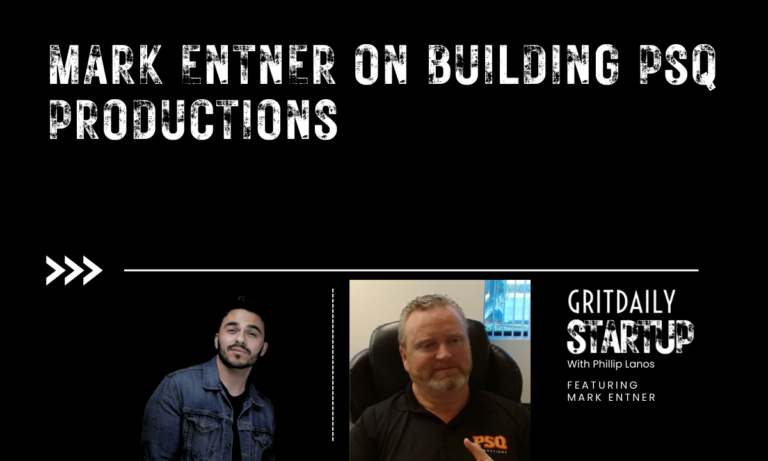
Mark Entner understands something many business leaders overlook: events do more than fill calendars. They give communities places to gather, celebrate, and feel connected. As founder of PSQ Productions, Entner has built a company around that idea, turning event production and venue management into a large-scale operation that serves cities, promoters, artists, families, and local audiences all at once.
His path into entrepreneurship did not begin with a sudden leap. It grew out of years spent inside the event business, where he developed firsthand experience working with vendors, promoters, public agencies, and the thousands of moving parts that shape successful live experiences. That early exposure gave him more than technical knowledge. It gave him a view into how events function as ecosystems, where logistics, trust, service, and community value all matter at the same time.
When Entner launched PSQ Productions, he was not simply starting a company. He was stepping from one side of the events industry to the other, applying what he had learned from supporting other organizers and operators to building an organization of his own. That transition came with the familiar challenges of entrepreneurship, from structuring the business and building financial systems to assembling the right team and carrying the risk that comes with live events. But for Entner, the deeper challenge was not paperwork or formation. It was building a company capable of delivering consistently under pressure.
That focus on execution has become central to PSQ Productions’ rise.
Today, the company operates at a scale that reflects both ambition and operational depth. Its work spans venue management, festivals, concerts, community celebrations, and major live experiences that require close coordination across public and private stakeholders. One of the clearest examples is Great Park Live in Irvine, where PSQ Productions has helped expand the venue’s standing-room capacity to 10,000. That increase is more than a technical milestone. It changes the level of entertainment the venue can support, opening the door to larger artists, bigger productions, and more ambitious programming.
For Entner, capacity is never just about numbers. It is about what those numbers make possible. A larger audience can support a different class of artist, a different financial model, and a broader cultural footprint for the venue itself. That makes capacity expansion a strategic move as much as an operational one.
What makes PSQ Productions especially notable, though, is not just the scale of its events. It is the company’s ability to work effectively at the intersection of government and business. Entner has built strong partnerships with public entities, particularly the City of Irvine, and that requires a style of leadership that goes beyond traditional event promotion. Public-sector relationships bring regulatory structures, approval processes, procurement expectations, and accountability standards that differ from a typical private deal. Entner’s prior experience working within a public-agency environment gave him fluency in that world, helping him understand how to operate with both entrepreneurial flexibility and institutional discipline.
That combination has helped PSQ Productions position itself not merely as a vendor, but as an extension of the agencies and communities it serves. Entner’s approach is built around trust. He sees trust as the foundation for resolving challenges, coordinating with public partners, and keeping projects moving even when complexity rises. In live events, where variables change constantly and timelines are unforgiving, trust is not a soft value. It is operational infrastructure.
That same principle shapes the company internally. PSQ Productions now manages a large team structure that includes full-time staff, contractors, and freelancers spread across a high volume of annual events. Entner’s solution to that complexity is not chaos management for its own sake. It is process. By building standard operating procedures and repeatable systems, the company avoids reinventing the wheel for every event. That creates room for the team to focus its energy where it matters most: unique activations, new experiences, custom programming, and the creative decisions that keep events fresh and relevant.
Technology supports that model, but does not replace it. PSQ uses venue and event management software to centralize scheduling, holds, planning, and contracts, giving the team a common operating system for high-volume coordination. Still, the company’s real advantage appears to come from discipline, communication, and clarity of purpose.
Entner’s leadership philosophy becomes especially clear when conflict arises. In an industry where budgets are high, timelines are tight, and opinions are constant, he returns to one question: what is best for the customer? That customer-first mindset acts as a decision filter, helping the team move past internal preferences and focus on the end experience. Surveys, feedback loops, and post-event input all play a role in that process. For Entner, relevance cannot be assumed. It has to be tested against what communities actually want.
That philosophy is visible in the breadth of PSQ Productions’ programming. The company’s calendar spans cultural festivals, family events, concerts, themed showcases, and large public gatherings, each with different audiences and expectations. Rather than treating that variety as fragmentation, Entner treats it as proof of what live events can do when they are aligned with the communities around them. He sees events as a kind of third place, somewhere beyond home and work where people can come together in meaningful, memorable ways.
That perspective also explains the optimism he brings to the business. In a field known for stress and unpredictability, Entner remains energized by the impact of the work itself. He talks less like a promoter chasing volume and more like a builder of civic and cultural experiences. The reward is not simply pulling off another event. It is seeing people show up excited, gather with friends and family, and leave with the sense that something worthwhile happened.
That mindset has helped PSQ Productions grow into more than an event company. It has become a trusted operator in spaces where community expectations are high and the stakes are very public.
Entner’s story also offers a useful lesson for aspiring founders. Entrepreneurship, in his view, is worth pursuing, but only if it is rooted in something a person genuinely loves. Building a company requires long hours, risk tolerance, and sustained attention. In events especially, the work rarely stays within neat business hours. But when the business is tied to a real sense of purpose, that commitment becomes easier to carry.
For Entner, that purpose has remained remarkably consistent from the beginning: create experiences that bring people together and leave them better for having shown up.
That is the kind of business model that scales beyond revenue. It scales into trust, loyalty, and community impact.