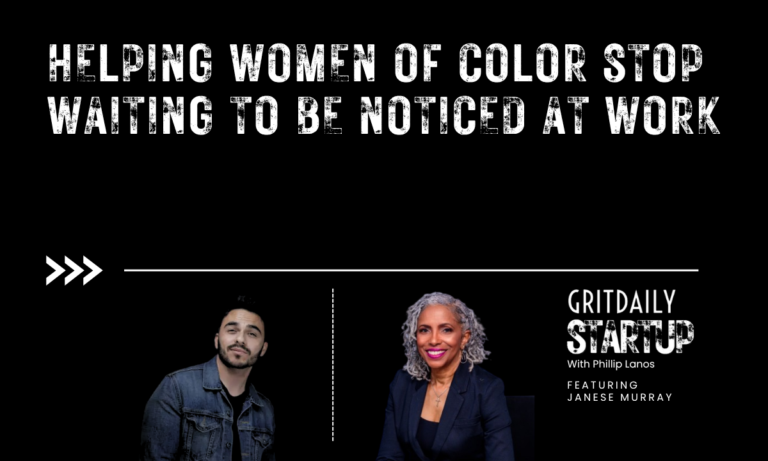
For many high-achieving professionals, the old advice was simple: work hard, keep your head down, and eventually someone will notice. Janese Murray knows how limiting that advice can be.
As the founder of Inclusion Impact Consulting, Murray works with women of color navigating corporate spaces where performance alone is rarely enough to advance. Being good at the job may get someone in the room, but it does not always determine who receives the promotion, the stretch assignment, or the chance to influence decisions.
That realization shaped much of Murray’s work. Earlier in her own career, she saw how easy it was to believe that doing the work well would speak for itself. In some ways, it did. But over time, she also recognized the importance of being more intentional about relationships, visibility, and professional brand.
Inside organizations, advancement often depends on who knows a person, what they know about that person, and whether they are willing to advocate when decisions are being made. That does not make performance irrelevant. It makes performance the baseline.
The harder part is learning how to shape the narrative around that performance.
Murray describes personal brand as what people say when someone is not in the room. It is not about becoming louder or more performative. It is about understanding how others experience one’s work, communication, judgment, and leadership. For women of color, that process can become especially complicated because the workplace may already carry assumptions they did not choose.
That is where executive presence becomes more than a corporate buzzword.
Murray approaches it as a mix of confidence, communication, emotional steadiness, appearance, and the way someone treats others. It can be developed, but it is not always simple. For women, and particularly women of color, the same behaviors are not always interpreted the same way. Humor, directness, restraint, and confidence may all require a level of calibration that others never have to consider as carefully.
That calibration can feel exhausting. It can also become a skill.
Murray does not frame corporate navigation as abandoning authenticity. Instead, she sees it as learning when to lean in, when to pull back, and how to read the room without losing oneself. Code-switching, in that sense, can be tiring, but it can also make someone a sharper observer of culture and power.
The key is not staying in vigilance forever. It is finding allies, mentors, sponsors, and spaces where the pressure lowers.
Mentors can offer honest feedback and help dilute the internal critic. Sponsors carry a different kind of weight. They are the people with influence who mention someone’s name when opportunities are being discussed. For professionals trying to move beyond being seen as reliable doers, that sponsorship can be critical.
Murray often sees talented women get trapped by perfectionism. They over-prepare, over-deliver, and hesitate to pursue opportunities unless they feel completely qualified. What looks like excellence can become avoidance. A person may delay applying for a role because they meet eight out of ten requirements, even though the missing two could be learned.
That pattern keeps people in boxes they have outgrown.
Moving forward requires a different kind of work. It starts with a self-inventory: skills, accomplishments, behaviors, and the value someone brings. From there, it requires intentional conversations with people who can provide feedback, open doors, or help clarify the next step.
It also requires knowing when an environment is simply wrong. Murray encourages professionals to check alignment early, especially around values and culture. A workplace does not have to be overtly hostile to be a poor fit. Sometimes the people are pleasant, but the culture still drains something essential.
Her coaching is rooted in helping people see what they already carry, then act with more intention. The goal is not to turn women of color into someone else. It is to help them recognize their own agency, name what they want, build the right support, and stop waiting for advancement to happen by accident.
Want more Grit Daily Startup Show? Take a look at past articles, head over to YouTube, or listen on Apple Podcasts or Spotify.