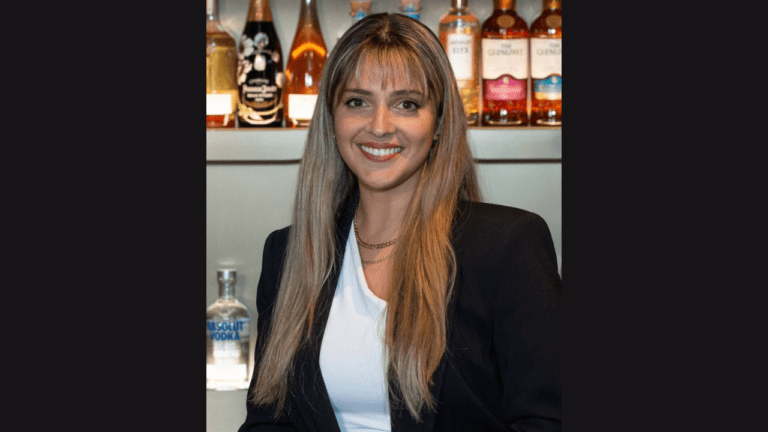
Breaking into the market with a new product requires a delicate balance of strategy, creativity, and flawless execution. Few understand this better than Maria del Pilar Riadigos, a branding specialist whose career has been shaped by high-stakes roles in global marketing. Currently serving as the marketing manager for Pernod Ricard, she oversees an impressive portfolio of brands, navigating the complexities of regional markets with precision. Before this, her time at Colgate-Palmolive honed her ability to connect products with consumers, refining the art of impactful messaging under tight deadlines. Riadigos’s insights into branding are as practical as they are profound, grounded in years of experience and proven success.
She started, “The key to success is a combination of product innovation and our ability to align it with consumer values.”
Her project with Colgate-Palmolive serves as a great example of this. The launch of Colgate Natural Extracts, the 100% recyclable toothpaste tube in the Latin American market, was a crucial step in their commitment to sustainability, aimed at reducing plastic waste without compromising on the quality or effectiveness of the product. This product tapped into a growing consumer demand for more eco-friendly products.
“By positioning the launch not just as a product but as part of a larger movement toward sustainability, we connected with consumers on a deeper level,” said Riadigos.
However, innovating and staying aligned with customer values is only the first challenge. A marketing manager must also have an acute vision for brand communication and be extremely diligent with managing resources and pricing strategies. Balancing the two extremes is the task at hand, and few can do so, especially in highly competitive companies playing in diverse and dynamic markets.
“Managing pricing strategies at Colgate-Palmolive involved balancing the need to maintain profitability with the importance of remaining competitive in an everchanging market. In challenging economic environments, such as during the drastic downturns in Argentina,” remarked Riadigos.
When navigating turbulent waters such as the Latin American market, dealing with economic instability, and customers with lower average purchasing power, there is no room for trial and error. In these kinds of situations, Riadigos emphasizes high-impact activities across both traditional and digital channels.
“Digital campaigns and influencer partnerships allowed for more targeted, engaging, and measurable interactions with consumers, complementing traditional efforts. By combining the strength of established channels with the agility of digital and influencer marketing, the strategies drove strong ROI and ensured sustainable growth across key market segments,” she said.
Riadigos strongly believes in staying open-minded and diversifying the approach. She is fond of digital influencing and how quickly these efforts can reach a broad audience, but she also understands the value of traditional marketing and how those can showcase a higher level of reliability. Focusing only on digital influencing can yield good results but can create this image of a passing trend, ensuring a strong presence on traditional marketing is essential for building a brand. In addition, Riadigos also talks about how different products will have different approaches, some focusing more on digital marketing, others on traditional.
Riadigos mentioned a recent campaign she ran for Pernod Ricard, launching Absolut Watermelon in Puerto Rico. She explained, “In the case of Absolut Watermelon, the global strategy was already well-aligned with local trends, as watermelon is one of Gen Z’s preferred summer flavors. We’ve seen a growing trend for watermelon drinks and cocktails, especially during summer when internet searches for watermelon-based drinks spike.”
Based on data analytics and knowing that Gen Z would be their target audience, she realized digital marketing was the proper avenue to explore. “We leveraged our influencer marketing platform to connect with local cultures throughout Puerto Rico, Guatemala, and other key markets. By working with local influencers who embodied Absolut’s values and aligning their storytelling with the refreshing personality of the product, we ensured that the campaign resonated with the local audience,” said Riadigos.
It is with this approach that Riadigos continues to be a reference in her field. With the advancement of technology, many aspects of marketing are evolving. Riadigos believes that the future will see a shift toward highly personalized experiences driven by advancements in AI and data analytics.
“Consumers expect brands to deliver tailored, relevant experiences across all touchpoints. At the same time, experiential luxury will continue to grow, with unique brand collaborations and immersive, digital-first engagements becoming more prevalent,” remarked Riadigos.
With this overwhelming new pool of resources, it is up to branding specialists to know how to get the most out of these tools. It has never been easier to understand what the customer wants. It is only a matter of delivering a product that stays true to their demands and connects with customers on a deeper level.