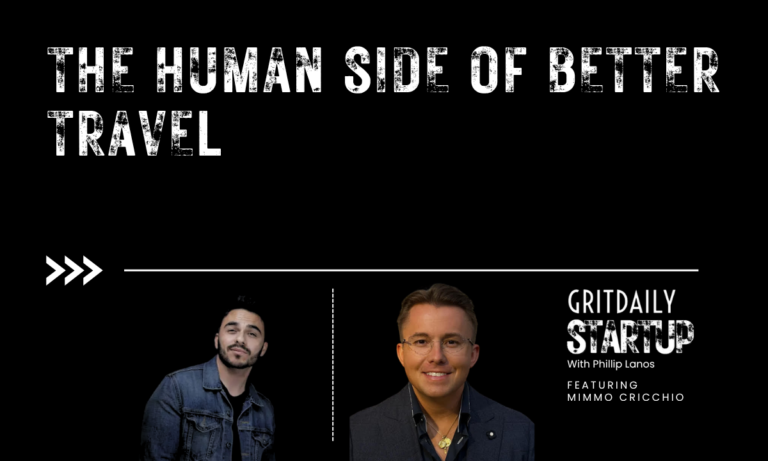
Mimmo Cricchio did not enter travel through a traditional agency path. His story began in the restaurant business, where his family operated Da Mimmo Restaurant in Baltimore’s Little Italy for decades and built the kind of community trust that often becomes the foundation for other opportunities.
The travel business grew naturally from that world. Guests knew Cricchio’s mother had a property on the Amalfi Coast, and they began asking her to organize trips to Italy. At first, it was not part of the plan, but the demand was real, and the family saw an opportunity to extend the same hospitality that had defined the restaurant into a different kind of experience.
That origin still shapes how Cricchio views travel today.
For him, a trip is not simply a vacation or a set of bookings. It is an opportunity to understand a place, step outside familiar routines, and come home with more than photos. That belief became even more central after the family sold the restaurant shortly before the 2020 lockdowns, leaving Cricchio at a crossroads. His academic background included political science, Italian, and law school, while his professional life had moved through other industries, including housing, but the travel business kept pulling him back.
Eventually, he made the move more fully, becoming an independent advisor and joining Fora Travel, a national travel advisory platform. The shift allowed him to expand beyond the family’s Italy-focused business while keeping the personal service model that had always made the work meaningful.
Cricchio’s approach is built around the idea that travel planning is still a relationship business. Technology can help people search, compare, and book, but it cannot fully replace the value of having someone who knows the client, understands the destination, and can step in when something goes wrong. That matters especially for travelers who are planning larger, more expensive, or more unfamiliar trips.
His experience with Italy gives him a clear example.
Italy may look simple from the outside because so many people know its famous cities, landmarks, and food, but the reality of planning a strong trip is more complex. Timing, transportation, hotel location, guides, cultural expectations, and pace all matter. Trying to fit Rome, Venice, and Milan into one week may sound efficient, but it can leave travelers spending more time in transit than actually experiencing the places they came to see.
That is where a good advisor becomes more than a booking tool.
Cricchio sees his role as helping clients set realistic expectations before they travel. Some people want to be deeply involved in the planning and simply need someone to book what they already know they want. Others want the entire experience shaped for them. In either case, the work begins with understanding the person in front of him, including their travel history, comfort level, preferences, allergies, hotel expectations, and priorities.
That human element becomes even more important when something goes wrong.
Travel always carries some uncertainty, whether it is lost luggage, passport issues, flight changes, or confusion on the ground. Cricchio remembers one couple who arrived at the airport for an Amalfi Coast trip only to discover that one passport did not meet the required validity window. They could not board, and the trip they had planned was suddenly impossible. Because the family controlled the trip experience closely, they were able to move the couple’s funds to a later departure rather than letting the whole investment disappear.
That kind of problem-solving is difficult to replace with a call center.
Cricchio is clear that travelers can use credit card portals, points platforms, and online booking sites, but those systems rarely offer a consistent person who knows the details of the trip. When a traveler works with an advisor, there is someone accountable, someone who understands the plan, and someone who can use relationships with hotels, travel partners, and local operators to improve the outcome.
That is also why he sees the rise of AI and DIY travel planning as only part of the story.
Planning tools can make research easier, but the more complex the trip, the more valuable judgment becomes. A weekend in Charleston may not require the same support as a safari, a luxury European itinerary, or a first trip abroad. Travelers may be able to gather information online, but knowing which advice applies, which partners to trust, and how to adjust when plans change is a different skill.
Cricchio’s philosophy is also shaped by his belief that travelers need to leave some comfort behind.
Experiencing another culture requires a willingness to adjust, especially for American travelers accustomed to convenience and predictability. The point is not to make travel difficult, but to recognize that the best experiences often come when people stop expecting everything to work exactly as it does at home. A strong advisor helps bridge that gap without removing the sense of discovery.
For Cricchio, that balance is central to meaningful travel. A client should feel supported, but not insulated from the place they came to experience. They should have structure, but not so much that the trip loses its spontaneity. Most of all, they should be able to enjoy the journey without carrying the stress of every logistical detail.
That is why his work remains rooted in hospitality.
The restaurant business taught him that reputation is built one experience at a time. In travel, the same rule applies. An advisor is only as good as the last trip they helped create, and the best outcome is a client who comes home satisfied enough to trust them again.
Travel, at its best, should feel personal. Cricchio’s work is built around making sure it stays that way.
Want more Grit Daily Startup Show? Take a look at past articles, head over to YouTube, or listen on Apple Podcasts or Spotify.