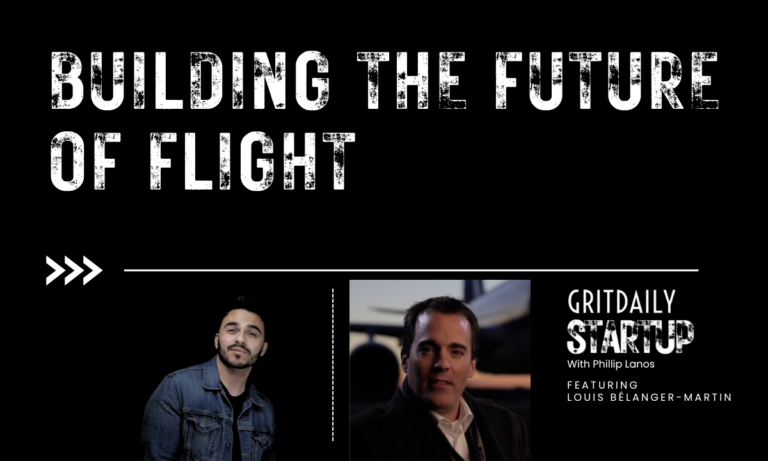
Louis Bélanger-Martin has spent enough time in the air to see flying differently from most people. For many passengers, a flight is a stretch of time between two places. For Bélanger-Martin, it has been something else entirely: a laboratory, a media platform, and one of the most interesting places in the world to study how people experience technology.
If he added up his annual travel and placed the flights back to back, he estimates it would feel like boarding a plane at midnight on January 1 and landing sometime in June. That kind of life changes the way a person sees airports, delays, cabins, frequent flyers, seatback screens, and the quiet rituals of people who live much of their lives in transit.
It also explains why Bélanger-Martin became so closely tied to the evolution of in-flight entertainment. Long before passengers expected thousands of content options, fast connectivity, interactive maps, or the ability to use their own devices in the air, he was part of the teams thinking about what the passenger experience could become.
The early version of that world was far more limited. In-flight entertainment once meant passengers watching the same thing at the same time, often in one language, with little control over the experience. The seatback screen, now taken for granted, represented a major shift. Suddenly, the cabin was not just a place to sit. It could become an environment designed around choice.
Bélanger-Martin entered the industry in the 1990s, when interactive television was beginning to move beyond the home. Aircraft presented a strange but obvious opportunity. At any moment, large numbers of people were above the clouds, sitting for hours with nowhere else to go. The question was not whether they needed something to do. The question was what kind of experience could be built for that environment.
The answer did not come quickly. The business took eight years to break even, a long stretch for any entrepreneur and especially long in aviation, where safety standards, regulation, airline procurement, hardware, and certification slow almost everything down. The breakthrough came through a feature that sounds simple now: a pause button.
Air France became an early opening when it showed interest in allowing passengers to pause a movie on their personal screen. It was small, but it mattered. A traveler could stop the film, speak to someone, order a drink, or step away without losing the thread. That single function pointed toward a larger idea: passengers did not have to be passive viewers.
From there, the industry kept moving. Software expanded into graphical interfaces. Interfaces grew into film libraries, music, connectivity, interactive maps, games, and eventually the broader digital ecosystem passengers expect today. Early connectivity projects involved antennas that were enormous by modern standards. Today, much of that technology has become lighter, faster, and almost invisible.
Bélanger-Martin sees that evolution as part of his life’s work. When he sits on a modern aircraft, he can see decades of decisions built into the cabin around him. The screen, the map, the content library, the Wi-Fi, the device pairing, the language options, and even the safety video all came from people who believed the flight experience could be shaped.
His approach has never been to follow trends. It has been to create them.
That distinction matters in aviation. Airlines do not move casually, and for good reason. Anything added to an aircraft must work safely inside a regulated environment. Innovation takes patience, but it also takes imagination. Bélanger-Martin’s view is that the best ideas are not always responses to what passengers ask for. Sometimes they are things passengers only recognize once they exist.
That is where the next frontier begins. AI, augmented reality, personalization, and immersive cabin design could make the passenger experience far more responsive. A flight might eventually curate content based on the route, destination, aircraft, or even the kind of passengers on board. Safety videos could become more specific. Entertainment could become more local. The aircraft could become not only a way to reach a place, but a way to start experiencing it before landing.
There are limits, of course. Immersive technology can be powerful enough to unsettle people if used carelessly. A cabin that visually projects the outside world onto interior panels may be technically impressive, but not every passenger wants to feel exposed at altitude. For Bélanger-Martin, the goal is not novelty for its own sake. The experience still has to serve the person in the seat.
After helping build a business that eventually listed on Nasdaq, Bélanger-Martin stepped back for a period. Now he is back in the industry, serving on airline-related boards, staying active in private equity, and looking closely at what AI may mean for the next era of aviation and media. He remains drawn to growth, innovation, and the kinds of ideas that sound unusual before they become obvious.
His career is not really about one feature or one company. It is about seeing the aircraft cabin as a place where technology, culture, design, and human attention meet. For most passengers, the screen turns on, and the flight begins. For Louis Bélanger-Martin, that moment is proof of what happens when someone spends decades asking what flying could become next.
Want more Grit Daily Startup Show? Take a look at past articles, head over to YouTube, or listen on Apple Podcasts or Spotify.