Happy People Games did not emerge from a trend cycle or a venture-backed brainstorm. It grew out of a career spent at the front edge of culture, and a deeply personal understanding of what it means to lose someone before they are gone.
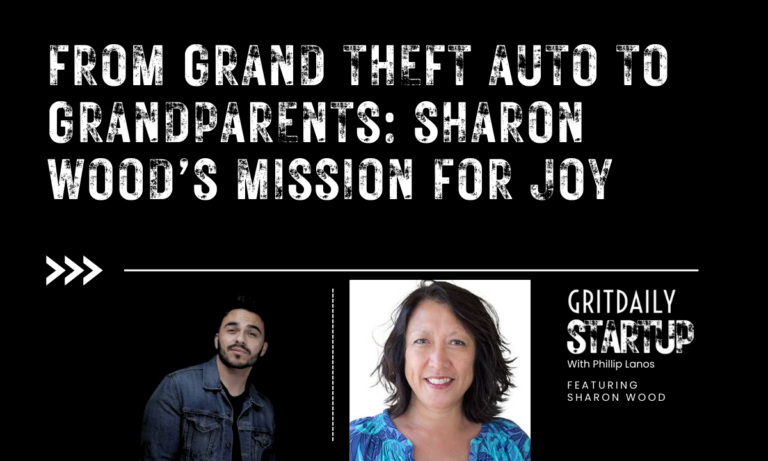
At the center of it all is Sharon Wood, Founder and CEO of Happy People Games, a marketing pioneer turned purpose-driven founder who has spent decades inside emerging industries, from sports marketing to video games. Long before “disruption” became a buzzword, Wood was helping shape categories that did not yet have playbooks.
She worked on youth baseball initiatives that sent children to the All-Star Game in full uniform, programs so culturally resonant they earned a place in the Baseball Hall of Fame. She moved through entertainment and licensing at a time when gaming was still fighting for legitimacy. As part of the original launch team behind Grand Theft Auto, she witnessed firsthand the cultural backlash that often accompanies innovation. While lawmakers debated bans and critics warned of moral decay, Wood sought out psychologists to understand what games were actually doing to young minds.
What she found stayed with her. Games, when designed well, did not erode cognition. They were building strategy, patience, experimentation, and resilience. They created safe spaces to explore ideas, test boundaries, and connect with others. That insight would quietly shape the next chapter of her career.
Across decades in emerging sectors, Wood became fluent in the reality that innovation rarely comes with a roadmap. There is freedom in that, but also risk. Success requires strategy, resourcefulness, and a willingness to fail forward. It also requires relationships. Her ability to bring major music catalogs into her latest venture, including partnerships involving Sony Music Publishing, Sony Music Entertainment, and Universal Music, is the product of relationships built over years in licensing and brand strategy.
But Happy People Games is not about nostalgia for the sake of it. It is about neuroscience, dignity, and connection.
The company’s flagship experiences, Timeless Tunes and Still Frames, are built on research around memory formation, mood elevation, and cognitive stimulation. Timeless Tunes leverages original recordings from artists such as Glen Campbell, Elvis Presley, The Jackson Five, and The Partridge Family to tap into deeply encoded memory pathways. By activating durable musical memory circuits, the experience aims to stimulate weaker, more recent memory systems.
Still Frames approaches cognition from a different angle. Drawing on research around autobiographical generative memory, it encourages users to build visual collages from personal and archival images. The act of selecting, arranging, and reflecting on images can prompt memory retrieval, emotional articulation, and even new memory formation. For families, the experience becomes collaborative, creating shared moments even when recall is incomplete.
The science matters, but so does the tone. Wood is adamant that older adults should not be infantilized. The brand language avoids age labels. The design avoids condescension. The goal is not to fix people, but to invite them into joyful participation.
That philosophy was shaped by personal loss. Wood watched her grandmother slip into the final stages of memory decline. She later supported her father through severe Alzheimer’s while raising children in another state. The logistical and emotional strain of distance underscored a painful truth: families often lack accessible tools to connect meaningfully when memory fades.
Happy People Games is her answer to that gap.
The products are simple enough to launch with a tap, yet layered enough to spark competition, laughter, and storytelling. In early community demonstrations, older adults have surprised even themselves with how quickly the competitive instinct returns. Good-natured teasing, dancing, and spontaneous conversation have become as important as correct answers.
In a tech ecosystem obsessed with youth and speed, Sharon Wood has chosen a different frontier. She is applying decades of gaming insight, licensing acumen, and scientific collaboration to a demographic often overlooked by innovation cycles. The result is not just another app in an overcrowded marketplace. It is a reimagining of how play can preserve identity, spark connection, and remind families that even when names fade, laughter can remain.
Want more Grit Daily Startup Show? Take a look at past articles, head over to YouTube, or listen on Apple Podcasts or Spotify.