
In an era obsessed with acceleration — from AI rollouts and generative dashboards to real-time everything — executives are being told to move faster, automate more, and trust the machine. But at what cost?
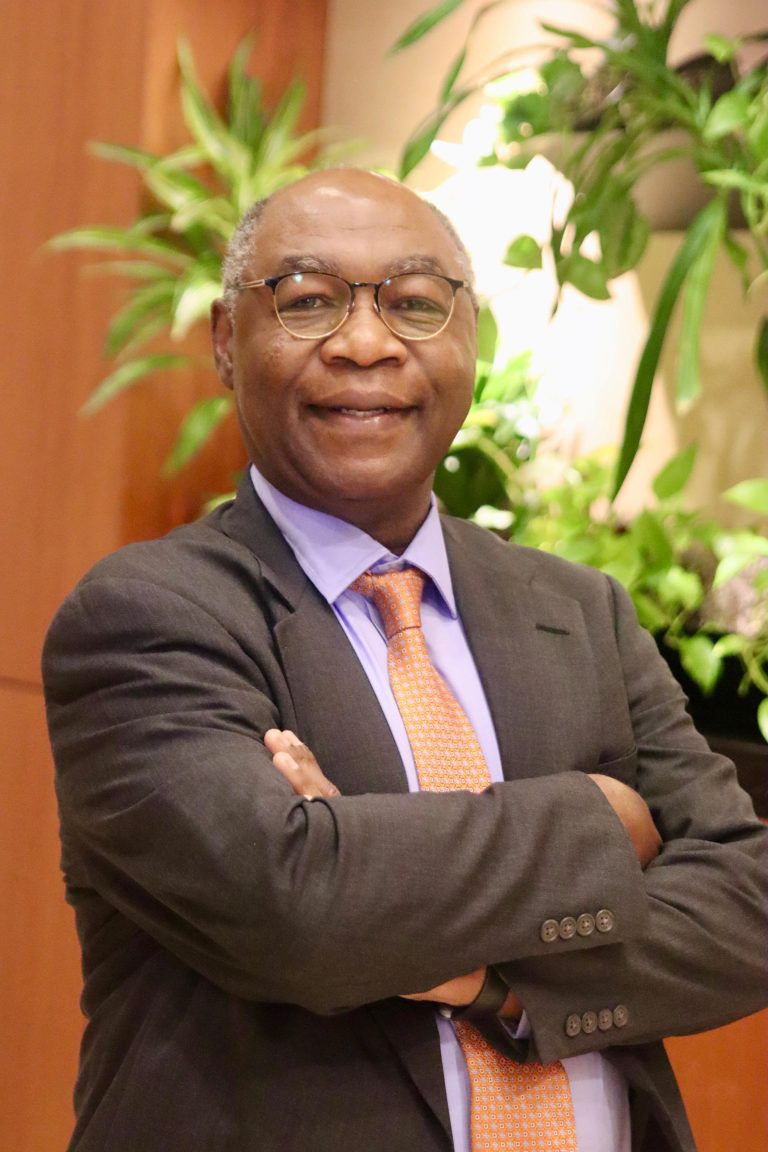
To explore what AI can and cannot solve in the modern executive’s world, Mosongo Moukwa, a strategic advisor and executive coach, offered insights drawn from his work with business owners and leadership teams navigating complexity, burnout, and the pressures of scale. His view? The technology is extraordinary, but the questions it raises are even more important than the answers it provides.
What’s the biggest misconception executives have about AI today?
That AI replaces clarity. It doesn’t. It replaces complexity with efficiency. But clarity? That’s a human process. I work with a lot of business owners who are using AI in impressive ways: automating workflows, improving decision speed, generating strategy drafts. But when you ask them, “What are you building, and why?” they go quiet. AI can generate pathways. It cannot give you a reason.
So, intelligence without intention is dangerous?
It’s directionless. Intelligence is access. Intention is focus. If you don’t have that focus, you end up chasing the next tool, the next model, the next automation, without asking whether it serves your mission. We’re seeing brilliant executives fall into this trap. They’re scaling something they don’t even want anymore.
“Move faster” is the dominant narrative in tech and business right now. Is speed the right KPI?
Only if you know where you’re going, otherwise, speed is just stress with a productivity label. I always tell my clients not to confuse motion with meaning. AI can help you move faster, but it cannot help you pause. And that pause is often where real strategy lives.
How should executives be using AI in decision-making?
As an assistant, not an authority, AI is a phenomenal input generator. It will give you trends, summaries, probabilities, but it won’t hold your values. It doesn’t know your culture. It doesn’t know how that choice will affect your team, your family, your legacy. That is your job.
Do you think some executives are trying to outsource not just thinking, but responsibility?
Yes, and that’s what worries me most. I hear things like, “The model showed this was the best path,” as if that absolves them. But leadership isn’t about following the most efficient suggestion. It’s about holding the weight of the decision, the risk, the impact. That cannot be delegated to code.
Is there a psychological or emotional cost to all this AI-driven optimization?
Absolutely. Especially for mid-market executives. They’re expected to lead, adopt, adapt, and not flinch. But many of them are overwhelmed, not by the tools, but by the expectation to always be evolving. That’s exhausting. They don’t need another tool. They need time to think. Space to reconnect with what matters.
You talk a lot about emotional clarity in leadership. How does that connect to AI?
Because if you don’t know what success feels like for you, AI will just take you faster in the wrong direction. I’ve coached leaders who used AI to grow their company 30% and were more miserable than before. They scaled something misaligned. Emotional clarity has to come before strategy. Otherwise, all AI does is accelerate disconnection.
What’s your advice to an executive trying to integrate AI into their business responsibly?
Ask yourself two things. First, what is the real problem I’m trying to solve? Second, who do I want to be while solving it?
Then explore tools. But lead with questions, not with tech. AI is an amplifier. It will magnify whatever you’re already doing. Make sure it’s amplifying something meaningful.
Final question. What can AI never do?
It can’t feel. It can’t trust. And it can’t care. Those are and always will be the leader’s job.
Conclusion
In a world rushing toward ever-greater automation, Mosongo Moukwa offers a powerful reminder: leadership remains a profoundly human endeavor. While AI can streamline decisions and surface insights, it cannot replace purpose, values, or emotional clarity. For executives grappling with complexity, scale, or a quiet sense of disconnection, Mosongo’s perspective offers more than advice — it offers a path forward rooted in intention and alignment.
To learn more about his coaching programs or explore how the Profit Clarity Method can help you grow with focus and fulfillment, visit Mosongo’s website or connect with him directly.