

Ayurveda, which translates to “science of life,” is a holistic health system that goes beyond just treatment. It offers a complete philosophy for living well. Grounded in ancient Indian wisdom, it provides practical guidance for healing and day-to-day well-being. Historically, Ayurveda has evolved through a rich exchange with local health traditions, adapting to the needs of individuals, families, and communities. Yet, in recent decades, the growing influence of biomedicine has led to its increasing medicalization, shifting focus from lifestyle-based wisdom to clinical protocols.
Amid this shift, Akanksha Pandey (Acanxa) has developed her work on integrative medicine, combining traditional and modern approaches to health. Her approach seamlessly combines the foundational principles of Ayurveda with the rigor of modern functional medicine. By focusing on non-pharmaceutical strategies, she tackles chronic lifestyle-related conditions such as gut health issues, hormonal imbalances, metabolic disorders, and weight management — areas where conventional medicine often falls short.
Akanksha Pandey (Acanxa)’s dedication to holistic health is deeply personal. Her journey began with her own struggle against a chronic gut condition that standard medical treatments failed to address. This turning point prompted her to explore alternative approaches to healing, an exploration that would eventually shape her life’s work. She went on to study at globally respected institutions like Harvard University, Wageningen University in the Netherlands, and the Institute for Functional Medicine (IFM). She also undertook immersive training in traditional Kerala Ayurveda, grounding her expertise in both science and lineage-based wisdom.
Despite its deep historical and cultural significance, Ayurveda remains underrepresented in Western clinical literature. Only a limited number of Ayurvedic approaches have been evaluated in peer-reviewed medical journals. However, global interest is rising, particularly in the U.S., where over 240,000 adults now turn to Ayurvedic practices for their health and wellness needs.
Through her integrative lens, Akanksha is not only bridging the gap between ancient traditions and modern science. She’s redefining what healthcare can be. Her work empowers individuals to embrace a more balanced, proactive, and personalized approach to well-being, one that honors the body’s innate capacity to heal and thrive.
Integrative Approach to Health
Akanksha’s decision to merge Ayurveda with functional medicine stems from what she describes as a gap in conventional healthcare’s approach to chronic disease. “I was frustrated with modern medicine’s obsession with treating symptoms, not solving the problem,” she states. According to her, Ayurveda provided foundational tools that, when combined with evidence-based functional medicine, offered a more personalized framework for care.
Her methodology combines personalized nutrition plans, Ayurvedic lifestyle practices, and functional diagnostics to help individuals address the root causes of chronic conditions. The aim is to move away from symptom suppression toward long-term balance and recovery.
Programs and Services
Akanksha has developed several structured wellness programs that reflect this integrative philosophy:
- Feel Like Spring: A program designed for individuals experiencing issues related to digestion, hormonal health, sleep, and mood. It takes a systems-based approach, recognizing the interconnection of various physiological functions.
- Gut Set Go: Focused on restoring gut health through food-based protocols and personalized wellness planning. The program is guided by the principle of bioindividuality — the concept that health strategies should be tailored to each person’s genetic and physiological profile.
Drawing from Kerala Ayurvedic principles, she assesses individual body types, gut types, and subtle symptom patterns before recommending interventions. “Everything is bioindividualized,” she explains. “I incorporate these principles into my programs by emphasizing individualized nutrition, self-awareness, and daily rituals that align with each client’s body type and lifestyle needs.”
Role of Daily Habits and Self-Awareness
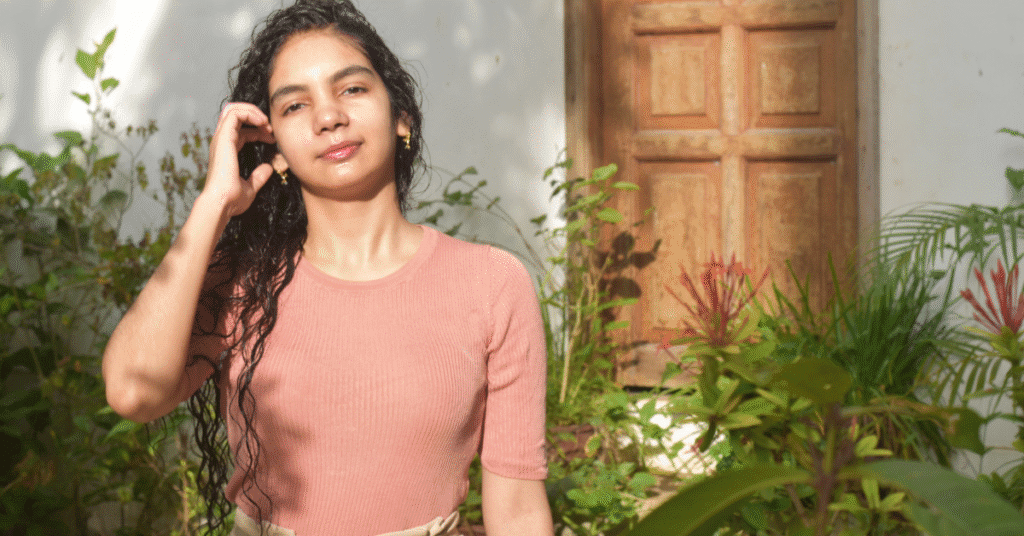
Akanksha emphasizes the importance of daily practices in achieving and maintaining health. She encourages individuals to listen to their bodies and pay attention to signals like digestion, energy levels, sleep, and mood.
Suggested practices include:
- Drinking warm water in the morning
- Eating seasonally and according to one’s constitution
- Practicing breathwork and yoga
According to her, such practices support long-term health by aligning daily routines with the body’s natural rhythms.
Challenges in Bridging Traditional and Modern Systems
Akanksha notes that integrative health approaches still face skepticism from parts of the medical community. “The biggest challenge is the resistance from the medical community, who still sees Ayurveda as outdated or unscientific,” she says. She points to emerging research on the gut-brain axis and the use of Ayurvedic herbs in hormonal regulation as evidence of increasing scientific validation for traditional practices.
While Ayurveda has historically been excluded from mainstream clinical frameworks, there is a growing body of research exploring its applications in areas such as microbiome health, endocrine support, and stress management. These studies are beginning to inform integrative care models in both academic and clinical settings.
Akanksha offers the following guidance to others working in wellness: “One of the biggest mistakes people make is blindly following trends. True wellness isn’t about jumping on the latest bandwagon — it’s about questioning what’s being pushed and choosing what aligns with your body.”
She encourages professionals in the field to maintain a critical perspective and avoid one-size-fits-all solutions, emphasizing the importance of customizing care to the individual.
Where Purpose Meets Profession: A Vision for the Future
Regarding work-life balance, Akanksha states that she does not separate her personal and professional life in the traditional sense. “To me, it’s about integration,” she explains. “When you’re doing what you love, it becomes part of your life.” She adds that she sets personal boundaries to prevent burnout and maintains self-care routines that support both physical and mental health.
Akanksha Pandey (Acanxa) has worked with a diverse range of clients, including private individuals and public figures. She intends to continue expanding access to integrative health programs and contributing to the broader conversation around chronic disease management without sole reliance on pharmaceutical interventions.
She emphasizes that her methodology is not about rejecting modern science but about broadening the framework for how health is approached. “Ayurveda isn’t a static system — it evolves. I’m not here to follow rules. I’m here to offer alternatives and support personalized healing that works.”