
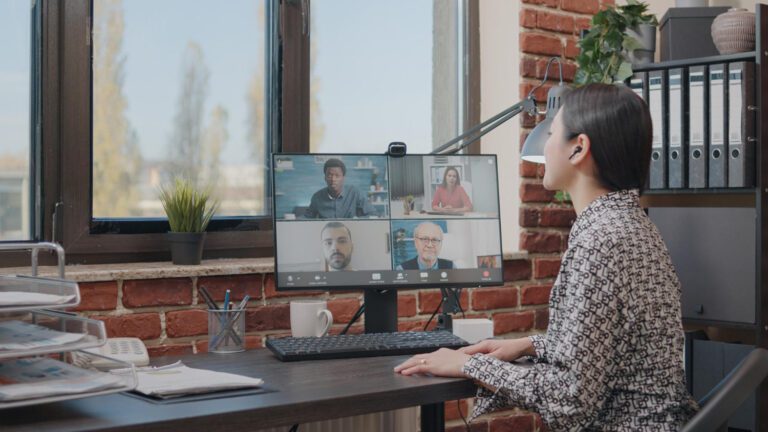
Given the rapid pace at which hybrid work was implemented, most organizations were caught off guard. They lacked the foresight and preparation to adapt networks, policies, and people to this new work style.
As a result, despite good intentions from leadership, technology issues can run rampant in hybrid setups. Performance lags, outage frustrations, and security oversights frequently plague poorly adapted IT infrastructure and access controls.
Simply put, enabling hybrid work is more than just stating a policy. The technology foundations need to directly cater to distributed access patterns to deliver seamless and secure employee experiences. Legacy architectures built for centralized offices restrict the benefits of hybrid models, and sometimes, they add too much risk.
The good news is that there are solutions purpose-built for hybrid work environments that can overcome these challenges, such as SASE. SASE convergence can future-proof networks and deliver seamless, secure access no matter where employees are located. Below, we will go into the hybrid issue, SASE’s role, and how to choose a SASE vendor to meet your business needs.
The Challenges of Hybrid Work
With the workplace fragmentation of hybrids, the days of routing all traffic through centralized data centers are over. Employees now work from home offices, airports, coffee shops — you name it. And they expect fast, reliable access to business apps and resources, regardless of where they’re located.
However, most legacy networks were designed for something other than this kind of flexible access, relying on rigid hardware components in fixed office locations. These outdated architectures simply can’t provide the scalability and resilience needed for hybrid environments.
As a result, many IT teams now need help delivering adequate performance for a dispersed workforce while securing access. Common pain points include:
- Poor application performance: When workers access cloud apps from remote locations over VPNs or legacy network hardware, lag and downtime frustrate employees and impact productivity.
- Complex management: IT headaches result from troubleshooting issues across fragmented security and networking tools for various locations. Policies must be manually duplicated for offices, homes, mobile devices, and cloud apps.
- Security gaps: Branch offices, mobile users, and cloud apps have different security requirements. However, inconsistent controls and visibility gaps leave companies vulnerable when they connect via legacy VPNs to the corporate network.
Clearly, legacy networking approaches fail to deliver efficient, secure connectivity in a hybrid work paradigm. They no longer align with digital businesses’ priorities. To adapt, IT must rethink its network architecture.
SASE Converges Networking and Security for Hybrid Work
SASE (pronounced “sassy”) is a cloud-native architecture converging networking and security. Defined by Gartner in 2019, this emerging framework supports hybrid work environments much better than legacy models.
Rather than route traffic through centralized data centers, the SASE model brings connectivity and security to the edges, like employee homes and mobile devices. IT no longer has to backhaul traffic needlessly via VPNs to apply policies. Instead, they can connect all users, devices, and cloud apps directly and locally. Key principles of SASE include:
- Delivered as a service from the cloud: SASE leverages globally distributed points of presence (PoPs) operated by the vendor, replacing private data centers.
- Identity-based access: Users, devices, and applications are verified everywhere with continuous authorization.
- Converged networking and security: SASE bundles WAN capabilities, Zero Trust Network Access, firewalls, and more.
- Edge-based intelligence: Local PoPs apply role-based policies for fast, secure local internet breakouts.
With these principles, SASE architectures overcome the pitfalls of hybrid work that handicap legacy networks:
- Consistent performance: As traffic doesn’t hairpin to centralized hubs, latency reduces, and bandwidth increases. Nearby PoPs accelerate SaaS and Internet access.
- Simplified administration: Consolidated networking and security reduces tool sprawl. Policies automatically follow users no matter their location.
- Risk reduction: Granular access controls based on identity minimize attack surfaces. Encryption secures internet breakouts.
As hybrid work pushes networks to their limits, SASE offers a cloud-native reset. Converging connectivity and security at the edge, it’s the ideal model for flexible work environments.
What to Look for in a SASE Vendor
SASE combines a wide range of networking, security, and access technologies into a unified cloud service. As an emerging offering, vendor solutions vary widely in completeness and capabilities.
When researching options, you want to assess potential providers based on how well they address your most pressing needs. Here are key considerations to help evaluate SASE platforms:
Your Top Networking Priorities
- What aspects of networking performance could be improved in your current environment? Poor SaaS access? Slow internet? Difficulty load balancing traffic across locations?
- Does the SASE offering provide strong SD-WAN capabilities like dynamic path selection, local breakouts, and application optimization?
- Can it easily replace or work alongside your existing network hardware?
Your Top Security Priorities
- What are your most significant security gaps? Inconsistent cloud app controls? Poor visibility into TLS-encrypted traffic? Authentication management across devices/users/clouds?
- Does it consolidate key security services like CASB, ZTNA, SWG, and FWaaS, or are many still stand-alone?
- Can it enforce unified policy across networks, cloud apps, and endpoints?
Your Top Access Priorities
- Do users struggle to connect securely in all the environments your business operates in — office branches, mobile devices, and cloud apps?
- Does the solution support secure access protocols for various use cases, such as VPN, ZTNA, and client connector?
- Can it scale user connections without bottlenecking traffic in centralized data centers?
By mapping SASE vendor capabilities to your most pressing networking, security, and access priorities, you can determine the best fit for your hybrid environments.
Is Your Organization Ready to Adopt SASE?
As hybrid workplaces become the norm, SASE presents a cloud-native opportunity to unify secure access. Converging WAN and security at the edge, leading SASE platforms overcome the shortcomings of legacy architectures.
To determine if your business can benefit from SASE, ask yourself these key questions:
- Are remote and mobile workers struggling with poor application performance?
- Does network complexity make policies challenging to manage as the business scales?
- Do visibility gaps create security risks in hybrid work environments?
- Is a lack of IT agility preventing the adoption of new cloud-based technologies?
If you answered yes to any of these, your network likely needs to meet the demands of hybrid work. By embracing SASE, you can align operations to the new digital reality — without costly overhauls of existing investments. SASE solutions integrate with your identity system and complement VPN infrastructure.