At the intersection of art, technology, and luxury branding, motion design is becoming an increasingly central tool for how brands communicate in the digital age. It allows luxury houses to enhance storytelling, capture attention, and create immersive experiences.
Luxury brands use motion design to boost digital storytelling, grabbing attention and increasing engagement far more than static visuals. This approach helps brands express their identity, highlight quality, and offer consistent experiences across platforms. Motion makes brand messages memorable and fosters emotional connection; consumers retain 95% of a video message versus just 10% from text.
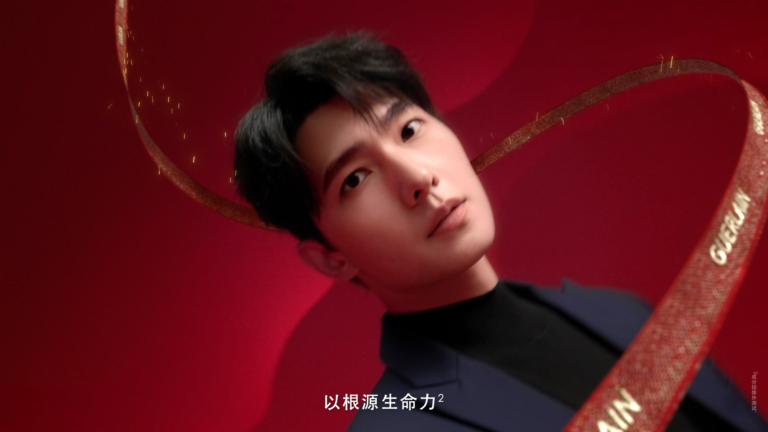
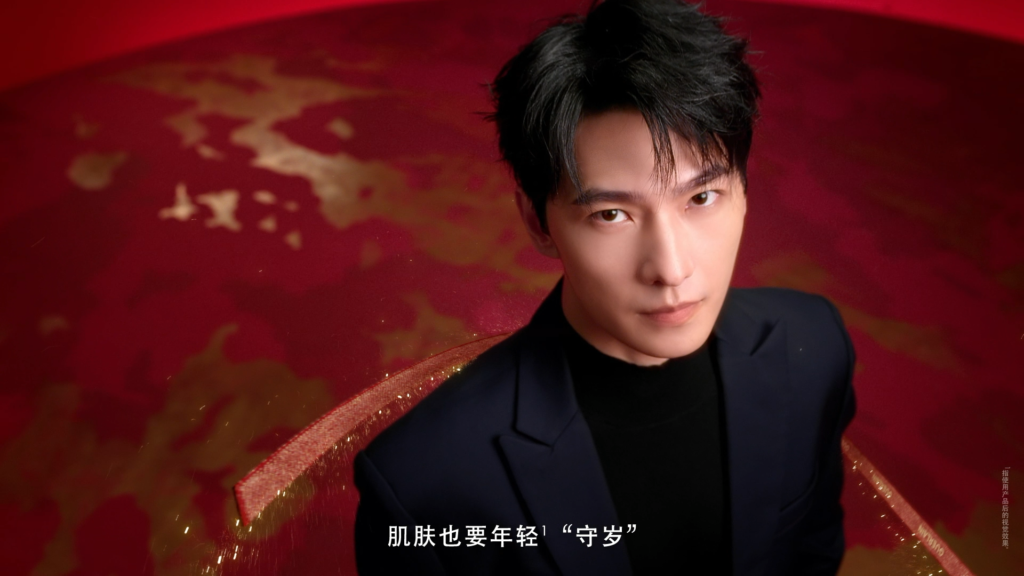
Zilan Lin was the New York-based Lead CG Artist for Guerlain’s high-stakes CNY 2025 campaign, starring Yang Yang, a prominent Chinese actor and dancer who has worked with Guerlain since 2015, progressing from brand ambassador to global spokesperson. His partnership is notable for the popular “Yang Yang shade” lipstick, which sold out quickly, and his regular promotion of Guerlain’s fragrances and makeup. Recognized as a top “traffic star” in China, Yang Yang is highly influential, known for leading roles in Love O2O, The King’s Avatar, and You Are My Glory, with over 2.5 million Instagram followers.
With this project, and others, Lin helped guide the Guerlain campaign starring Yang Yang to not just craft exquisite visuals; but to help shape the future of motion design by blending cutting-edge 3D rendering with AI-driven workflows and a keen understanding of a mobile-first Gen Z audience.
Lin’s distinctive contribution to the Guerlain campaign, a high-profile initiative for a heritage brand under the LVMH umbrella, stemmed from her dual role as both Lead CG Artist and On-set VFX Supervisor. This unique position allowed her to serve as a crucial bridge between the physical cinematography captured in Shanghai and the intricate digital world-building in post-production.
“By overseeing the entire lifecycle—from on-set technical direction to the final 3D render—I ensured a level of visual continuity and cinematic depth that fragmented workflows often lose,” Lin explains. “I focused on creating imagery that felt refined and atmospheric rather than overly technical.” Lin meticulously shaped lighting, material textures, and spatial composition to support Guerlain’s emotional narrative and elegant brand heritage.

Honoring Heritage with Hyper-Realism
Working with a revered, legacy French fashion house like Guerlain required a deep sensitivity to its legacy of craftsmanship and material precision. Lin’s approach began with “visual truth.”
“Before production began, I studied the actual product packaging provided by the brand, paying particular attention to the signature ribbon used in the gift box,” she notes.
Her responsibility included creating a CG ribbon that interacted seamlessly with brand ambassador Yang Yang in the film. Accurately capturing its texture, softness, and movement was paramount. “By carefully observing the real materials and translating those details into the CG rendering, I aimed to ensure the visuals felt authentic, refined, and aligned with Guerlain’s heritage,” said Lin.
This meticulous fusion of traditional cultural motifs with advanced 3D rendering was achieved through a rigorous technical process. Lin employed detailed Redshift shaders to perfectly capture the ribbon’s silk texture, utilized camera tracking for precise integration of CG elements with live-action footage, and meticulously recreated on-set lighting within the 3D environment. Final refinement occurred through Nuke compositing, resulting in a cohesive, cinematic finish aligned with the expectations of a global luxury audience.
Adapting for the Mobile-First Generation
Understanding that the majority of today’s audiences encounter brand campaigns through short-form digital platforms, Lin consciously designed the visuals to capture attention within seconds.
“I focused on creating strong visual moments within the first three seconds—clear silhouettes, tactile textures, and lighting that reads effectively on smaller screens,” she elaborates. The challenge, she notes, is “balancing cinematic depth with clarity for digital platforms” while retaining the elegance synonymous with luxury branding.
While acknowledging that Gen Z’s media habits significantly influence content consumption, Lin emphasizes that her primary goal extends beyond merely “hooking” viewers.
“Younger audiences are very visually literate and respond strongly to authenticity and thoughtful design,” she says. “While ‘hooking’ the viewer is a technical necessity, my primary goal is resonance.”
Pioneering “Vibe Coding” and the Future of Motion Design
Beyond her current success in high-stakes brand campaigns, Lin is a trailblazer in AI-assisted creative workflows, actively exploring a groundbreaking concept she calls “Vibe Coding.” This innovative R&D project, while futuristic in sound, is poised to redefine motion design.
“I am currently developing an AI-driven R&D project that maps emotional intent directly into a specific ‘Motion Grammar’,” Lin reveals. Unlike traditional pre-rendered videos, this system generates continuously evolving animation systems in real-time.
For instance, an “anxious” input might trigger “jittery micro-oscillations,” while “calm” produces “slow, floating particles.” This represents a profound shift. “The work shifts from animating frames to defining a ‘motion grammar’ that allows visuals to emerge organically,” she explains. Tools like AI and “Vibe Coding,” she believes, will lower technical barriers, enabling motion designers to focus more on designing expressive systems rather than just executing animation, notes Lin.
Looking ahead, Lin sees these nascent technologies as invaluable for high-stakes advertising. “By engaging with them early, I’m learning how they can support both creativity and efficiency,” she said.
For brands requiring a series of visual assets, this could mean building a core “motion framework” that defines visual behaviors, allowing for rapid generation or adaptation of new visuals while maintaining consistent brand identity.
Zilan Lin’s journey, from her robust background in animation and CGI – including contributing to DreamWorks Animation’s “Kung Fu Panda 4” – to her current role as a Motion Designer at Chantecaille, positions her at the forefront of digital art. Her work exemplifies a forward-thinking approach to visual storytelling, ensuring that luxury brands can communicate effectively, authentically, and resonantly with the visually sophisticated audiences of tomorrow.