
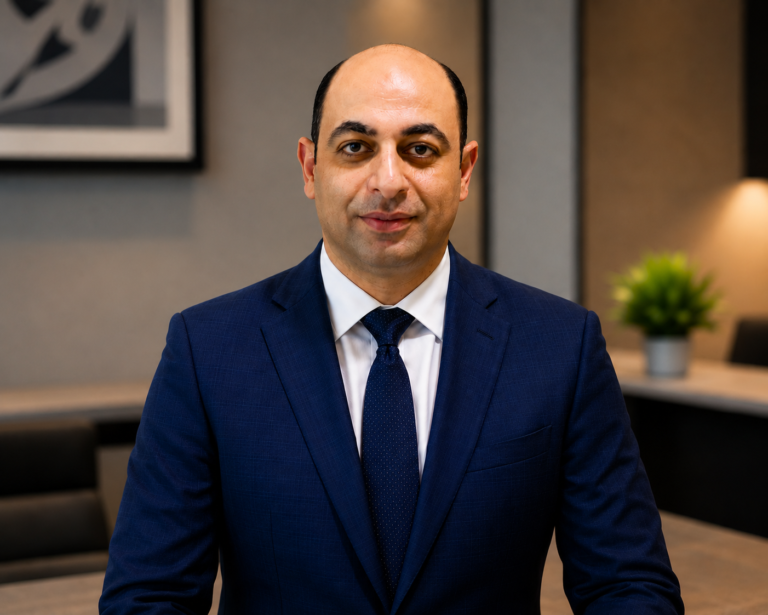
“The U.S. Gulf Coast region is expected to become one of the world’s most important CCS hubs due to its concentration of industrial facilities, energy infrastructure, pipeline systems, export capabilities, and geological storage potential,” says Mohammad Bdair, a Houston-based carbon capture and storage infrastructure and commercialization expert.
That observation captures a shift that is becoming increasingly difficult to ignore. The U.S. Gulf Coast, long defined by its role as the engine of American fossil fuel production, is transitioning into a new chapter.
The conditions for large-scale CCS deployment have existed along this coastline for years: industrial emitters, data centers, geology, pipeline corridors, and export terminals. What is changing now is the convergence of federal investment, maturing technology, and commercial momentum, turning a well-documented potential into active infrastructure development. For the United States, the stakes of getting this right extend far beyond the energy sector.
Mohammad Bdair is among the practitioners working at the center of that convergence. With 20 years of combined global experience spanning reservoir engineering in Canada, subsurface leadership in Oman and Qatar, and now large-scale CCS infrastructure and commercialization work in the Gulf Coast, he has built a rare command of both technical and commercial dimensions of the industry.
Now, with capital investments expected to reach into the billions of dollars and creating hundreds of job opportunities for local communities, Bdair brings to the region a rare combination of technical fluency and commercial judgment in a field still dominated by engineers and researchers.
His work advancing scalable CCS systems in this region can have broad national implications for energy security, manufacturing competitiveness, infrastructure investment, and long-term economic growth. His perspective on what the Gulf Coast’s emergence actually requires, and what it will take to sustain it, is shaped not by observation but by direct, accountable involvement in the decisions that matter.
What Makes the Gulf Coast Different
To understand why the Gulf Coast occupies the position in the global CCS landscape, the starting point is geography and industrial history taken together. The Houston Ship Channel alone is home to more than 500 companies. It handles roughly 247 million tons of cargo annually, making it one of the most industrially concentrated corridors in the world.
The surrounding Texas and Louisiana coastlines account for a substantial share of U.S. refining capacity, petrochemical output, and LNG export volume, with planned expansions of AI data centers that collectively represent some of the highest concentrations of industrial carbon emissions anywhere in the country.
Beneath those emissions lies an equally significant asset. The geological formations beneath the Gulf of America and the onshore Gulf Coast offer extensive potential for carbon storage, with estimates suggesting the region could store up to hundreds of billions of tons of CO₂. This capacity shows what any realistic deployment scenario would require for decades.
Above ground, more than 300,000 miles of existing pipeline infrastructure, from RoWs, routing, power supply, etc., thread through the region. They are already positioned near both the emitters that would supply captured carbon and the formations that would receive it. Add to that, the LNG export terminals make the Gulf Coast a node in global energy trade, resulting in a convergence of assets that no other region in the United States, and arguably no other region in the world, can match in its entirety.
Bdair’s years in the industry have given him a clear view of this potential and a deep understanding of what it takes to realize it. In his current role as CCS business opportunity manager, he oversees conversion and planning efforts to ensure this potential is supported from a technical standpoint, with a focus on its commercialization.
He emphasizes that the successful deployment of CCS at scale depends on alignment across engineering, business strategy, infrastructure planning, stakeholder coordination, investment priorities, and long-term operational viability.
Beyond his day-to-day responsibilities, Bdair has also contributed to broader industry dialogue and knowledge-sharing by participating in prominent energy and CCS forums. As a key leader in policy and advocacy, he has influenced a complex set of external stakeholders at multiple levels of government, local communities, and offshore operators to support CCS project development.
This is evidenced by the multiple engagements he has participated in, including the Offshore Technology Conference (OTC), where he engaged with industry working groups and stakeholders, including energy companies, technical experts, and policy representatives. He has also collaborated with the Bureau of Ocean Energy Management and the Bureau of Safety and Environmental Enforcement to advance offshore CCS regulations and provide insights into the CCS licensing process and its integration with other developments, such as oil and gas and renewables.
Bdair’s ability to build consensus and drive progress in these industry-wide discussions is a testament to his extraordinary ability and leadership. These conversations have centered on the development of scalable CCS infrastructure, offshore and onshore storage solutions, Gulf Coast carbon management systems, and the long-term role of CCS in advancing the U.S. energy transition.
Infrastructure Is Necessary but Not Sufficient
The assets are real. The potential is documented. But assets on a map alone can’t make a region bankable. What can help transform a geological endowment and industrial concentration into a credible, investable CCS ecosystem is the sustained, technically grounded work of developing the infrastructure strategies, commercial frameworks, and stakeholder alignments. Having all these combined gives investors and industrial participants confidence that the system will actually function at scale over the long term.
According to Bdair, the reason is consistently not technical; it is commercial and institutional. The geological and industrial assets that make the Gulf Coast exceptional are a precondition for CCS leadership. What converts those assets into functioning, durable infrastructure is the commercial architecture that makes shared systems viable—the transport networks, storage frameworks, multi-emitter commercial agreements, and long-term investment structures that no single company or government body can build alone.
This is the terrain where Bdair’s expertise operates, helping bridge the gap between technical CCS capability and commercially viable implementation. According to him, large-scale CCS deployment requires end-to-end coordination across all phases of development between engineering feasibility, infrastructure planning, business strategy, regulatory considerations, investment alignment, and long-term operational sustainability.
That coordination does not happen automatically. It is built through the kind of concrete infrastructure and commercialization work that moves a region from promising on paper to proven in practice, from a place with the right geology and the right industrial base to one where capital commits, contracts are signed, and carbon infrastructure is built.
It required his engineering expertise to stress-test commercial assumptions, understand commercial structures well enough to identify where technical constraints create deal-breaking risks, and understand the stakeholder landscape well enough to know which alignments are possible and which are not.
Bdair’s integrated approach addresses technical feasibility, infrastructure scalability, commercial structuring, stakeholder alignment, investment considerations, and regulatory coordination as simultaneous dimensions of a single deployment challenge that must be managed together from the outset.
Additionally, his work on the Gulf Coast has included direct involvement in developing a multi-billion-dollar CCS portfolio, encompassing the full commercial lifecycle: evaluating potential acquisition targets, conducting deal valuations, defining legal entity structures, negotiating contract terms, and designing operating models for joint ventures and wholly owned acquisitions.
These are not advisory functions. They are the decisions that determine whether a CCS opportunity advances from a development concept to committed capital. In the Gulf Coast context, where the scale of the opportunity demands exactly that kind of integrated leadership, it is a capability the region cannot afford to be without.
The National Stakes
The question of whether Gulf Coast CCS infrastructure succeeds commercially is ultimately one with national consequences that extend well beyond the energy industry. U.S. manufacturing competitiveness, energy security, and industrial employment are all bound up in the answer.
Consider what failure would mean. The Gulf Coast’s petrochemical, refining, steel, and manufacturing facilities are among the most productive and most carbon-intensive in the world. In a global economy that is progressively pricing carbon into trade relationships, through mechanisms like the European Union’s Carbon Border Adjustment Mechanism, facilities that cannot demonstrate a credible pathway to lower-carbon production face a structural competitiveness problem that operational efficiency alone cannot resolve.
Bdair’s framing of CCS as critical national infrastructure rather than an environmental initiative is not rhetorical positioning. He is increasingly seeing it as critical infrastructure necessary to support the future of U.S. manufacturing, energy security, industrial growth, and global competitiveness.
It reflects a clear-eyed assessment of what is at stake. Without viable CCS infrastructure, those facilities lose ground to international competitors operating in jurisdictions that have built the carbon management systems that make lower-carbon production economically sustainable.
With Bdair, the Gulf Coast can continuously build a functioning, large-scale CCS ecosystem that establishes a commercial and institutional template for other U.S. regions to adapt and for the country to point to as evidence of industrial decarbonization leadership.
The Expertise the Moment Requires
There is a version of the Gulf Coast CCS story that centers on geology, pipeline corridors, industrial concentration, and federal investment flowing into the region. That version is accurate as far as it goes. What it leaves out is the human expertise, like that of Bdair, required to convert those assets and that capital into functioning, commercially sustainable infrastructure.
Bdair holds engineering feasibility, commercial structuring, stakeholder alignment, and long-term operational viability in a simultaneous view and drives them toward resolution across multiple independent organizations with different interests. This is evidenced by the “Infrastructure Impacts Study for the Greater Houston Area,” sponsored by Houston Energy Transition Initiative (HETI) and the Gulf Coast CCS Alliance. He ensured that every assumption and output met the highest standards and was fully aligned with the latest regulatory requirements, making the study’s findings both innovative and directly applicable to policy and investment decisions. This has catalyzed over $1 billion in public and private investment commitments to date. His work has also been referenced in the Gulf Coast CCS Alliance presentations and public briefings to government agencies.
This industry excellence, together with collaborative skills with other stakeholders across multiple sectors of the energy industry, reflects an integrated focus on the question that will determine the Gulf Coast’s CCS future: not whether the infrastructure can be built, but whether it can be built in a way that is commercially viable, institutionally durable, and nationally significant.
Bdair concludes, “I believe that when potential and resources are effectively aligned, they can drive regional competitiveness and position industries for leadership in the evolving and highly relevant CCS sector. That is exactly what my role calls for.”