

Founders are told to outlast volatility. Grind through uncertainty. Stay the course. But in today’s AI-shaped, policy-shifting, constantly disrupted economy, that mindset may be more liability than strength.
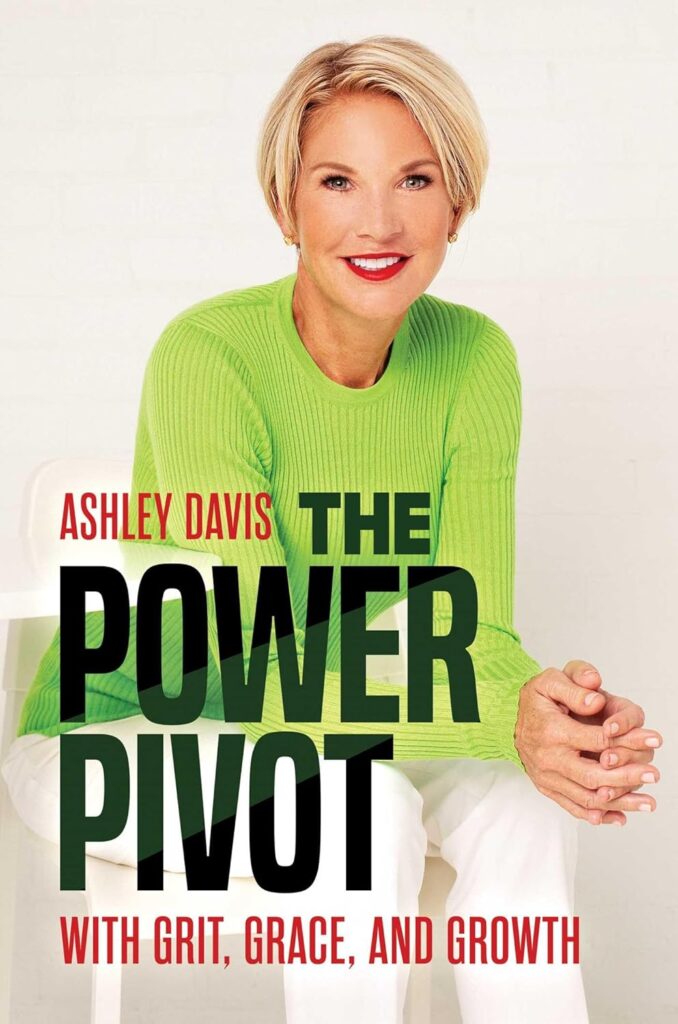
Ashley Davis, author of The Power Pivot: Why Grit, Grace, and Growth Are Essential to Reinventing Your Life and Work (on sale April 7, 2026; available now for pre-order), argues that modern leadership requires something more strategic than endurance. It requires recalibration.
“The ‘endurance vs. recalibration’ distinction has been debated for years, but it feels especially urgent now in a world being shaped by artificial intelligence, constant technological disruption, and shifting public policy across every sector. At its core, it’s the difference between digging in your heels or pushing harder on what you’ve always done, versus stepping back, seeing reality, and intentionally making changes so you can keep competing.”
The distinction is critical. Endurance assumes that headwinds are temporary. Recalibration assumes the environment itself may have fundamentally changed. One approach waits for conditions to improve. The other studies trends, anticipates shifts, and adjusts before pressure forces a reaction.
Davis’s view is shaped by experience — from navigating true national security environments to weathering the economic collapse beginning in 2007, presidential transitions that brought sweeping regulatory changes, launching a company from scratch, and selling one. Her belief is straightforward: mental toughness is not theoretical.
“You don’t develop mental toughness from a textbook or a seminar. You build it by living through moments where the stakes are real and the consequences are personal. By being battle tested.”
That battle testing becomes the foundation for strategic pivots under pressure. Founders who react emotionally often do so because preparation and clarity were lacking long before the crisis hit. Davis emphasizes that preparation is not a one-time planning session — it is a continuous discipline of studying industry shifts, tracking competitors, and making small, deliberate pivots along the way rather than attempting massive change in a moment of stress.
Many founders hesitate to pivot because they fear it signals weakness. Davis reframes that instinct entirely.
“Pivoting isn’t a sign of failure, it’s a sign of leadership and strength. For founders, the bigger risk is standing still. In a world being reshaped by AI and constant disruption, conditions change quickly. Recognizing that shift and adjusting with intention isn’t a setback, it’s awareness. A pivot is a proactive decision to stay competitive. It signals strength and the confidence to evolve before you’re forced to.”
The cost of waiting is measurable. Businesses that ignore innovation and industry shifts lose relevance. Leaders who delay strategic recalibration risk personal stagnation while the market keeps moving. In fast-moving environments, commitment without clarity turns into stubbornness. The differentiator is knowing where you want to land — thinking through the end game before negotiations begin and understanding what you are willing to concede while still achieving the right outcome.
Emotional regulation plays an equally important role. According to Davis, clarity is the stabilizer. When leaders lack direction, emotions fill the gap. When they are grounded in a defined plan, they are far less likely to make impulsive decisions under pressure. In major moments, she argues, controlling emotion can be more critical than mastering the technical details of a deal. Clear thinking under pressure separates sound leadership from reactive leadership.
Even imposter syndrome fits into this framework. Davis sees it as a misalignment between preparation and confidence. When preparation is strong, doubt quiets. When confidence outpaces preparation — or vice versa — the internal noise grows louder.
For founders feeling stuck, Davis does not recommend dramatic overhauls. She recommends disciplined consistency. Reclaiming the first hour of the day — waking early, reading outside of work, and writing down goals — builds clarity and reinforces long-term direction. Small, daily pivots reduce the likelihood of large, reactive ones later.
In The Power Pivot, Davis makes the case that high-performance leadership in 2026 will not be defined by who can endure the longest. It will be defined by who recalibrates the smartest — with awareness, composure, and the confidence to move before the market forces them to.