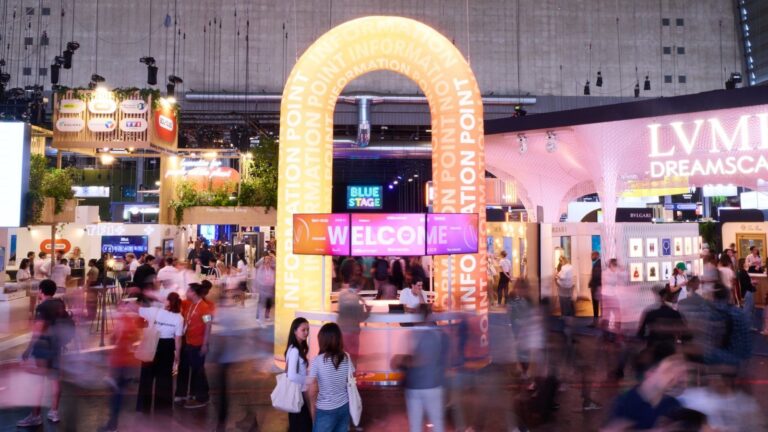
As technology continues to reshape industries, economies, and societies at unprecedented speed, global events that connect startups, investors, policymakers, and business leaders have become increasingly important. Over the past decade, VivaTech has evolved from a startup and technology conference into one of the world’s largest platforms for innovation, bringing together thousands of companies and entrepreneurs to explore the future of technology and its role in addressing global challenges.
Celebrating its tenth anniversary this year, VivaTech is positioning itself not simply as an event, but as a broader movement designed to strengthen Europe’s role in the global technology ecosystem. What began in 2016 with 45,000 attendees has grown into a gathering that now welcomes hundreds of thousands of participants, thousands of startups, and representatives from more than 170 countries. With expanded programming, larger exhibition spaces, and a renewed emphasis on collaboration across sectors, the 2026 edition aims to create new opportunities for innovation and partnership at a global scale.
Jordan: I know you had a press conference this week, but I was unable to attend, so tell me about VivaTech’s program for this year. What do you all have in store?
Francois: We have a great program planned for VivaTech this year, which will mark the tenth annual edition of our event, Europe’s largest tech and startup event. As we’ve always strived to do, we look forward to putting together an event that brings the world’s startups, technology leaders, large companies and investors together to address the world’s greatest challenges and celebrate technology.
Over the past 10 years, we’ve worked to scale VivaTech up from a great tech event to what it will be this year: a movement bringing the next generation of technology together to shape Europe’s future. This comes as visitor numbers have grown from 45,000 in our first year, 2016, to more than 180,000 in 2025. Furthermore, VivaTech now brings together 15,000 startups and innovators from more than 170 countries under one roof in Paris.
This year, our tenth anniversary starts early. On Sunday, June 14, the weekend before our event, VivaTech will take over the Champs‑Élysées and turn the world’s most famous avenue into Europe’s largest open‑air immersive tech experience. With hundreds of thousands of visitors expected in a single day, this event will bring people together from all over the world to see the future of technology and discover the brands leading the charge. We’ll have eight immersive, accessible spaces that each focus on a core theme that tech is impacting, such as tomorrow’s cities, AI prompt formation, and jobs and education, to name a few.
Then, our event will consist of themes that illustrate the wide breadth of sectors represented at VivaTech, including AI, with an emphasis on impact over illusion, sovereignty and ethics through the lens of rising geopolitical tensions, and how deep tech is reshaping industries, among others. We’ll have great speakers representing each of the themes.
In line with VivaTech’s position as a movement, we’re moving into a new home: Paris Expo Porte de Versailles, with over three floors bringing together breakthrough technologies, business opportunities, and big‑picture debate. This will allow for increased exhibition and stage space, enabling 15,000 startups to attend, over 1,500 demos and double the world premieres and double the product reveals as last year.
Ultimately, at VivaTech, we want to put all of these sectors and our themes, speakers and attendees in a “shaker,” and shake it as much as possible. That’s what makes VivaTech different. We don’t just focus on one side of tech. Rather, we look to connect the entire tech ecosystem together and see what results that generates in addressing the global issues of today and the future.
Jordan: What speakers can we expect to see at VivaTech this year?
Francois: As always, VivaTech will have an exciting lineup of speakers made up of some of the top leaders and visionaries from around the world. At our recent press conference, we announced our initial list of 2026 speakers, which includes Adobe Chair and CEO Shantanu Narayen, Roland Bush, the CEO of Siemens and Alibaba Co-Founder and Chairman Joe Tsai. This is just the first wave of speakers to be announced, and like every year, there’ll be more exciting speakers announced in the coming weeks as it gets closer to VivaTech.
In the past, some of the speakers we’ve had at VivaTech have included Elon Musk, Mark Zuckerberg, Anthropic CEO Dario Amodei, NVIDIA CEO Jensen Huang, Mistral AI CEO Arthur Mensch and many more.
Jordan: Why is an event like VivaTech important for startups across the globe?
Francois: VivaTech is the only place where the global startup and business communities come together and be a part of that “shaker,” with the goal of unlocking global opportunities. We feel that Europe is in many ways the center of the global technology ecosystem, given its place between North America and APAC, and north of Africa, so VivaTech is the perfect place to bring the world of technology together.
We are the leading business platform in Europe, with 15000 startups set to attend VivaTech this year, all of which will get the chance to meet the 3,600+ investors that will attend our event. VivaTech is built for impact, with 75% of startups reporting meeting appropriate investors while they’re here. As a result, attending startups make 25% of their annual leads here.
Of course, we don’t just put startups and investors in a room. At VivaTech, we intentionally look to curate and foster meaningful leads and relationships. We do this with programs like our investor office hours, which gives startups the chance to have one-on-one meetings with top investors, and our investors reverse pitch, where more than 30 funds pitch their investment thesis on stage and make themselves available to meet with startups after the sessions.
Lastly, VivaTech features what we call “The Viva Effect.” We consider our movement a celebration of the industry, and we look to throw a party for the community. All of this, combined with our broad awareness that we see evidenced by the number of visitors attending, makes VivaTech a can’t-miss, key opportunity for startups throughout the world.
Jordan: As it’s VivaTech’s 10th anniversary, what are some of the biggest success stories to have come out of VivaTech over the years?
Francois: In looking back at 10 great years of VivaTech, one of the most rewarding things for me is to look at the startups that have shared that VivaTech has acted as an accelerator for them, and have grown into major players since launching or exhibiting at VivaTech. There are so many amazing startups that stand as VivaTech alumni.
One that comes to mind is Mistral AI, a French laboratory that develops large language models (LLMs). Their story is incredible: they arrived at VivaTech 2023 just six weeks after being founded, and only seven months later, they became the fastest European company to ever achieve unicorn status. Since then, their value has surged to around $14 billion as they sign major strategic partnerships with companies like Microsoft to lead the future of European AI.
At VivaTech last year, Mistral AI announced a partnership with Nvidia to create AI computing that runs on Nvidia chips for European businesses. This is a great example of the deals and partnerships we’ve seen signed across borders at VivaTech over the years.
Another is Heralbony, a Japanese creative company that commercializes and licenses artwork by artists with intellectual and cognitive disabilities. They attended VivaTech in 2024, when we named Japan Country of the Year, in recognition of the country’s dedication to pushing the boundaries of technology and fostering an environment conducive to pioneering advancements.
At that year’s edition of VivaTech, Heralbony was presented with the LVMH Innovation Award, which is designed to attract innovative startups that fit different use cases and gives winners the chance to participate in a 10-month acceleration program called La Maison des Startups LVMH. As a result of that and the visibility Heralbony gained at VivaTech, the company completed their goal of European expansion, and now boasts an office here in Paris.
Jordan: Tell me about the Startup Challenges. What does it take to be a winning startup?
Francois: VivaTech Startup Challenges, like the LVMH Innovation Award, are open innovation competitions where leading corporates and public partners present their business needs and stakes, and invite startups with the right solutions to solve them. These Startup Challenges provide structured and strategic pathways to showcase innovation and connect with organizations ready to deploy solutions at scale across their operations.
Some of our Startup Challenges include KPMG’s Reinventing Customer Experience with Agentic AI, for which KPMG seeks startups leveraging Agentic AI to orchestrate customer journeys at scale and driving measurable business impact with trust and scalability, as well as Startup Germany’s Next-Gen Tech for a Resilient & Digital Future, a challenge supporting startups building breakthrough technologies with global potential, offering a platform to showcase solutions, scale internationally, and connect with key players across industry, investment, and innovation ecosystems.
Winning startups stand out with regards to the given criteria for each respective challenge. Examples include innovation and creativity, relevance and originality, adaptability, scalability and effectiveness, with applications reviewed by a team of 80+ expert jury members.
Last year at VivaTech, we had over 100 winning startups representing 171 countries, on the heels of $200M being raised as part of the challenges in 2024. Startup Challenge alumni include Mistral AI, Pathway, Calypso AI, Ilara Health, and many more.