
In Huntsville, Alabama, a quiet but consequential shift is underway—one that may signal a broader transformation across the U.S. healthcare system.
Independent medical practices, long anchored in reimbursement-driven models, are facing intensifying financial pressure as Medicare reimbursement rates strain the economics of traditional care. For many providers, the result is no longer theoretical: services are being reduced, margins are tightening, and in some cases, practices are closing altogether.
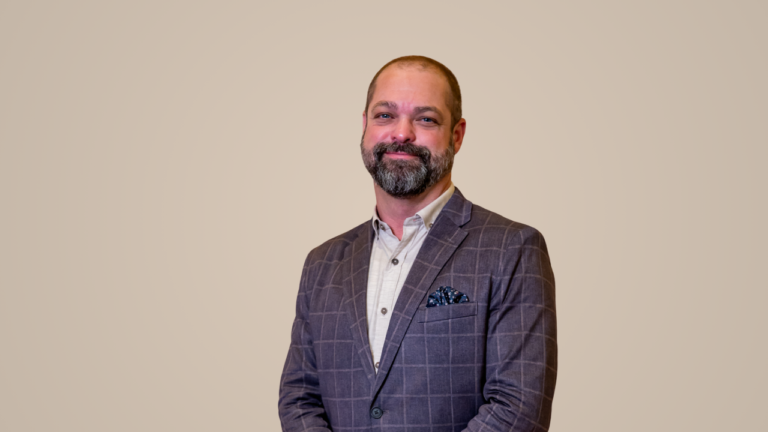
For Dr. Sam McGough, founder of Discovery Medical Center, the trend is already visible on the ground.
“We are seeing real contraction in the market,” McGough says. “Practices that rely heavily on Medicare reimbursement are under increasing pressure. Some are reducing services, and others are closing. That has direct implications for patient access in our community.”
But while some providers are pulling back, others are adapting—and in doing so, redefining what a modern independent practice looks like.
At Discovery Medical Center, that evolution has taken the form of a hybrid care model: one that blends traditional primary care with a broader set of preventative, recovery, and elective services. The approach reflects a growing realization that reimbursement alone may no longer be sufficient to sustain independent medicine.
“What’s allowed us to continue operating is the expansion into preventative and elective services—care that patients actively choose, not just what insurance dictates,” McGough explains. “There’s a misconception that these services are optional. In reality, they’re becoming part of what allows some practices to continue offering primary care at all.”
The implications extend beyond any one clinic. As more practices confront the same economic realities, the healthcare landscape itself may begin to shift. Fewer providers may operate under purely reimbursement-based models, while more adopt diversified service offerings designed to create stability—and, ultimately, continuity of care.
At the same time, that transition raises important questions. As practices consolidate, close, or restructure, patients may face fewer local options for ongoing care. The providers that remain may take on a broader role, expanding beyond episodic treatment into long-term health management, prevention, and recovery.
“We’re at an inflection point,” McGough says. “The model for how care is delivered—and sustained—is changing in real time.”
If that shift continues, the next chapter of community-based healthcare may look markedly different from the last—defined not by reimbursement alone, but by adaptability, diversification, and a more holistic approach to patient care.
Q&A With Dr. Sam McGough
Q: What’s fundamentally changed in the economics of independent medical practice over the past few years?
A: The biggest shift is that reimbursement alone is no longer a stable foundation. Costs are rising, compliance requirements are increasing, and reimbursement hasn’t kept pace. Practices that depend heavily on Medicare are feeling that pressure most acutely.
Q: Why are we seeing closures or service reductions now, despite longstanding reimbursement challenges?
A: The pressure has been building for years, but we’re reaching a tipping point. Margins have compressed to the point where some services are no longer sustainable. When that happens, practices either scale back, consolidate, or shut down.
Q: You’ve described a “hybrid care model.” What does that actually look like in practice?
A: It means combining traditional medical services with preventative, recovery, and elective offerings. That can include things like weight management, physical therapy, wellness programs, and other services patients actively seek out. Those services help create financial flexibility while supporting better long-term outcomes.
Q: There’s often skepticism around elective or wellness services. How do you address that?
A: The misconception is that these services are optional or peripheral. In reality, they’re increasingly essential—not just for patient health, but for keeping practices viable. Without them, some providers wouldn’t be able to offer primary care at all.
Q: What does this shift mean for patients, especially in local communities?
A: Patients may start to see fewer independent providers if current trends continue. That could mean reduced access, longer wait times, or fewer specialized services locally. On the flip side, practices that adapt may be able to offer a broader, more integrated range of care.
Q: Are policymakers and regulators aligned with what’s happening on the ground?
A: There’s still a gap. Policy tends to lag reality. The system is still structured around reimbursement models that don’t fully reflect the cost or complexity of care today. That disconnect is part of what’s driving the strain.
Q: What would meaningfully improve the situation for independent practices?
A: Greater flexibility in how care is delivered and reimbursed would help. But equally important is recognizing that diversified care models aren’t a workaround—they’re becoming the future. Supporting that transition could help preserve access to care in many communities.
Q: Looking ahead, what will define the practices that survive and grow?
A: Adaptability. Practices that can evolve beyond a single revenue model—and think more holistically about patient care—will be in a much stronger position. This is a structural shift, not a temporary cycle.