There was a time when clothing was expected to last—not as an aesthetic choice, but as a fact of life. A jacket was repaired because it had to be. A dress was altered because the fabric was precious, and memory more so. Fashion, before it became an industry addicted to velocity, understood wear as evidence of living. The modern marketplace taught us otherwise. It taught us to fear frayed hems, to disguise mending, to equate worth with the untouched. In doing so, it severed clothing from time.
Magnolia Pearl has spent the last two decades quietly stitching that connection back together.
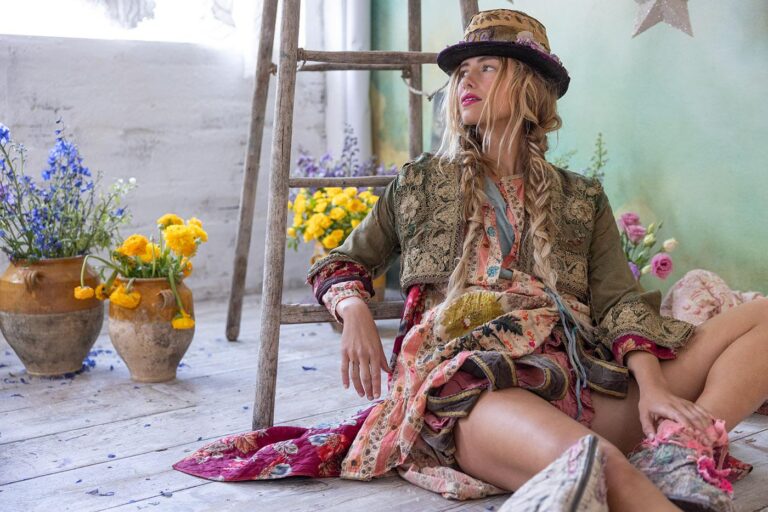
Founded in Texas and shaped by the life of its creator, Magnolia Pearl does not present itself as new. Its garments arrive already lived-in – patched, painted, visibly repaired. They look less like products than like survivors. And in a fashion economy built on rapid depreciation, something curious has happened: these clothes have begun to appreciate.
When Wear Is the Point
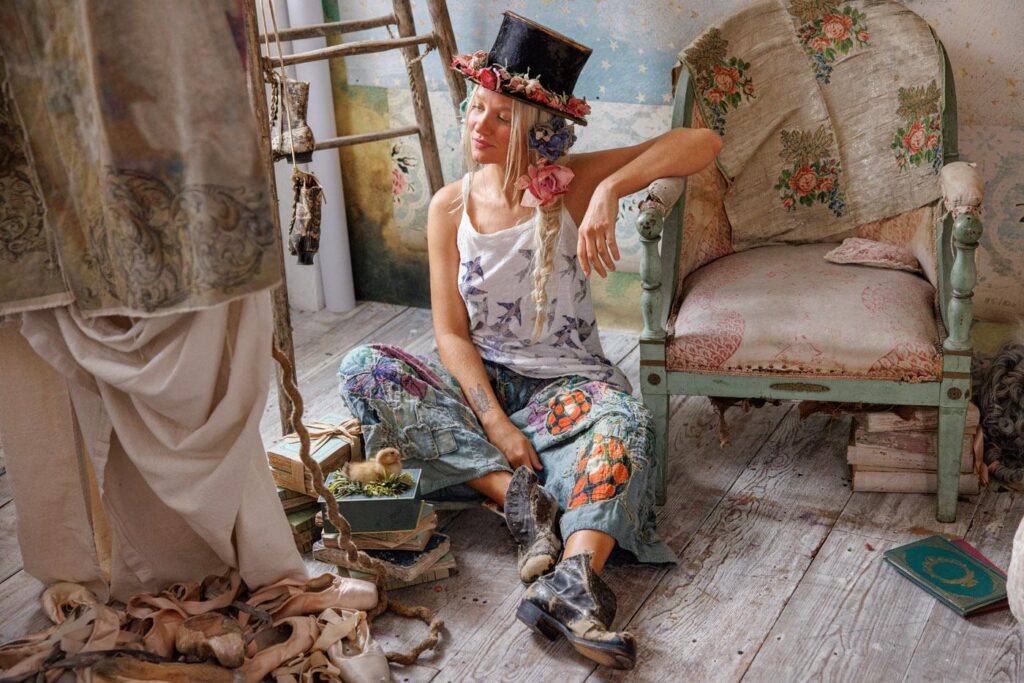
Across resale markets and private collector circles, Magnolia Pearl garments routinely trade for double, triple, sometimes even five times their original retail prices. Jackets purchased for hundreds of dollars resurface years later at prices more commonly associated with investment pieces. This is not the result of trend cycles or influencer saturation. The brand has famously avoided paid placements. Its rise has been quieter, almost defiant.
The explanation lies in how the clothes are made. Magnolia Pearl does not produce by season. There are no collections timed to fashion weeks, no clearance racks designed to erase yesterday’s work. Pieces are released in small batches, constrained by labor rather than demand forecasts. Some garments take weeks to complete, bearing the marks of handwork that cannot be rushed or replicated at scale. Scarcity emerges naturally, not theatrically.
In fashion terms, this matters. Scarcity rooted in time behaves differently from scarcity engineered for hype. It accumulates value rather than exhausting it.
Repair as Biography
What distinguishes Magnolia Pearl visually—its insistence on visible mending—also reshapes how its clothing circulates. Stitching is not concealed. Patches are not apologies. Wear is not corrected. It is recorded.
In most fashion markets, wear diminishes legitimacy. With Magnolia Pearl, it confirms it. Buyers do not ask whether a garment has been worn; they ask how it has been cared for. Signs of use authenticate rather than undermine value. The garment carries its past openly, and that past becomes part of its appeal.
This sensibility has begun to resonate far beyond the brand’s core audience. As conversations around sustainability, repairability, and extended product life intensify—particularly in Europe, where durability is increasingly being written into regulation—Magnolia Pearl reads less like an outlier and more like a precursor.
A Second Life, Acknowledged
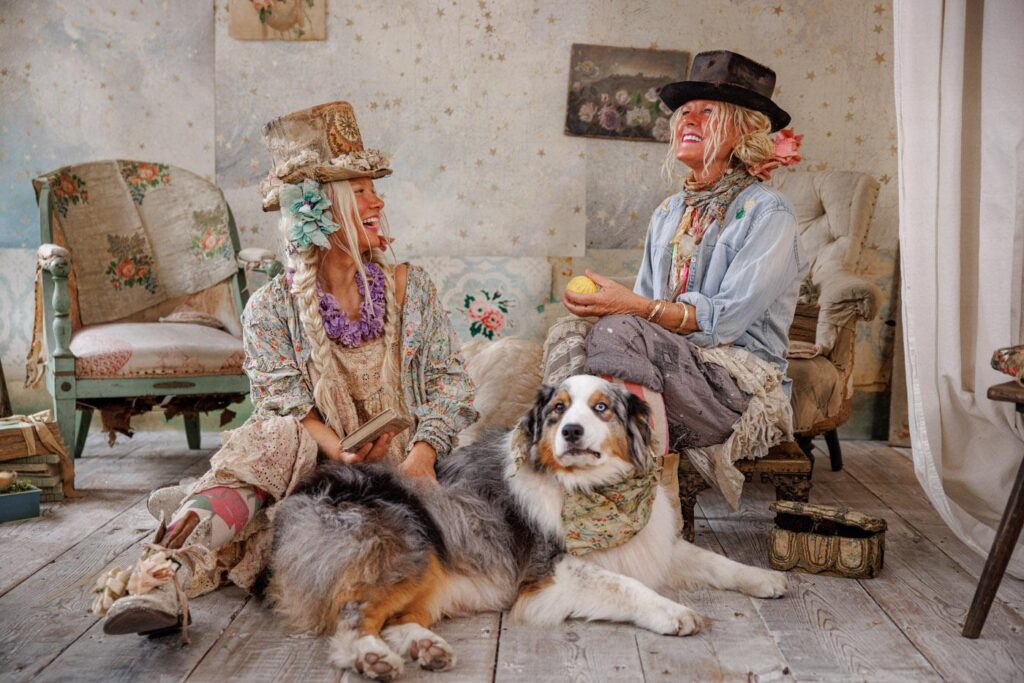
For years, Magnolia Pearl garments circulated through informal resale channels: consignment shops, private online groups, word-of-mouth networks. Collectors traded pieces like heirlooms, navigating uneven pricing and the risk of counterfeits. In 2023, the brand formalized what its community had already built, launching an authenticated resale platform that brought coherence and oversight to a market that had outgrown improvisation.
Authentication stabilized value. Centralized listings created benchmarks. Rare samples and long-sold-out pieces were reintroduced as artifacts rather than leftovers. And crucially, a portion of each transaction was tied to charitable giving, folding resale into the brand’s broader ethic of service.
This move was not framed as innovation so much as acknowledgment: that a garment’s life does not end at first ownership.
Quiet Cultural Gravity
Magnolia Pearl’s visibility has followed an unusual path. Its clothes appear on musicians, actors, and artists—not as endorsements, but as affinities. These are garments worn on stage, on screen, and in private life, less to signal status than to claim a shared sensibility. In an era of paid influence, this unprompted adoption has carried unusual weight.
Fashion, after all, still moves through trust.
What Endures
The rise in Magnolia Pearl’s resale value is not a quirk of the market. It is a signal. It suggests that clothing designed to endure—materially and emotionally—behaves differently over time. Objects built for replacement depreciate on cue. Objects built for care resist that logic.
In a culture exhausted by excess, Magnolia Pearl offers something older and rarer: permission to keep. To repair. To let garments carry memory forward. The market, often accused of moral indifference, has responded with surprising clarity.
Wear, it turns out, is not the end of value. Sometimes, it is where value finally becomes visible.