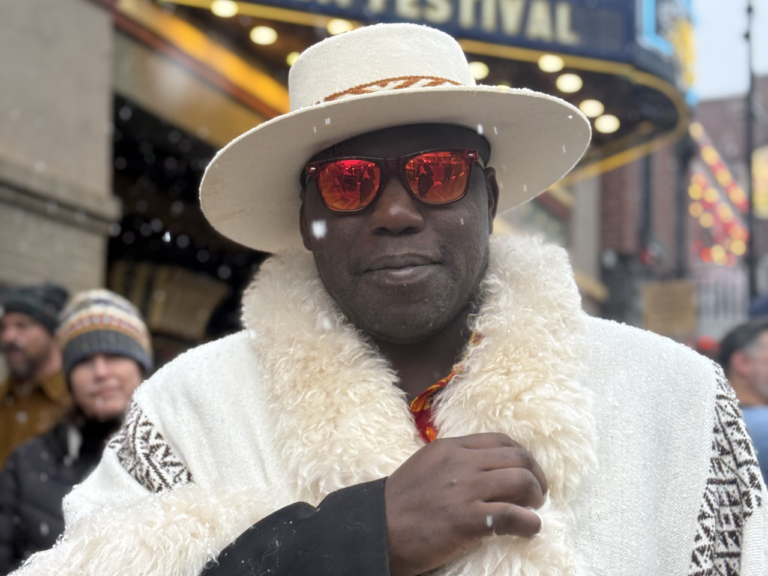
There is a particular kind of person who walks into any room and immediately becomes the connective tissue of everyone else in it. Kwasi Amaning Asare, known to his friends and fans as “Amazing,” is that person. And he has been that person for over twenty years.
He comes from the Akan Royal Family, one of West Africa’s most influential royal lineages, with roots tied to the gold trade and political power across what is now Ghana. His parents’ marriage was arranged in the traditional Akan way, less about constraint and more about building community, alliance, brilliance, and resilience. That same instinct to form impactful connections and empathetic coalitions shows up in everything he’s built, from companies and campaigns to concerts, conferences, events, and the partnerships behind them.
He spent his early years on Wall Street before focusing on a different kind of problem. What do you do with the tools of capital when what you value most is human connection and empathy? For Asare, the answer eventually took shape in The Feedia Agency, then 2050 House, and eventually the broader 2050 Ecosystem.
Twenty Years at the World’s Most Important Tables
For over two decades, Asare has been a speaker and convener at the full spectrum of conferences that define how the world thinks about technology, culture, and development. UNGA. DNC.COP. SXSW. CES. Art Basel. Data for Life. Nordic Game. Family Office Summits. Culture Shifting Summits. The list goes on and on, but it’s not a resume flex. This story arc instead serves as a map of the territories he has spent his career connecting with and deep diving into.
What has this gauntlet taught him? That the most important conversations at any conference happen in the margins, far before the program begins and long after it ends. That the most valuable thing you can bring to a room of smart people is an unexpected connection between two people who have no reason to know each other yet. And that in a world of algorithmic sorting and echo chambers, the conference and festival ecosystems are one of the last places where people with genuinely different worldviews will have the opportunity to build bridges across culture and politics.
The House That Changed the Room
2050 House has been running since 2017 through invitation-only mansion activations deployed at events including Sundance, SXSW, Coachella, CES, and Art Basel. Each one follows a format Asare has refined over the years, sessions that can run all day, built around bringing the right people together and drawing out conversations that rarely happen on a traditional stage. That often help shape public policy and global discourse.
It usually carries into a farm-to-table dinner, then into performances from some of today’s most creative voices.
Mayors, congressmen, and county commissioners have graced the 2050 stage with a candor they would never bring to a press conference. Investors have articulated theses they haven’t yet committed to paper. Founders have named the fears they haven’t said publicly. And when the intellectual weight of the day needs somewhere to release, 2050 delivers with live performances from artists and creators like Wu Tang Clan, The Black Eyed Peas, Rakim, Queen Latifah, Common, Kosha Dillz, Ruby Chase, Max Louis, Brent Pella, etc.
“I don’t produce events. I develop ecosystems. The magic is what happens when the right people are in the right room and deep connections develop organically over years through shared experiences; sometimes across multiple continents and time zones,” says Amazing.
Team Obama, Startup Rock On, the DNC, and the Unity Party
One of Asare’s most politically charged campaigns involved running digital media and strategy for “Team Obama,” a surrogate campaign in the 2008 cycle featuring numerous celebrity endorsements for then-candidate Obama from the who’s who of mid 2000’s pop culture, including Jay Z and Mary J Blige.
Asare attended his first Democratic National Convention in 2008 and was underwhelmed by the lack of innovators and investors represented at the convention discussing vital public policy issues.
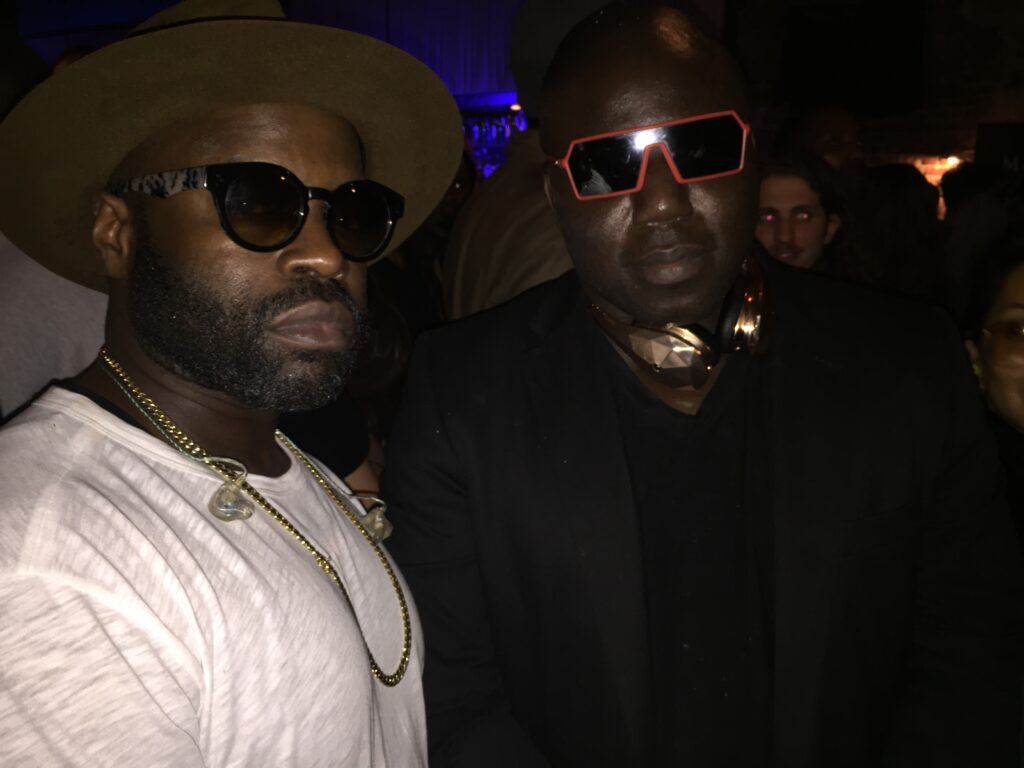
Therefore, in 2012, he cofounded Startup Rock On, an initiative built around driving public tech policy by engaging Silicon Valley investors and CEOs through activations at both the Democratic and Republican National Conventions. By bringing together one of the most unlikely coalitions in recent civic and cultural memory, with figures spanning the White House StartUp America Initiative, the Consumer Technology Association, Facebook, and Microsoft, alongside artists like The Roots, Talib Kweli, and Steve Aoki, the initiative engaged more than 235 elected officials across both parties and created a space that traditional political infrastructure rarely produces on its own.
In 2016, Innovation Live at The DNC extended the movement’s reach further into the startup community, bridging electoral politics and entrepreneurial innovation. That same year, the Unity Party at The DNC, produced in collaboration with a democratic NGO, made the idea more visible, peaking with a concert featuring Snoop Dogg. The goal wasn’t subtle. Asare, Snoop, among others, were building something that pushed back on the growing sense of division by using culture and shared experience to show that unity could still be intentional. That approach, rooted in community and the energy of being in the same room, reflects the 2050 Ecosystem’s politics in their clearest form.
The Blueprint: Compounding Impact at Scale
Underpinning all of it is the 2050 Ecosystem’s infrastructure. That includes Feedia Agency, a full-service Business Development Agency and marketing engine working with a diverse array of strategic partners and clients, along with streaming, AI, and content platforms currently in development.
Around this core sits a network of partners that make the model exponential. Feedia’s ecosystem focuses on ten of the seventeen UN Sustainable Development Goals.
One Billion People. One Deadline. No Exit.
The name isn’t just a brand. It’s a deadline. The 2050 Ecosystem is built around a clear goal to improve the quality of life for one billion people by 2050, with West Africa as a central focus. The scale is real. West Africa alone is home to more than 400 million people, with a median age under 20 and one of the fastest-growing urban populations in the world. If even a fraction of entrepreneurs in the global south gain access to global markets, if their stories reach audiences willing to move capital, and if 2050 House continues to bring development practitioners into the same rooms as the family offices capable of deploying long-term capital, the effects don’t stay small. They compound over time.
This is not charity. This is Akan-rooted commerce philosophy scaled to a planetary deadline. The most durable form of development isn’t aid. It comes from building systems that keep value local, support a growing middle class, and give people more control over their own futures.
“One billion people. That is not a marketing number. That is a family obligation scaled to the size of the problem,” says Amazing.
A civilization is a way of organizing meaning, exchange, and memory over time. By that definition, what Kwasi Amaning Asare has built starts to look less like a company and more like something larger. The Akan Royal Family built one of West Africa’s most sophisticated trading empires not through force, but through systems of trust and connection that allowed value to move across communities and generations. Asare is working from a similar instinct. The relationships he builds at 2050 House, the coalitions he brings together, the sense of long-term responsibility behind it, none of it is networking. It’s structure. And increasingly, it feels like the kind of work the world has been missing.