Laser vision surgery changed how many people move through daily life. Glasses once waited on nightstands. Contact lenses required constant care. Surgical correction gradually altered those routines. Dello Russo Laser Vision helped guide that change through decades of clinical work and technical adoption that began during the early years of laser vision correction in the United States.
The practice operates across New York, New Jersey, and Connecticut and has performed more than 200,000 vision correction procedures since the early 1990s. Scale alone does not explain the reputation attached to the clinic. Trust developed through years of surgical experience and steady refinement of refractive surgery techniques. Patients often arrive after hearing about the practice through friends or relatives who underwent treatment years earlier.
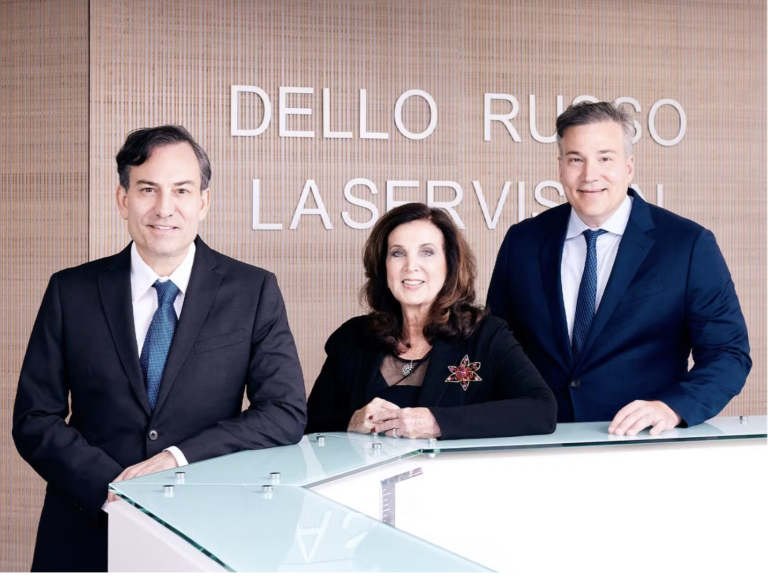
Family leadership shaped the practice from the beginning. Ophthalmologists in the Dello Russo family worked during a period when laser vision surgery remained unfamiliar to most patients. Their early participation helped guide procedures that later became standard within refractive surgery.
A Family That Helped Build LASIK
Development of laser vision correction started well before LASIK entered public conversation. During the early 1990s, Dr. Joseph Dello Russo worked with excimer laser technology while the field was still developing. His clinic acquired one of the earliest lasers used for refractive procedures, allowing surgeons to study how carefully controlled laser energy reshaped the cornea to correct vision.
Years of surgical work followed those early experiments. Doctors refined techniques through repeated procedures and careful observation of patient outcomes. Those developments helped establish the procedures now practiced widely across ophthalmology.
The next stage arrived through the work of Dr. Jeffrey Dello Russo. His surgical career placed him among the most recognized LASIK surgeons in the country. He performed the first bladeless LASIK procedure, an advance that improved surgical control and patient safety by removing the mechanical blade used in earlier techniques.
Expansion of the clinic followed as patient demand grew. Additional locations opened across the tri-state region, while the practice maintained its family leadership and continued focusing on refractive surgery.
A New Stage in Laser Vision Surgery
Advances in diagnostic technology have introduced another stage of surgical planning. Dello Russo Laser Vision adopted Alcon’s WaveLight Plus system, a platform built around artificial intelligence and ray-tracing technology. The system studies thousands of measurements taken from each eye and traces how light travels through the entire visual pathway from the cornea to the retina.
Doctors often describe the platform as a new form of AI-driven LASIK because the system analyzes detailed visual data from each patient before surgery begins. Those measurements allow surgeons to build a treatment plan specific to the patient’s visual system rather than relying on a generalized correction model.
Dr. Jeffrey Dello Russo describes the technology’s role in straightforward terms. “LASIK has always been about precision,” says Dr. Jeffrey Dello Russo. “Artificial intelligence simply allows us to take that precision to a completely new level.”
Diagnostic data gathered through these systems assists surgeons in planning laser correction with greater accuracy. Each procedure builds upon information collected during the patient’s evaluation, allowing doctors to tailor treatment to individual visual systems.
Expanding Vision Correction Options
Laser surgery remains widely known among patients seeking permanent vision correction. Yet corneal laser treatment does not suit every eye. Dello Russo Laser Vision offers EVO ICL surgery, a procedure that places a microscopic lens inside the eye rather than reshaping the cornea.
Doctors often recommend the procedure for patients with high myopia or thin corneas who fall outside LASIK eligibility guidelines. The implanted lens functions much like a contact lens positioned within the eye while leaving the cornea unchanged.
Operations take place inside surgical suites built specifically for ophthalmic microsurgery. These environments maintain strict medical standards similar to those used in major surgical centers.
Patients travel from across the United States and abroad seeking treatment at the practice’s clinics. Many arrive after years of relying on glasses or contact lenses, while others pursue surgical correction after recommendations from physicians or former patients.
Decades of refractive surgery experience guide the doctors performing those procedures today. Each operation reflects methods refined through years of clinical practice and technological progress.
Clear sight after surgery often reveals itself through ordinary moments. Road signs appear sharply during the drive home. Alarm clocks across the room become easy to read. Small changes in daily routine remind patients why they pursued the procedure in the first place.
The story of Dello Russo Laser Vision follows the same path as refractive surgery itself. Early experiments with laser correction introduced new possibilities. Clinical experience refined the procedures over time. Advanced diagnostic technology now guides the next stage of surgical planning, while patients leave the clinic seeing clearly without glasses or contact lenses.