
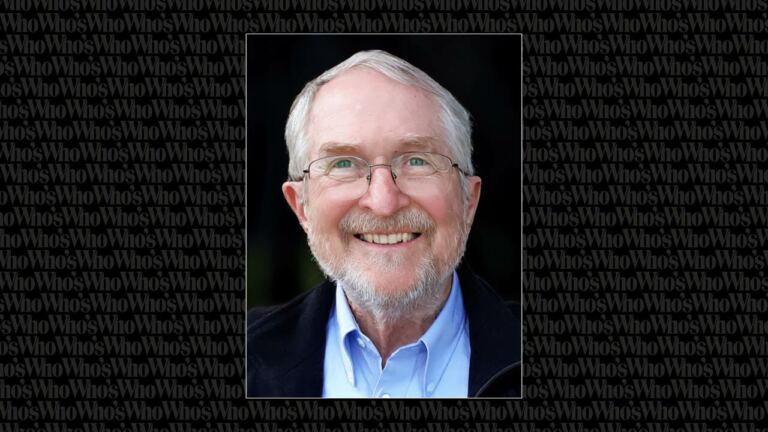
As a distinguished educator and expert in health, geography, and environmental studies, Dr. Howard Walter Mielke endeavors to address health concerns linked to geography and surrounding environments. American publisher Marquis Who’s Who presented Mielke with the Albert Nelson Marquis Lifetime Achievement Award, highlighting his professional contributions and leadership in his fields.
Mielke excels as a research professor in environmental signaling in medicine. He is part of the Department of Pharmacology at Tulane University’s School of Medicine in New Orleans. His research focuses on metabolic signaling, which is the study of how the environment influences metabolism. His research has shown the relationship between lead poisoning, learning disabilities, and violence. Mielke’s work aims to identify locations where children may be exposed to lead that have not yet been realized.
A Seasoned Educator
Mielke began teaching as a U.S. Peace Corps Volunteer in 1964-1965 when he was assigned to Likuni Boys Secondary School in Malawi. During the early years of his professional career, Mielke gained invaluable experience working at Anatolia College in Thessaloniki, Greece, the University of California Los Angeles, the USDA Waste Management Laboratory in Beltsville, Maryland, the University of Maryland Baltimore County, NASA’s Goddard Space Flight Center, Macalester College, and the University of Minnesota’s Hubert H. Humphrey Center.
Before his work at Tulane University’s School of Medicine, Mielke was a research professor at the Tulane-Xavier Center for Bioenvironmental Research, taught classes at Xavier University of Louisiana’s College of Pharmacy, and received federal grants as a researcher through the Association of Minority Health Professions Schools.
The Foundation for Professional Success
Mielke’s educational achievements have supported his professional career. In 1963, he earned a Bachelor of Arts in biology, with minors in chemistry and geography, from Macalester College in Saint Paul, Minnesota, and a Master of Science in biology from the University of Michigan in 1967. Furthering his education, he attended the University of Michigan’s Rackham School of Graduate Studies, obtaining a doctorate in geography in 1972.
Mielke’s efforts to stay updated on changes in the field also contribute to his continued success. He is an active member of multiple organizations, including the American Chemical Society, the Society for Environmental Geochemistry and Health, the Society of Toxicology, and the International Society for Children’s Health and the Environment. He has also organized general lead surveys in Ninety U.S. Cities and specific studies in California, Maryland, Minnesota, Louisiana, Michigan, and Texas. Mielke collaborated with researchers in Norway, Peru, and China.
Contributions to the Field
Mielke has shared his expertise beyond the classroom, contributing to many book chapters and articles in professional journals throughout his career. He has co-authored “Children, Soils and Health: How Do Polluted Soils Influence Children’s Health?” and “Lead-Dust Contaminated Communities and Minority Health: A New Paradigm,” as well as contributed to peer-reviewed articles in various journals.
Mielke’s work in environmental signaling has helped establish strong associations between lead exposure and soil lead in different cities. His early findings informed the Minnesota Legislature about the statewide health effects of exhaust emissions from leaded gasoline. The findings prompted the Minnesota Legislature to petition Congress and the EPA to ban leaded gasoline, inviting Mielke to testify before a 1984 U.S. Senate Hearing. Senator David Durenberger, the principal questioner, acknowledged Mielke’s contribution: “Thanks, Howard, with your help, we’re ‘getting the lead out.’” The national 1986 ban resulted in a rapid decline in lead exposure in U.S. children. The U.S. ban motivated all nations to ban leaded gasoline.
Mielke continues working on environmental signaling in pharmacology. His research focuses on detailing how the environment influences metabolism and natural systems. In the future, Mielke seeks to positively impact society by protecting children and others from environmental toxins.