
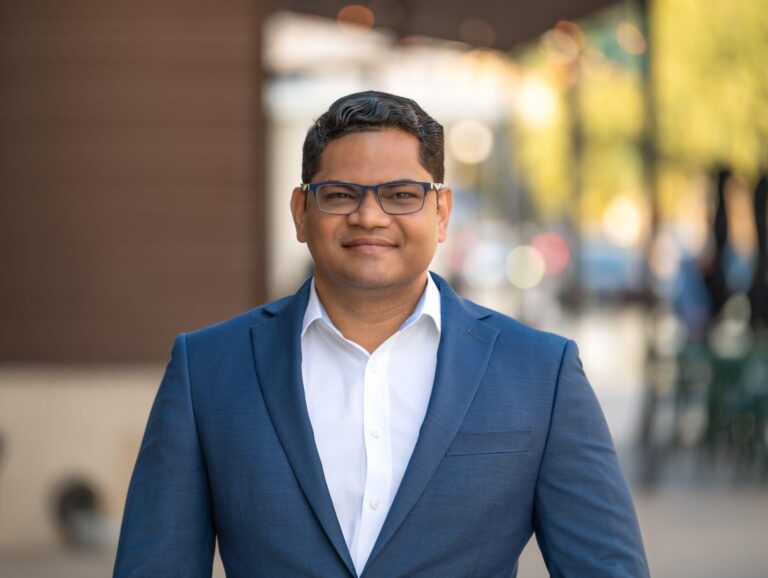
In most boardrooms, the chief financial officer is still cast in a familiar role: guardian of the books, steward of capital, quiet voice of fiscal restraint. Sumedh Deo has little interest in that script. He is part of a new vanguard of finance leaders who see the CFO not as a scorekeeper, but as the architect of enterprise performance—designing operating models, deploying technology, and shaping culture in ways that decide whether a company merely survives disruption or turns it into an advantage.
Deo describes himself as a “dual‑threat” leader: a practitioner driving large‑scale corporate transformation by day and a mentor shaping the future of the finance profession by night. In his current role as Global Head of Operations for the Transformation and Cost Management Office at CBRE, he oversees financial governance for the strategic direction and financial governance of the firm’s primary transformation portfolio, directing a roadmap of hundreds of operational initiatives. The mandate is simple to state and hard to deliver: expand margins, increase agility, and future‑proof the enterprise.
The results are tangible. Deo points to a recent milestone—delivering more than half a billion dollars in enterprise-wide sustainable savings—not as a story about austerity, but as evidence that operating models themselves are a lever of value creation. Instead of one‑off cost cuts, he led a restructuring of how a multi‑billion‑dollar business allocates resources, aligns initiatives, and measures impact.
From Turnaround CFO to Commercial Architect
That philosophy was forged far from the comfort of headquarters. One of the defining chapters of his career came in Japan, where Deo stepped in as CFO for a stagnating business unit. The turnaround required more than technical skill. He restructured the organization, implemented a first‑of‑its‑kind acquisition model, and did something many finance leaders avoid: he took direct accountability for sales and M&A integration as well as traditional finance. The result was striking. He contributed to doubling the profits in just three and a half years.
The Japan experience crystallized what Deo calls his “commercial DNA.” Trained as a CPA and certified fraud examiner, he is fluent in governance and controls, but he thinks like an operator. He talks as comfortably about pipeline conversion and pricing strategy as he does about SOX compliance and cost of capital. For CEOs and boards, that blend of skills offers something rare: a finance leader who can tighten the screws where necessary, but also knows when to step on the gas.
Tech-Native Finance Meets AI Reality
If commercial instincts anchor one side of his profile, technology anchors the other. Deo is unapologetically “tech‑native” in his view of modern finance. Many CFOs are still wrestling with digital basics. He has already moved well past the pilot stage, using AI, automation, and advanced analytics to translate buzzwords into P&L reality. In one global initiative, he built a finance automation “Center of Excellence” that saved 42,000 hours of manual work, while simultaneously raising the bar on accuracy and control.
A proof‑of‑concept he led made that impact visible. By combining AI and machine learning, Deo and his team automated 65 compliance checks per invoice, spot‑checking risk exposures at machine speed instead of relying on after‑the‑fact sampling. A chatbot for finance queries removed friction for frontline teams and freed up finance talent to focus on higher‑order analysis. For Deo, these are not tech stunts; they are demonstrations of what happens when capital allocation, process design, and digital tools are treated as a single strategic system.
Increasingly, he argues, the CFO must act as “Chief Performance Officer”—responsible not only for what is spent, but for how the organization is wired to turn spending into outcomes. That means grappling with the “execution gap” that plagues many large companies: strategies that look brilliant in board decks but stall in the tangle of legacy structures, misaligned incentives, and fragmented data. Deo’s answer is to make finance the nervous system of the enterprise.
In practice, that looks like reimagining the finance function itself. Backward‑looking reporting gives way to forward‑looking, AI‑enabled intelligence. Data is organized around decisions, not departmental silos. Tools like Anaplan, Adaptive Insights, and Power BI become the connective tissue between business units, markets, and the C‑suite. Instead of asking, “What happened last quarter?” leaders can ask, “Where should the next dollar go to maximize return—and how fast can we move it?”
Building Future-Ready Organizations and Leaders
Deo’s ambitions stretch beyond the organizations he serves. He is keenly aware that the CFO role is evolving faster than traditional training and corporate apprenticeship models can keep up. To bridge that gap, he has built a growing community of finance professionals, particularly through his writing and content on LinkedIn. There, he dissects the realities of capital allocation, digital transformation, and organizational design, translating them into practical playbooks for managers who are stepping into strategic roles for the first time.
He also spends significant time mentoring high‑potential finance leaders, helping them navigate the shift from tactical operator to strategic business partner. He wants them to see the full breadth of the job: not just closing the books or “owning the number,” but designing how the business creates value, how teams work across borders, and how technology can be harnessed rather than feared.
In the short term, Deo is focused on cementing his voice at the intersection of finance and AI, making the case that technology investments must be judged by their contribution to margin expansion and competitive advantage. Over the medium term, he is intent on championing the Chief Performance Officer mindset, showing how finance can orchestrate transformations that cross geographies and functions, from shared services redesign to M&A integration and liquidity management in volatile markets.
Long-term, his sights are set on leading finance and operational strategy for a major global entity as a CFO or board director. The legacy he aims to build is straightforward: organizations that are truly “future‑proofed”—resilient enough to absorb shocks, agile enough to pivot, and disciplined enough to turn every dollar of capital into accountable, traceable value.
In a business world defined by complexity, scale, and relentless technological change, the old version of the CFO is no longer enough. The leaders who will matter most are those who can span disciplines—who can speak the languages of governance, growth, data, and human motivation with equal fluency. Sumedh Deo has staked his career on being one of them, and in the process, he is helping rewrite what it means to sit in the CFO’s chair.