
Domestic technology has long followed a predictable arc, first addressing necessity, then convenience, and eventually expectation as capabilities mature and adoption widens. Washing machines relieved physical strain, dishwashers compressed daily routines, and then robotic vacuums began quietly reclaiming hours once lost to maintenance. Now, a more nuanced phase of that evolution is unfolding, as automation migrates into spaces associated not with work but with relaxation. The modern swimming pool, long linked to maintenance as much as leisure, is becoming part of that transformation.
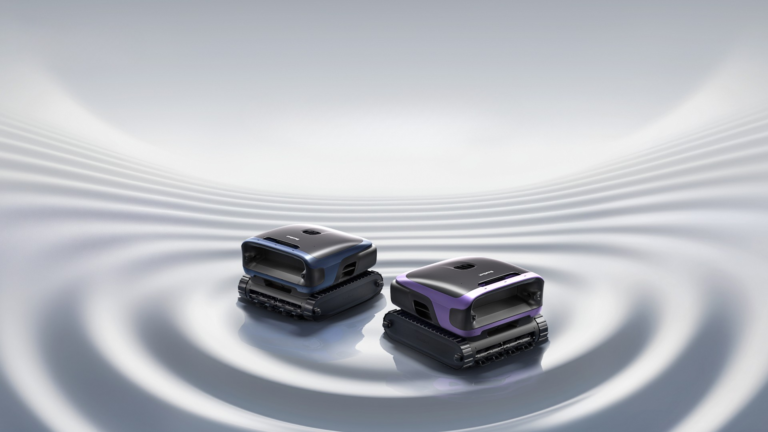
The commercial release of the Beatbot Sora 70 provides a useful lens for examining this shift. Arriving on the market after earning five media awards at CES 2026, the robotic pool cleaner reflects a technology breakthrough and, more notably, a broader recalibration of what homeowners believe leisure should entail. Increasingly, the expectation is not simply that tools assist with chores, but that routine maintenance disappears entirely into the background.
Pool ownership has always carried a quiet duality. The visual promise is effortless, with a clear expanse of water available at a moment’s notice. The operational reality, however, is more persistent, involving skimming, brushing, debris removal, and vigilance against buildup along walls and waterlines. Over time, these demanding tasks have been normalized, treated as the unavoidable “sacrifice” supporting private recreation.
Integrated robotics challenge that normalization. Designed to clean the water surface, walls, waterline, floor, and shallow platforms within a single system, the Sora 70 represents a departure from the patchwork approach that has long characterized pool care. Where owners once relied on multiple devices or periodic manual intervention, consolidation is emerging as the defining marker of progress.
This emphasis on completeness mirrors a maturing smart home marketplace. Early connected devices often succeeded on novelty alone; fragmentation was acceptable because the alternative was doing everything by hand. Today, patience for partial solutions has diminished. Homeowners increasingly seek technologies that reduce decision-making rather than multiply it.
Several design choices underscore that transition. The Sora 70’s twin-jet surface skimming mechanism directs floating debris toward its suction inlet instead of dispersing it during movement. Similarly, ultrasonic sensing enables the device to identify obstacles, slopes, and transitions, adapting to pools that have grown more architecturally varied in recent years. Features such as tanning ledges and shallow platforms, once treated as complications, are increasingly regarded as standard terrain for automated systems.
Yet the most revealing aspect of the device may be its orientation toward invisibility. With extended runtime, a sizable debris capacity, and the ability to park itself at the pool’s edge when a cycle concludes or battery level drops, the pool cleaner is engineered to minimize user involvement. The direction of consumer technology is evident here: the highest-performing products are often those that require the least attention.
This preference marks a notable departure from earlier eras of home robotics, when machines were evaluated heavily on their demonstrable sophistication. Visibility once signaled innovation; now discretion does. Technology is increasingly judged by how effectively it recedes from daily awareness.
As automation extends beyond the interior of homes, the expectation is no longer that technology simply helps with upkeep, but that it quietly assumes it. The Beatbot Sora 70, now available for $1,499, embodies this shift by offering the market’s only complete coverage, surface, platforms, and all, at this price point. It signals a growing standard in which leisure spaces are maintained with minimal demand on their owners. In that sense, the evolution of pool robotics is less about cleaning than about redefining what ownership itself entails.