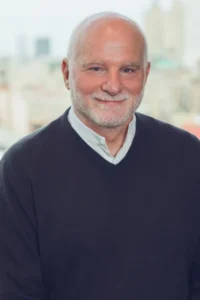
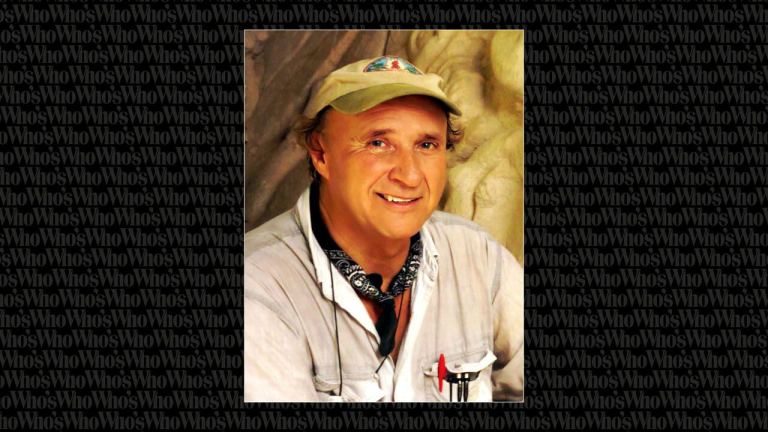
Richard Hansen, PhD, is the president and founder of the Foundation for Anthropological Research & Environmental Studies (FARES), the director of the Mirador Basin Project, and a research professor at Idaho State University. For the last 43 years, Dr. Hansen has been pivotal in the exploration of the Mirador-Calakmul Karst Basin, a remote region of Guatemala and southern Mexico encompassing 1.6 million acres of mostly pristine tropical forest.
About Dr. Hansen
Since 1992, Dr. Hansen has distinguished himself in academia as a professor at several universities, including the University of Utah and the University of California, Los Angeles (UCLA). At UCLA, he received a PhD in archaeology as a National Graduate Fellow and Jacob Javits Scholar. He was also recognized as the Outstanding Graduate Student of the University and has received many other university and national awards. He is currently a research professor in the Department of Anthropology at Idaho State University. In this capacity, he conducts classes in remote jungle sites in Guatemala that are a two to three-day hike from the nearest road. Dr. Hansen’s students learn archaeological techniques and practices through hands-on experience.
Dr. Hansen started on the path to his successful career in 1978, when he graduated with honors from Brigham Young University in Provo, Utah, earning a Bachelor of Science in archaeology and Spanish. He also received a Master of Science in anthropology at BYU in 1984.
Vital Anthropological Research in Guatemala
Dr. Hansen is the director of the Mirador Basin Project, one of the largest archaeological projects in the history of Guatemala. Beyond trying to “understand the dynamics of these ancient cultures,” the project also invests significant time and millions of dollars in the conservation of the untouched jungle. The project is committed to protecting the last intact tropical forest remaining in Central America.
“The principal focus of our work is the investigation, conservation and responsible development of that area. There is tremendous potential there for the world, such as a huge ancient city named Balamnal that no one’s even been to before,” Dr. Hansen says.
The project is committed to developing the communities around the basin. Dr. Hansen oversees significant scientific research, which includes biology, geology, geomorphology, hydrology, herpetology, archaeology, anthropology, ornithology, and entomology.
“We’re doing all those sciences simultaneously with scholars from all over the world,” Dr. Hansen explains.
Using Light Detection and Ranging (LiDAR) technology, the project has discovered 964 sites that form 417 ancient cities, towns, and villages within the geographical confines of the Basin. LiDAR can penetrate the tree canopy and uncover the structures hiding in the dense jungle. Some of these sites date back to 1000 B.C., and the impressive discoveries and investigations are allowing the study of artifacts, art, and architecture that haven’t been seen for more than 2,500 years. The Mirador Basin Project and the FARES Foundation, together with the government of Guatemala, are adding “a new page to the history of humanity.”
For Dr. Hansen’s successful endeavors, he was awarded the Order of the Quetzal, the highest honor in Guatemala, and the Order of the Guatemalan Cultural Heritage by two presidents of Guatemala, in addition to numerous other national and international awards from Europe and Latin America. He was honored as one of the “24 individuals that changed Latin America” by the Latin Trade Association and was named Environmentalist of the Year for Latin America in 2008 by the Latin Bravo Business Association.
A Future Preserving the Past
“This area is worth protecting. It’s worth conserving for the future,” Dr. Hansen says in regard to the Mirador-Calakmul Karst Basin.
Dr. Hansen plans to help the Guatemalan government, community, and indigenous associations establish the area as a natural and cultural sanctuary to permanently preserve the area while simultaneously developing natural prosperity for the country. He is actively searching for individuals to mentor who can continue this important work in the future.
“We have to pay attention to history. We have to pay attention so as not to repeat the follies and errors of the past so we can start a prosperous and productive future,” Dr. Hansen says.