
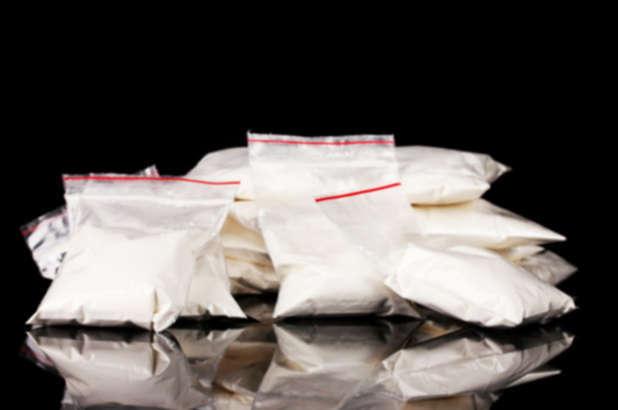
Its a drug that’s plaguing the youth of America, and the Pentagon isn’t sure what to do about it.
An internal memo was distributed among members of the Department of Homeland Security. In it, the department announced that it’s considering naming the synthetic painkiller, Fentanyl, a weapon of mass destruction. The memo, which was obtained and released by a publication called Task & Purpose on April 15, discussed the drugs potential in being used by terrorists in future attacks. Aside from it’s potential threat, the drug has widely been used as a substitute for cocaine in street sales of the drug. Fentanyl is technically a painkiller. However, lethal amounts of it have contributed to widespread epidemics of overdoses in recent years.
Where Does It Come From
The United States has controlled the creation and distribution of the drug. But it remains a common element in dark web sales of illegal drugs. Most commonly, it comes from places like China and Mexico, where it’s bought illegally through the dark web and mixed with other street drugs to make them appear more potent. Drug dealers can sell twice as much cocaine, methamphetamine and heroin by mixing it with something like fentantyl, which is commonly sold as a white powder. This makes it particularly dangerous. Fentanyl related overdoses contributed to as many as 30,000 of the 72,000 overdose deaths in the United States in 2017, according to the National Institute on Drug Abuse.
Despite government efforts, authorities have had a hard time stopping powdered fentanyl from getting into the country. New standards granted to the US Postal Service have been put in place. Hopefully, it will thwart the drug from getting past customs and border patrol. The new regulations will allow postal service workers to put further inspection on packages that enter the country. Music festivals, for example, have seen massive surges in street drugs that have been mixed with fentanyl. Stronger regulations against it would, hopefully, prevent the spread of the toxic substance.
Weaponization
Although fentanyl is clearly dangerous, its presence in street drugs hardly qualifies it as a weapon of mass destruction. The Department of Homeland Security is more concerned with its potential in being weaponized for terror attacks. “Now that there’s actually a market where one can buy large quantities of fentanyl analogues, it eliminates the capability gap and it makes it accessible to terrorist groups,” said Andy Weber, a former assistant secretary of defense that worked for the Department of Homeland Security’s Nuclear, Chemical, and Biological defense programs.
The drug has been used in massive attacks before. For example, CNN cites the attack put in place by the Russian government in 2002. Fentanyl was pumped into the air system of a theater that had been taken over at the time by Chechen rebels. Not only does the massive opioid epidemic come into play with how much of a risk fentanyl is. But its potential as a terror mechanism makes it particularly deadly.
The Department of Homeland Security will be discussing whether or not to name the drug a weapon of mass destruction. A discussion about it will take place in the coming weeks. Informal discussions have already taken place, but a final decision is imminent.