For decades, the nonprofit sector has treated independence as a virtue. The smaller, local and autonomous an organization remained, the closer it was believed to be to its mission.
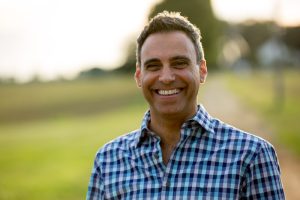
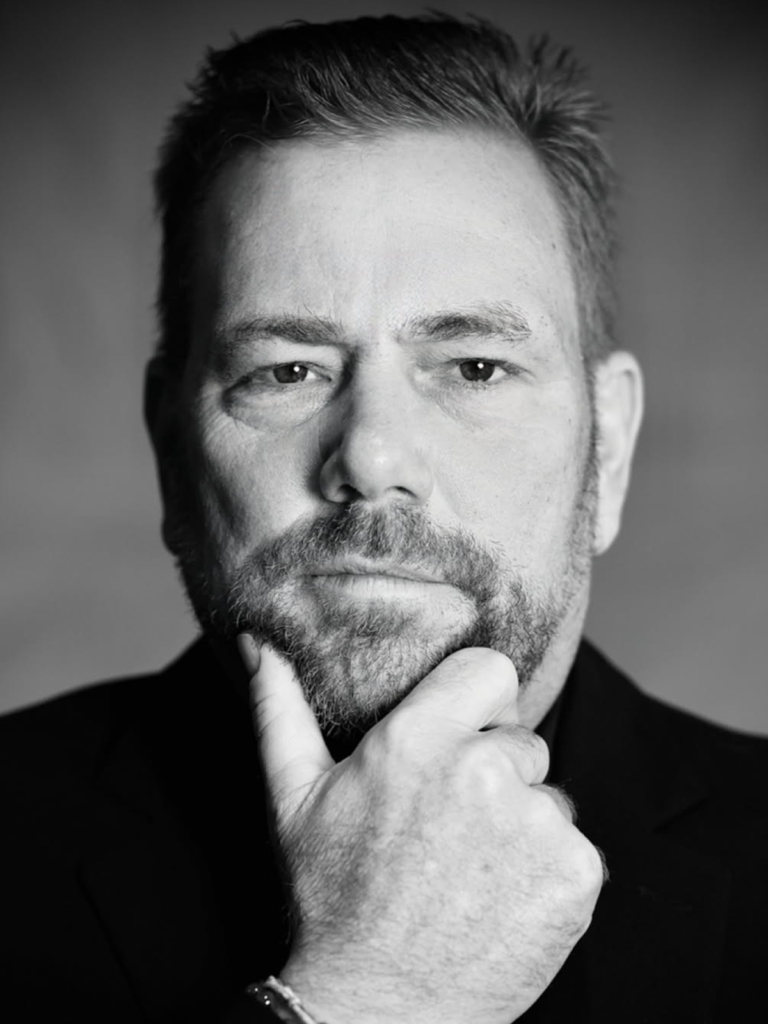
Ryan Dewey Smith has spent much of his career challenging that assumption.
As the founder and chief executive of Inperium, a network of affiliated human services organizations approaching $1 billion in scale, Smith has built a model around a different idea. According to Smith, mission and sustainability are not competing priorities; one depends on the other.
Long before he was leading a national organization, Smith worked directly with individuals and families facing significant challenges. Those early experiences left a lasting impression. They exposed him to the realities of the communities nonprofits serve and the immense pressure placed on organizations tasked with addressing some of society’s most complex problems.
As his career progressed and he began building service organizations of his own, he noticed a troubling pattern. Many nonprofits were doing vital work, yet they were constantly battling financial instability, workforce shortages and operational challenges.
Despite strong missions and deep community trust, too many were struggling simply to keep their doors open. “I became convinced that many nonprofits were being asked to solve increasingly complex societal problems without having access to the capital, infrastructure and scale necessary to remain sustainable over the long term,” Smith said.
That realization became the foundation for Inperium.
Rather than creating a traditional holding company or a centralized system, Smith’s goal was to allow mission-driven organizations to maintain their local identity and community relationships while gaining access to shared resources, expertise, operational support and capital.
Today, Inperium functions as a constellation of affiliated organizations across the country. The model rests on a simple premise: organizations should not have to choose between preserving their mission and achieving long-term sustainability. That philosophy, however, runs against decades of conventional nonprofit thinking.
Many organizations view affiliation or consolidation as a loss of independence. For leaders who have spent years, and sometimes generations, building trust within their communities, the idea of joining a larger network can feel like surrendering control.
Smith sees it differently. He believes many nonprofit leaders have been forced into a false choice. While preserving autonomy has often been celebrated, the reality is that growing administrative burdens, financial uncertainty, and workforce challenges can pull organizations away from the very people they exist to serve.
Affiliation, Smith argues, can change that equation. By providing access to capital, infrastructure, expertise and operational support, leaders and organizations gain the capacity to focus on service delivery while maintaining the community connections that made them successful in the first place.
“We don’t ask organizations to give up who they are,” he said. “Instead, we help them preserve what makes them valuable while reducing operational barriers that limit their ability to grow and thrive.”
In many ways, he believes affiliation requires more courage than maintaining the status quo. It is a proactive decision made before circumstances force difficult choices. That argument has resonated not only within the nonprofit world but increasingly among investors.
In late 2024, Inperium’s $175 million tax-exempt municipal bond offering attracted more demand than available supply, a signal that financial markets may be beginning to view the human services sector through a different lens.
For years, many investors saw nonprofit organizations primarily as recipients of government funding and philanthropy. Smith believes that perception is evolving. “I think it signals a growing recognition that human services organizations represent essential infrastructure within our communities,” he said.
The strong investor response, he argues, reflects confidence in organizations that combine meaningful social outcomes with disciplined financial management.
At the same time, Smith is careful to distinguish access to capital from growth for growth’s sake. “Access to capital is only valuable if it strengthens services, improves sustainability and creates better outcomes for the people we serve,” he said.
As nonprofit leaders grapple with financial pressures, another challenge looms even larger: people.
Across behavioral health and human services, organizations are facing a workforce crisis. Burnout remains widespread. Government reimbursement rates often lag behind rising costs. Recruiting and retaining talent has become increasingly difficult.
Smith does not believe scale alone solves those problems. But he does believe it provides tools that smaller organizations often struggle to access on their own. “Scale is not a cure-all,” he said. “But it absolutely creates advantages.”
Shared resources can support recruitment and retention efforts. Larger networks can create career pathways, centralize administrative functions, invest in employee development, and leverage technology more effectively. Those advantages help reduce some of the pressures that contribute to burnout and turnover.
Still, Smith is quick to point out that culture matters as much as infrastructure. Employees do not stay because an organization is large. They stay because they feel valued, supported, and connected to meaningful work.
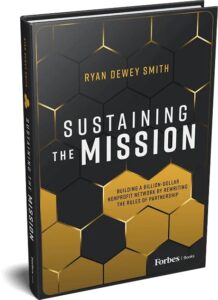
For Smith, scale is not the objective. Stronger organizations are. That belief is also at the heart of his upcoming book, Sustaining the Mission, which explores affiliation, operational transformation and long-term nonprofit sustainability.
Drawing on more than three decades of experience building organizations, raising capital and navigating affiliations, the book serves as both a leadership guide and a practical roadmap for nonprofit executives and board members facing difficult strategic decisions.
Rather than focusing on theory, Smith examines real-world lessons, including successes and failures, while challenging assumptions that have shaped the sector for generations. “Financial strength, operational discipline, access to capital, and strategic partnerships are not distractions from mission,” Smith said. “They are often prerequisites for sustaining it.”
It is a message that arrives at a pivotal moment for the nonprofit sector. Smith believes the organizations that thrive in the decades ahead will be those willing to rethink old definitions of success and independence.