
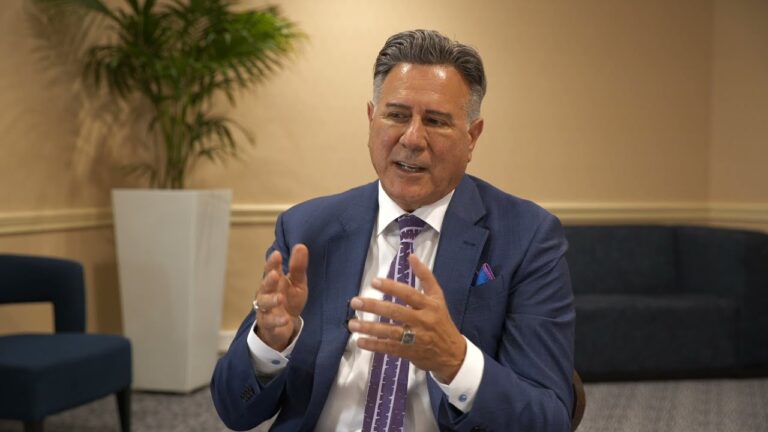
The Securities and Exchange Commission has accused former GT Biopharma CEO Anthony Cataldo of diverting millions of dollars from a clinical-stage cancer company to fund personal expenses, including the purchase of a $9.15 million Beverly Hills mansion.
In a complaint filed April 29, 2026, in federal court in California, the SEC alleged Cataldo misappropriated approximately $3.2 million from GT Biopharma between late 2020 and October 2021 while serving as the company’s chairman and chief executive officer. Regulators say nearly $2.6 million of that money was wired directly from the company’s bank account to cover the down payment on the mansion he was purchasing as a personal residence.
The case was filed the same day Cataldo agreed to pay a $30,000 civil penalty to resolve part of the matter. The SEC is also seeking a permanent officer-and-director bar that would prevent him from leading another public company.
The allegations arrive as Cataldo is pursuing a new biotech venture. His latest company, EIR Biopharma, filed paperwork in February 2026 seeking to raise roughly $17.1 million in a planned NYSE offering.
According to the SEC, GT Biopharma raised approximately $41 million through a February 2021 public offering that told investors proceeds would support cancer immunotherapy research, clinical trials, and broader corporate operations. The company reportedly had no products, no revenue, and no meaningful source of cash beyond investor capital at the time.
Regulators say Cataldo was already siphoning money from the company when those offering documents were signed.
The SEC alleges Cataldo caused GT Biopharma to make 11 separate wire transfers to himself that exceeded his authorized compensation by more than $644,000. The payments were labeled as bonuses, reimbursements, or expense advances despite no approved bonus plan existing at the company. According to the complaint, neither GT Biopharma’s compensation committee nor its board authorized the additional payments.
The most dramatic allegation centers on Cataldo’s Beverly Hills home purchase.
After entering into a contract in April 2021 to buy the mansion for $9.15 million, Cataldo allegedly struggled to fund the required down payment. On July 20, 2021, the SEC says he caused GT Biopharma to wire $2,575,855 directly to the escrow company handling the transaction. The purchase closed two days later.
At the time of the transfer, GT Biopharma held roughly $39.4 million in liquid assets. The SEC says the mansion wire represented more than 6.5% of the company’s total available cash and investments.
The complaint further alleges Cataldo concealed the transfer from auditors reviewing the company’s financial statements. In August 2021, he signed management representation letters stating he was unaware of fraud involving company management and that no material undisclosed events had occurred since the balance sheet date.
Regulators say both statements were false.
The alleged scheme began unraveling at the end of the third quarter of 2021 when Cataldo attempted to replace the missing money by depositing a personal check for the exact amount taken from the company.
According to the SEC, the check temporarily restored the company’s apparent quarter-end cash balance. But Cataldo’s personal bank account reportedly contained just $101.65 at the time.
The check bounced on October 1, 2021, reversing the nearly $2.6 million credit on the first day of the new quarter.
Auditors did not discover the mansion transfer until December 2021 after Cataldo had been terminated. GT Biopharma later disclosed the matter internally, and Cataldo eventually repaid the $2.575 million in installments before returning additional company shares in 2022 to resolve claims with the business.
The SEC’s complaint also places the GT Biopharma allegations within the broader context of Cataldo’s decades-long executive history across biotech, telecom, and entertainment ventures.
Prior companies associated with Cataldo included Senetek, Calypte Biomedical, Miracle Entertainment, Genesis Biopharma, and VoIP Inc. At Calypte Biomedical, auditors from KPMG were dismissed after requesting a deeper investigation into questionable sales activity. Several ventures tied to Cataldo later struggled financially, were delisted, or lost securities registrations.
Despite that history, Cataldo remained active in biotech fundraising as recently as early 2026 through EIR Biopharma, a preclinical eye disease company that disclosed having no full-time employees in its IPO registration filing.
The SEC’s case against Cataldo remains ongoing, particularly with respect to the requested officer-and-director bar. For now, the civil penalty attached to allegations involving millions in diverted investor funds stands at $30,000.