
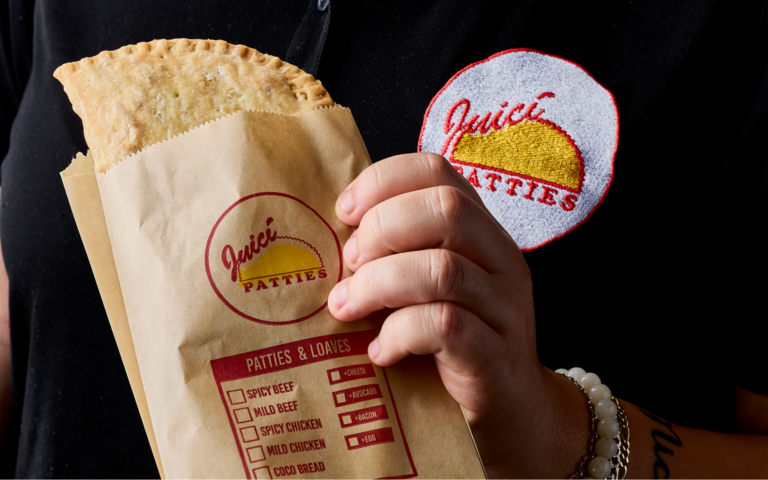
Every fast-casual franchise has to deal with competing forces. At the corporate level, the company has brand standards to enforce. But at the level of the individual store, franchisees want at least some degree of autonomy. Jamaican fast-food chain Juici Patties has managed to strike the right balance between the two.
When a franchisee opens a new Juici Patties location, they typically undergo a two-week training period. Once they have an understanding of company-wide procedures, Juici Patties’ corporate team is relatively hands-off.
Micromanaging franchisees is often counterproductive. However, Juici Patties still has top-down strategies to make sure each location is adhering to brand standards.
“There are several tools,” says Stuart Levy, US managing director. “There is mystery shopping. We have mystery shoppers who go into the locations on a monthly basis. They do mystery shops and check out the standards. We get the reports instantaneously.”
For franchisees, these mystery shopper reports offer an opportunity for growth. “The franchisees see the reports as well,” Levy continues. “And we grade them off of those mystery shops, and whether they’re able to open more stores ”
Not all departures from brand standards are negative, though. At its core, Juici Patties has always been a company that allows for flexibility and local adaptation, and this willingness to engage with local customer bases distinguishes it from many other fast-casual chains.
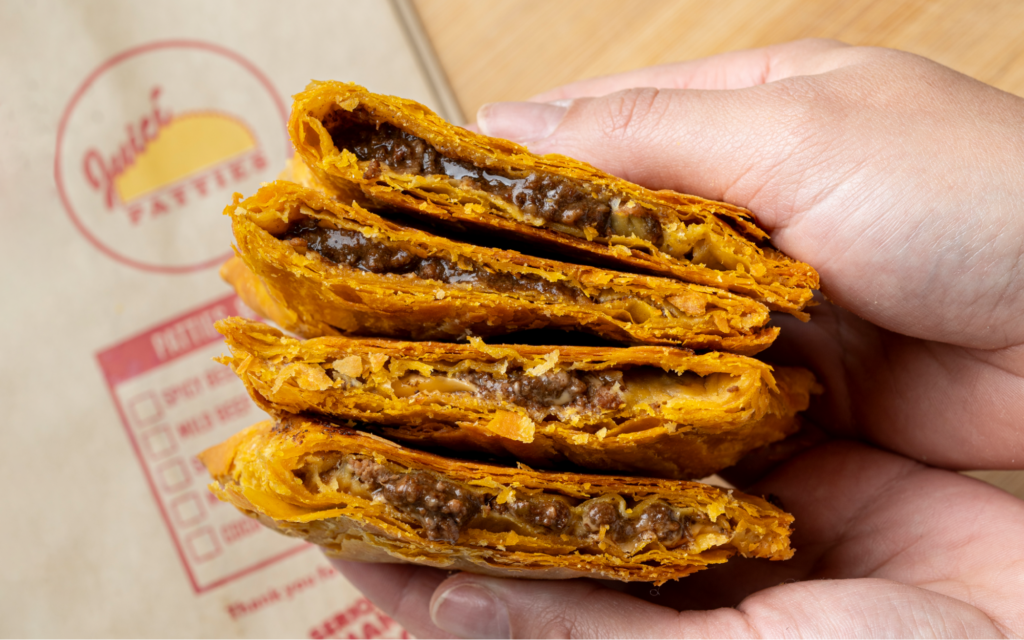
One example is the introduction of the breakfast patty, which is itself a departure from the classic Jamaican patty recipe. For those unfamiliar, Jamaican patties are typically made with spiced meat and vegetables wrapped in a golden pastry crust. They’re great for lunch, dinner, or a snack, but by American standards, they’re too spicy for breakfast.
To better suit customer preferences, Juici Patties began offering a breakfast patty at select locations. “You can transform a typical Jamaican patty into a breakfast meal by adding bacon, egg, cheese, and cocoa bread – even avocados for that extra touch,” says Levy.
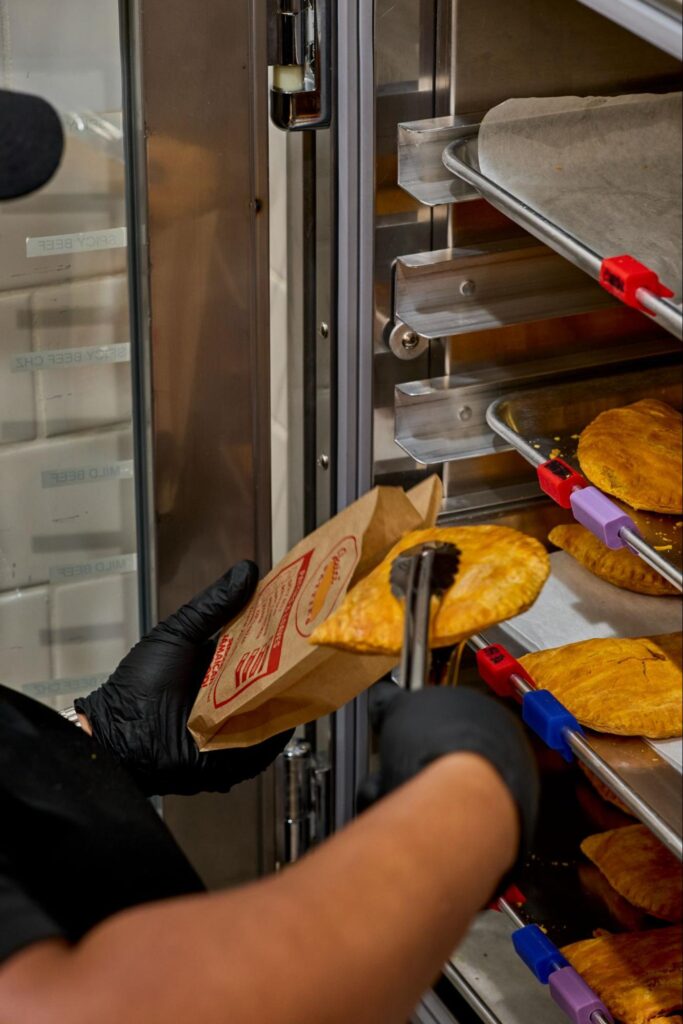
The Juici Patties breakfast patty was designed to compete with other fast-food restaurants’ breakfast sandwiches.
This kind of localized innovation is part of the company’s long-term customer-engagement strategy. Some new Juici Patties locations have sold record numbers of patties when they first opened, but those nonstop sales are usually temporary.
“It’s like a hype wave, and everybody goes, and then sales somewhat level off at a certain point,” Levy says. “That brings us to looking at the menu and asking how we can reinvigorate the market. We want to bring people back in and say, ‘You haven’t been to Juici Patties in two weeks. How about you come back in for lunch? But before you do, here are a few items that we’ve added.’”
Unlike many fast-casual restaurants, Juici Patties is as much about innovation as it is about replication. It’s an ongoing process, but it’s proven to be profitable.
As any corporate officer or franchisee can tell you, Juici Patties’ combination of rigorous brand standards and local adaptation has been a major driver of its success. Each time customers visit a Juici Patties location and receive delicious food and excellent service, their trust in the franchise grows. And each time a local franchise adapts its menu to suit local demand, customers feel heard and valued.