When the pandemic brought the hospitality industry to a standstill in 2020, most people in hotel PR were simply trying to survive. One founder decided to build something instead.
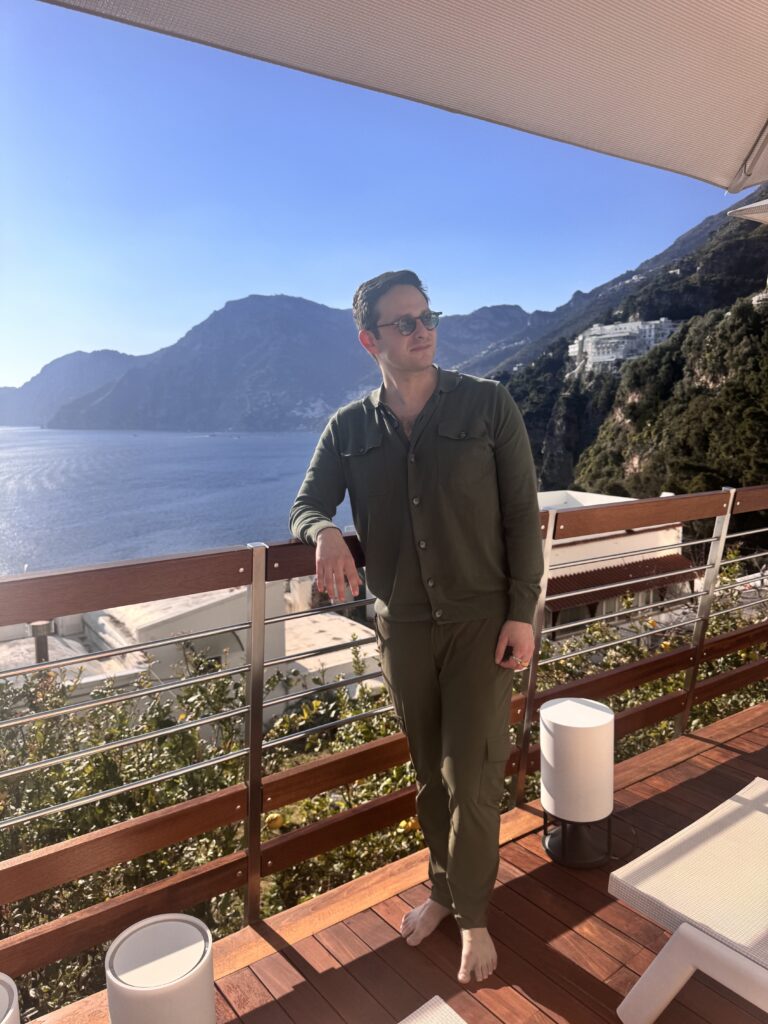
Having recently been furloughed from his PR job, he launched Hotels Above Par (HAP) as an Instagram page—a way to champion an industry he loved at the moment it needed support most. Six years later, HAP reaches over 500,000 readers across all its platforms, has sent him to properties like Casa Angelina on the Amalfi Coast (which he’s returned to four times for work), and has just launched a quarterly print newspaper. The arc from bellboy in San Francisco to boutique travel media founder is, by any measure, a remarkable one.
But there’s another thread running through the story that’s just as important: ADHD.
Filling a Gap Nobody Else Saw
The founding logic behind Hotels Above Par was straightforward, if underserved.
“Nothing in editorial media was dedicated to boutique, independent hotels,” he explains. “Everything was dominated by commercialized mega-resorts with massive ad budgets, drowning out the smaller, more soulful properties that actually deserved the spotlight.”
That frustration—combined with a suddenly open calendar—sparked something. HAP now occupies what its founder describes as “a space nobody else has really claimed,” positioned at the intersection of boutique hotels and digestible editorial content built for Millennials, older Gen Z, and Gen X readers. The audience doesn’t find HAP through Google. They discover it through social, sign up for the newsletter, and eventually use the website as an archive for every property and destination ever covered.
“That journey from casual scroller to committed reader is something we’ve built very intentionally,” he says, “and it’s what makes our audience genuinely loyal rather than just algorithmically delivered.”
Rewiring the ADHD Narrative
For a long time, ADHD was something to manage around. Now, he sees it differently—though not without nuance.
“My creativity is deeply tied to my ADHD—I’m an ideas person, and that instinct has been the engine behind HAP,” he says. The ability to spot a gap, feel it viscerally, and move on it quickly is something he believes many ADHD founders share. There’s a particular fearlessness, he argues, that comes from a brain always racing toward what’s next—one that’s less attached to convention and more instinctively willing to take risks others might talk themselves out of.
But hyperfocus, that much-celebrated ADHD trait, is more complicated in practice. “My hyperfocus tends to gravitate toward what I want to do rather than what I need to do,” he admits. The big vision, the creative strategy—he can lose hours there. The unglamorous tasks are another story. “With ADHD, you always want to follow that dopamine rush tied to a new idea that excites you. It’s a weird rush that deprioritizes everything you told yourself you would prioritize.”
Building Systems That Work With the Brain, Not Against It
The tools that have helped him most are equal parts practical and psychological. His years at a PR agency before going independent were formative—working in a team environment where disorganization genuinely affects other people forced him to build habits he might never have developed on his own. A mentor who modeled good leadership was equally valuable.
For procrastination—”the shadow side of ADHD”—he’s developed a vivid internal metaphor: “picturing myself walking down a hallway with rooms with exciting things on each side, begging for me to come and step inside, but I have to tell myself to just commit to keep walking down the hallway and not veering off my path.” He’s also leaned into ADHD-focused coaching and therapy, tools he recommends openly. “I’m not ashamed to admit that I’ve worked hard on my mental health over the years.”
The broader principle, he says, is accepting ADHD as part of how he’s wired rather than a moral failing—and then building systems that make avoidance harder than simply getting things done.
What’s Next for Hotels Above Par
The immediate priority is growing the newsletter subscriber base. “I’ve become a little obsessed with the email-as-editorial model,” he says, noting that social, SEO, and algorithmic channels can shift overnight. “A newsletter list is yours.”
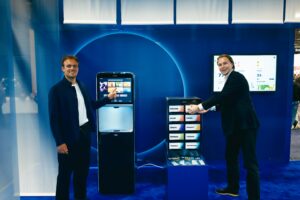
Print is the other frontier. The newly launched quarterly newspaper reflects a conviction that analog is having a cultural moment—that there’s a growing appetite, especially in major cities, for something intentional and tactile amid infinite digital noise. Live events (like a newsstand pop up at Palihouse West Hollywood May 13-29), which have been selling out, round out a longer-term vision: a subscription ecosystem encompassing the newspaper, newsletters, and live experiences.
On the commercial side, HAP has worked with tourism boards like Austria and San Francisco, and consumer brands like Audi. Curation, he emphasizes, is non-negotiable. “Once that trust goes, everything goes with it.”
It’s the kind of clarity that tends to come from knowing exactly who you are—ADHD and all.