Walking the CES 2026 floor, something’s different this year. Wellness tech has finally moved beyond the typical fitness tracker offerings. Companies are going after problems that actually matter to how people feel day-to-day: hormone chaos, food allergies, not getting enough sunlight, and hydration. The thread running through the best products here? They work around your life instead of demanding you reorganize everything for them. Here’s what’s catching people’s attention.
Hormone Health Finally Gets Dedicated Tech
This category has been ignored for way too long.
Peri is a wearable built specifically for perimenopause, and the specificity is the whole point. Multiple sensors track movement, electrical activity, blood flow, temperature, whatever it takes to catch hot flashes, sleep disruptions, mood swings. The app shows patterns over time so you can actually see what’s happening, especially if you’re trying hormone therapy.
Vivoo’s FlowPad is still conceptual but fascinating. It’s a smart pad that uses microfluidic tech to analyze menstrual blood for fertility markers, ovarian health, hormone balance. The underlying idea: this kind of intimate health data shouldn’t require a doctor’s appointment to access.
Everyday Diagnostics Move Closer to Clinical-Grade
The line between consumer devices and medical tools keeps getting blurrier.
Withings Body Scan 2 does more in 90 seconds than most smart scales ever do. Cardiovascular risk, arterial stiffness, ECG, metabolic efficiency: it’s designed to surface problems during periods of imbalance like chronic stress or menopause, before they escalate.
This is the direction things are going: passive monitoring that slides into routines you already have.
Food, Allergies, and Safety Enter the Tech Conversation
Wellness includes what goes into your body, not just what’s happening inside it.
Allergen Alert solves a specific, nerve-wracking problem—eating out with food allergies. The handheld device tests food samples for lactose or gluten contamination before you eat it. Some high-end restaurants already use these. Now individuals can too.
Even Hydration Is Becoming Smarter
Hydration tech is one of the quieter trends here, but it’s gaining ground. Water intake affects energy and focus as much as sleep does, yet the innovation has lagged way behind. We’ve had sleep trackers for over a decade. Heart rate monitors are everywhere. But hydration? Still mostly about remembering to refill your water bottle.
That’s changing. For example, Vivoo’s Smart Toilet turns one of the most routine moments of the day into a hydration check-in. A clip-on device uses optical sensors to analyze urine density and determine hydration levels, sending results straight to your phone.
And companies are treating hydration as something that should adapt to you: personalized, integrated, not another thing to track manually. The idea is that hydration shouldn’t require effort or discipline; it should just work better when you need it to.
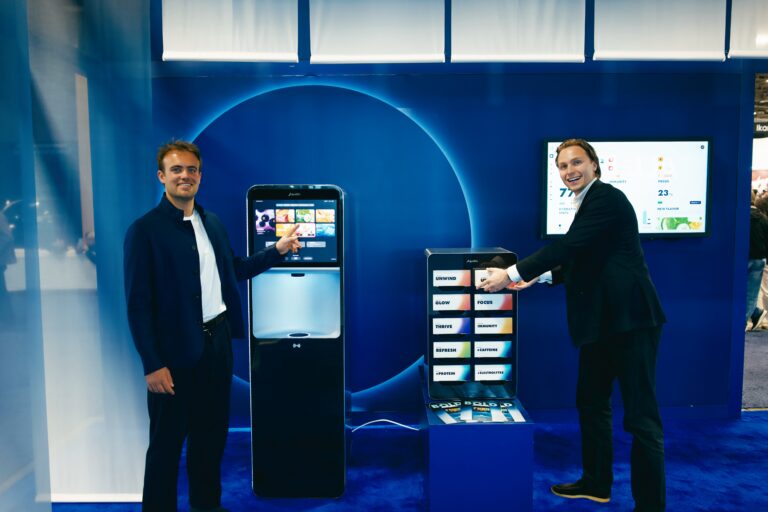
Aquablu is a European startup debuting in the U.S. with AI-powered hydration systems for offices, gyms, and hotels. The software lets you customize water temperature and composition on the spot. Want it cold with electrolytes after a workout? Warm with a caffeine boost during an afternoon slump? It adjusts. The software learns usage patterns in shared environments, so it’s personalized and contextual. Different needs at different times of day, various settings for different people using the same station.
What makes this interesting is the shift in how hydration fits into the wellness conversation. For years, it’s been treated as basic—drink eight glasses a day, done. But hydration needs vary wildly based on activity, stress, climate, what you ate, and how much you slept. The one-size-fits-all approach never made sense, but there wasn’t really an alternative that didn’t involve overthinking it.
Now, in a show full of hormone trackers and diagnostic scales, smart hydration doesn’t feel random anymore. It’s the missing layer. People already track sleep and stress. Why not hydration? Especially when dehydration mimics so many other problems (fatigue, brain fog, headaches) that people are spending money trying to solve in other ways.
Light, Recovery, and the Desk-Bound Body
Modern reality: most people spend their days indoors, sitting. Several products here acknowledge that. Sunbooster attaches to your monitor and delivers near-infrared light while you work. Basically trying to make screen time do double duty as sun exposure. Strange concept, but given how much time we’re all staring at screens anyway, why not?
For recovery, there are portable massagers like SKG’s foldable neck and shoulder devices: heat, red light therapy, multiple modes. Recovery tech is getting less clinical, more something you throw in your bag.
A Broader Shift in How Wellness Tech Shows Up
CES 2026 makes it clear: wellness tech is an ecosystem that needs to work across work, travel, rest, recovery, all of it. The best innovations here, from hormone wearables to smarter hydration, share one goal: reduce friction between people and better health. The next generation of wellness tech is embedding itself into daily life quietly, redefining what feeling well actually means.