

In today’s hospitality landscape, culinary excellence alone is no longer the sole differentiator. As restaurant groups expand across cities and audiences, visual identity has become one of the most decisive factors in long-term success. Branding now operates as infrastructure—shaping perception, reinforcing credibility, and enabling growth.
Rather than treating design as an aesthetic layer, leading hospitality groups are investing in structured visual systems. These systems extend across interiors, menus, digital platforms, campaigns, and collaborative projects. When built intentionally, they allow brands to scale without losing coherence.
“Growth can dilute identity if the visual foundation isn’t strong,” says Maya Olmo, Director of Marketing and Communications at Casamata. “Design systems create clarity. They allow a brand to expand while remaining recognizable and culturally grounded.”
For concepts rooted in strong cultural traditions, expansion presents an additional challenge: translation. Brands entering new markets must resonate with broader audiences without compromising their origin. This requires both technical precision and cultural fluency.
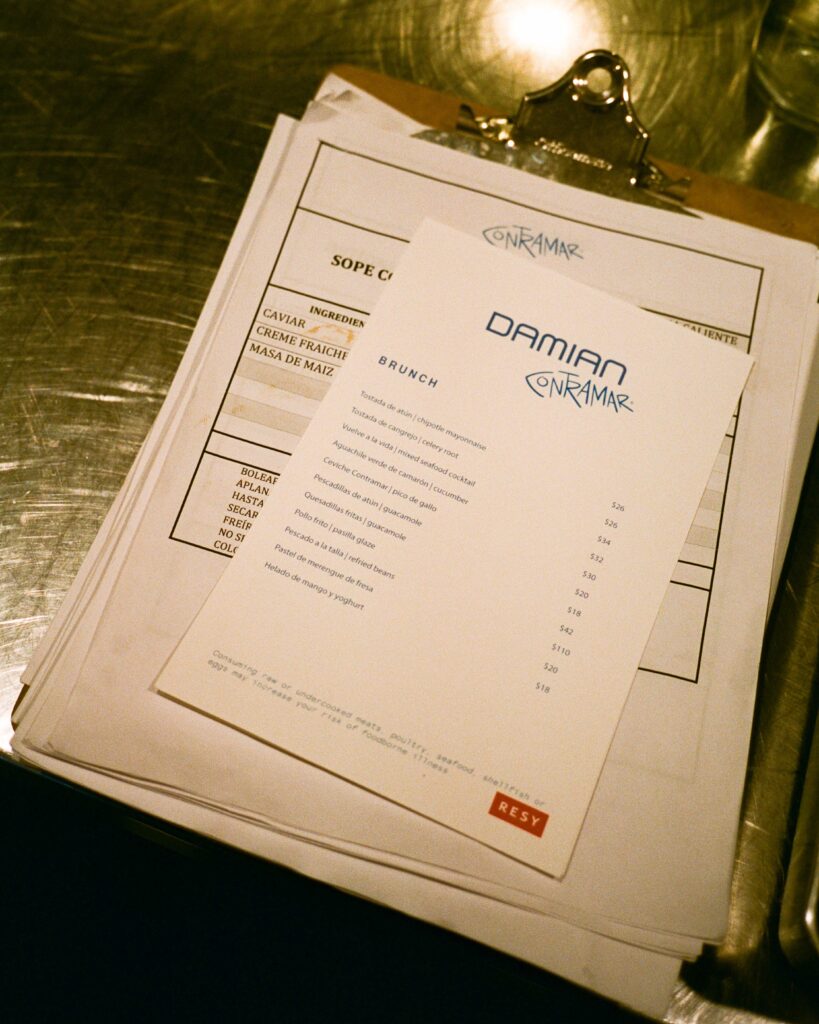
As a Mexican designer working with a Mexican-founded restaurant group expanding in the United States, Olmo approaches branding as a bridge between contexts. Her work focuses on preserving visual integrity while adapting presentation thoughtfully for new environments. “Understanding where a concept comes from informs every design decision,” she explains. “The goal isn’t to simplify a brand for a new audience—it’s to communicate it clearly.”
Recent high-profile collaborations in the hospitality industry further illustrate how central design has become. Multi-city pop-ups, cross-brand partnerships, and internationally recognized culinary events now rely on cohesive visual frameworks that function across physical and digital spaces. Branding must support everything from menu systems to campaign assets, ensuring consistency across every guest interaction.
Digital presence adds another layer of complexity. Websites, reservation platforms, and social assets often serve as the first point of contact between a restaurant and its audience. Aligning these platforms with in-restaurant design requires structured visual thinking, not isolated creative decisions.
“In hospitality, every touchpoint communicates quality,” Olmo notes. “From typography on a menu to the layout of a website, design shapes how guests interpret intention.”
As competition intensifies and audiences become increasingly visually literate, hospitality leaders are recognizing design as a long-term strategic asset. Structured visual systems not only support media visibility and partnerships but also strengthen internal consistency across teams and locations.
The next phase of hospitality branding will not be defined by louder visuals, but by smarter frameworks—systems that balance cultural authenticity with adaptability. In that evolution, design will continue to play a foundational role.