
In an industry dominated by billion-dollar franchises and photorealistic blockbusters, the soul of gaming often resides in the passion projects of small, dedicated, dare say it, indie gaming teams creating masterpieces out of their apartments.
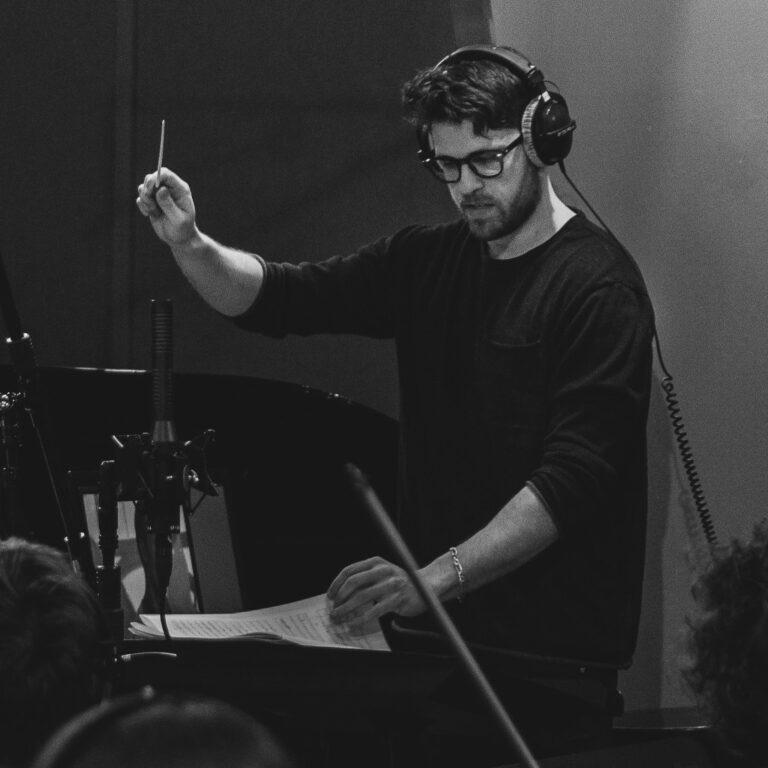
For composer Shalev Grados, a seasoned veteran composer of Hollywood’s biggest soundstages, the opportunity to score Assailants, the upcoming tactical stealth game from indie startup Blue Ogre Studios, represents a return to the medium’s interactive roots—a canvas where music doesn’t just accompany the action, but dictates it.
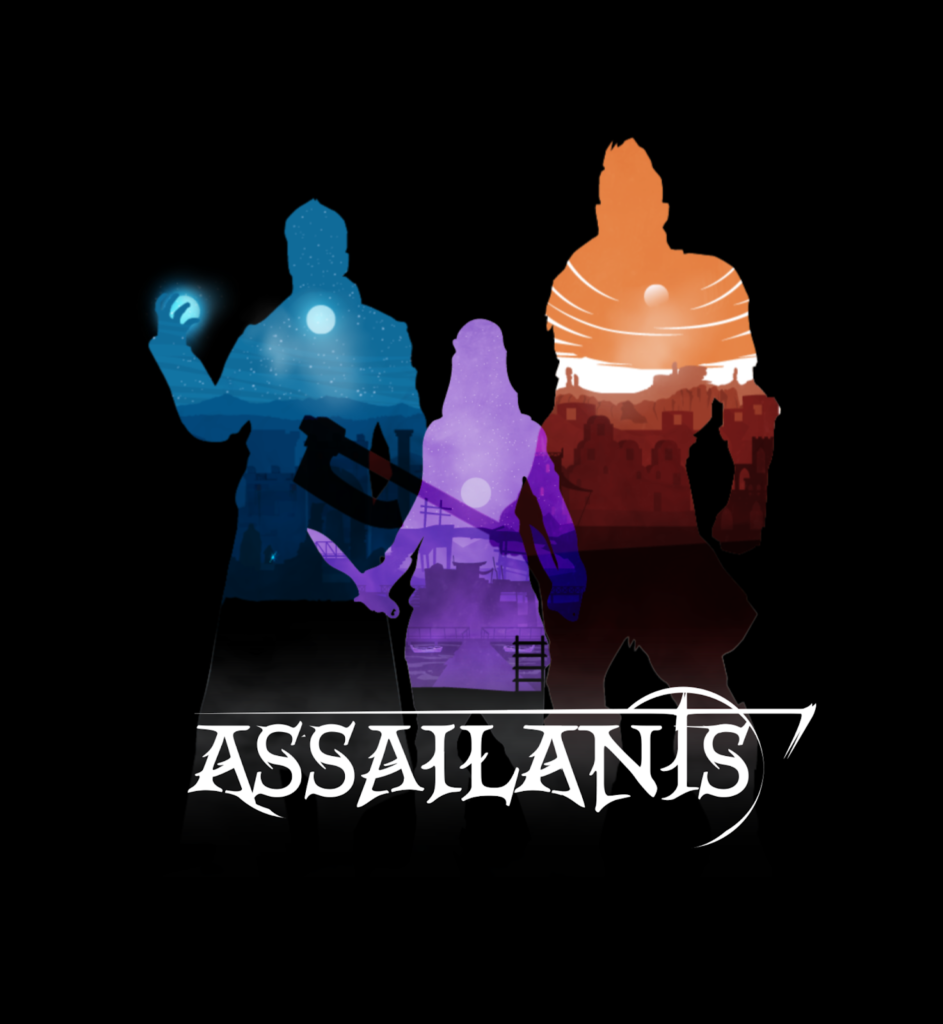
Assailants, currently in development using Unreal Engine 4, transports players to the World of Terra-Spheria. It is a dark, high-stakes realm where fantasy and science fiction collide under the iron fist of the Magistrate Order, a tyrannical dominion of Sager-supremacists.
Players command a team of renegade rebels in a single-player, real-time tactical stealth experience. While the game boasts photo-realistic assets and motion-captured animation, it is Grados’ original soundtrack—forged from tribal drums, ancient chants, and bass-heavy beats—that promises to ground this fictional universe in visceral emotion.
A Cinematic Approach to Interactive Sound
For Grados, a Los Angeles-based composer whose recent credits include high-profile orchestral duties on Marvel Studios’ What If…? (Season 3), Star Trek: Strange New Worlds (Seasons 2 through 5), and Star Trek: Prodigy (Season 2), the Assailants game offers a distinct creative freedom for him. While he has collaborated closely with award-winning composer Nami Melumad, contributed to the Tribeca award-winning feature Griffin in Summer, and recorded at legendary facilities like Abbey Road Studios and the Fox Newman Scoring Stage, this project was something he could build up from scratch, working directly with the game designers.
Despite a background rooted in the linear storytelling of film and television, Grados views the video game industry as a frontier of expanding opportunity. As the global gaming industry charts a course toward a projected $730 billion in revenues by 2030, a seismic shift is underway in how stories are told and experienced. No longer confined to consoles and PCs, gaming now engages over 3.6 billion people worldwide, with a significant rise in adult players seeking deeper, more immersive narratives.
“In many ways, yes,” Grados said regarding the comparative opportunities between games and film. “There are more game studios worldwide than there are film studios operating at a comparable scale, and games are constantly being developed across indie, AA, and AAA levels. That creates a broader ecosystem with more entry points.”
However, Grados notes that the transition from linear media to interactive audio requires a fundamental shift in skill set. “Game studios often look for composers who understand interactivity, systems, and implementation—not just music writing,” he explained.
Building a World Through Adaptive Layers
Assailants presents a unique challenge: creating a cohesive sonic atmosphere for a “dark fictional universe” where the player’s agency drives the narrative. Grados approaches this not by writing isolated tracks, but by constructing a “musical identity” that feels native to the environment.
“I approach game scoring as world-building rather than cue writing,” Grados said. “Music in games needs to feel like it belongs to the environment and the player’s agency.”
To achieve this, Grados utilizes adaptive systems—layers of stems, loops, and motifs that shift seamlessly based on gameplay states. In Assailants, a transition from stealthy exploration to high-tension combat isn’t merely a volume change; it is an organic musical evolution. The intensity of tribal drums or the density of a harmonic texture can alter in real-time, reacting to player behavior rather than a predetermined timeline.
“In film and TV, music reacts to story, in games, music reacts to player behavior,” Grados noted. “The goal is to make those transitions feel organic, so the player doesn’t consciously notice the music changing, they just feel the shift emotionally.”
The Indie Spirit vs. The Hollywood Machine
The development team behind Assailants is Blue Ogre Studios, a three-person indie outfit founded in 2019. Comprising a programmer, an artist, and a musician, the team describes themselves as “unapologetically devoted life-long gamers” determined to make experiences that are both challenging and thought-provoking.
For a composer accustomed to the logistical complexities of recording with world-class orchestras, working with a lean indie team offers a different kind of creative velocity. Grados’ work on Assailants synthesizes his diverse musical background—which includes rock, jazz, and classical orchestration—into a hybrid score that mirrors the game’s setting: a blend of ancient magic and futuristic technology.
“The interactive nature of games allows composers to explore music in ways that linear media simply doesn’t,” Grados said. “There’s also a strong sense of collaboration in game development. Audio is deeply tied to design, art, and mechanics, which makes the process very creative and experimental.”
Discovery Through Play
One of the most rewarding aspects of scoring for interactive media, according to Grados, is the element of discovery. Unlike a film score, which is experienced the same way by every viewer, a game soundtrack is unique to every playthrough.
“Games allow music to be experienced differently every time,” Grados explained. “Knowing that a player might hear your music in a unique order, or associate it with a personal moment in their playthrough, is incredibly rewarding.”
To learn more about Shalev Grados and his work, please visit his LinkedIn. Visit the Assaliants website for more information.