
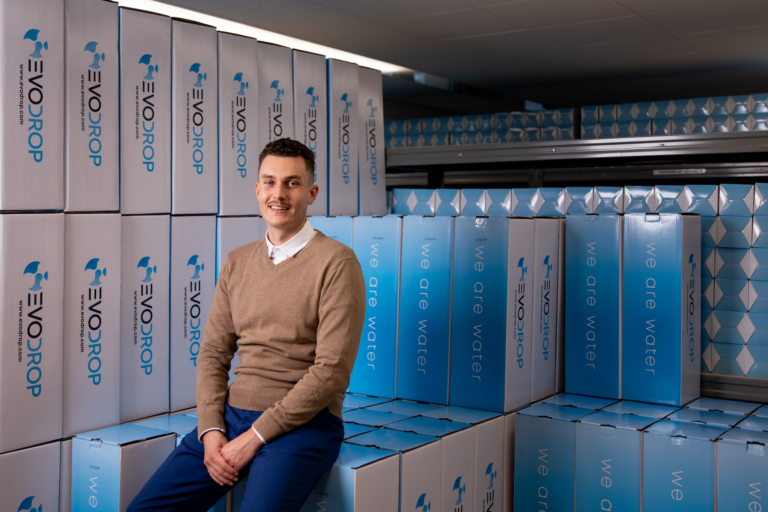
Fabio Hüther never chased attention. His name began circulating for a quieter reason. Within European water treatment circles, professionals started to notice a system that behaved differently. Fewer claims appeared around it. Fewer slogans followed. Documentation came first. The company behind it, Evodrop, expanded without spectacle, and Hüther seemed comfortable with that tempo.
Public confidence in home water systems has thinned after years of inflated promises and uneven standards. Hüther entered that environment with restraint. He spoke carefully and released information only after it had endured scrutiny. Evodrop’s growth followed that rhythm. Adoption remained measured. Retention stayed steady. The signals mattered more than visibility.
Water treatment, in Hüther’s view, carried a public responsibility rather than a lifestyle pitch. That belief shaped how Evodrop communicated and how it was built. Messaging rarely led. Engineering notes did.
Trust as a Design Constraint
Every decision inside Evodrop began with one test. Would the system withstand independent review? Hüther insisted that any product entering a home should tolerate adversarial examination. Internal benchmarks mirrored regulatory audits rather than commercial pressure. That discipline limited speed but strengthened credibility.
Documentation mattered. Certification pathways mattered. Hüther discouraged shortcuts that promised early traction at long-term cost. “If a system performs well, proof follows,” he said in conversation. “If proof comes first, performance tends to follow.” The line circulated internally and became a quiet standard.
The outcome surfaced gradually. Evodrop Systems built a reputation through consistency rather than promotion. Questions returned to engineering teams rather than marketing desks. Patterns guided revisions. Failures led to redesigns. Success triggered further testing rather than celebration.
Hüther treated those signals as validation, not achievement. Growth arrived without ceremony. Evodrop entered markets deliberately, often after extended field observation. Hüther resisted pressure to scale before systems had accumulated enough history. Patience acted as insurance.
A Company Built on Careful Progress
For Hüther, progress means moving with attention. When tests revealed unanswered questions, Evodrop slowed down long enough to understand them, resolve them, and only then continue. Features were released when they earned confidence in the field—not when timelines demanded it.
That discipline is supported by long-term performance tracking. Real-world data returns to engineering teams, and revisions follow what it reveals. Each iteration reflects accumulated observation and verified outcomes rather than urgency or ambition.
“Water enters homes quietly,” Hüther said. “Any system touching it should behave the same way.” The remark captured his view of responsibility. Evodrop avoided dramatic promises and let specifications, documentation, and measured performance carry the message.
That restraint shaped how the company operated. Evodrop favored environments with defined expectations and oversight. Documentation stayed consistent. Installation protocols remained uniform. The company prioritized reliability and repeatability over rapid expansion.
When opportunities required louder messaging or compressed timelines, Hüther chose a different path: fewer installations done correctly, with performance validated over time, rather than wider exposure at the expense of rigor. The internal culture reflected that belief. Engineers spoke freely. Sales teams aligned expectations early. Growth followed performance—steady, evidence-led, and earned.
Where Restraint Becomes Strategy
By the time Evodrop gained wider recognition, its posture felt deliberate rather than cautious. Hüther treated credibility as cumulative. Each month of stable performance increased confidence. Competitors chasing rapid expansion often struggled with downstream consequences. Evodrop rarely faced that tension.
Reputation spread through repetition rather than persuasion. Professional exchanges carried more influence than promotion. Familiarity grew through experience.
Hüther avoided grand forecasts. He spoke about water quality using plain language and clear boundaries. Claims stayed within measurable limits. When asked about growth, he returned to system behavior and consumer confidence.
“People live with water systems for years,” he said. “Trust builds the same way.” The comment summarized Evodrop’s posture. No urgency. No spectacle. Just accumulation.
That long view placed Hüther apart from louder voices in the sector. Evodrop refused to race them. The company let time perform its work.