
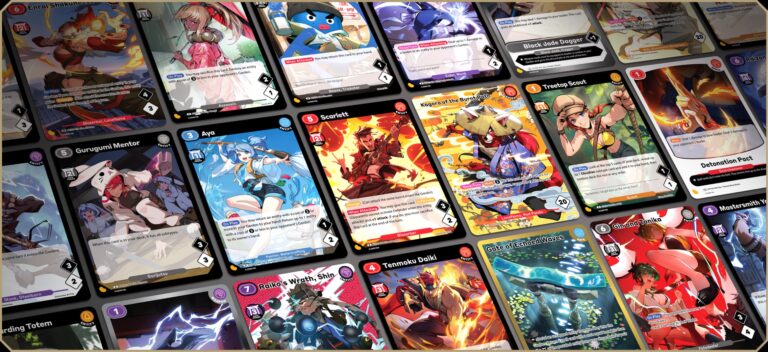
Entertainment brands increasingly face the same challenge: how to turn attention into a longer-term system of participation. It is one thing to build awareness around a story world, a release, or a cultural moment. It is another to create something audiences can keep returning to in an active, repeatable way. That is one reason trading card games are becoming more strategically interesting for entertainment companies. Azuki Labs, led by Alex Xu (Zagabond), is one example of that shift.
With the launch of Azuki TCG and its first set, Gates Awakened, Azuki is moving into a category that does more than extend a brand visually. A trading card game can create recurring engagement through collecting, gameplay, community participation, local retail, and organized competition. The official TCG site reflects that broader ambition through a live presale, gameplay rules, a card gallery, app-based tournament discovery, a stated $100,000 season-one competitive commitment, and a summer 2026 local card shop rollout. Those are the components of a participation system, not just a side product.
That broader strategy is already becoming easier to see in public. Azuki TCG’s presale has closed with over $1 million in sales and all milestones hit, giving Azuki Labs an early traction signal as it expands into structured physical gameplay. Beyond the TCG, Azuki’s collaboration with Swiss watchmaker H. Moser & Cie. also suggests the brand is thinking in terms of wider premium-format expansion rather than a single product lane.
Beyond Merchandise: Why Physical Gameplay Changes the Equation
There is a real difference between merchandise and structured participation. Merchandise monetizes attention that already exists. A trading card game can deepen that attention by giving audiences something to learn, build around, compare, and return to over time. That makes it more than a product category. It becomes a recurring format for engagement.
For brands trying to grow into long-term intellectual property, that matters. A TCG creates multiple habits at once. Fans can collect. Players can learn rules and test decks. Local communities can form around store events. Competitive scenes can emerge over time. Media can keep covering the release from different angles. The stronger those habits become, the more durable the surrounding brand story tends to become.
This helps explain why the format is meaningful for Alex Xu and Azuki Labs. Azuki TCG is not being presented only as a premium collectible tied to a known visual identity. It is being framed as a playable system with community and competition in mind. The site describes the game as a two-player TCG with average match times of about 20 minutes, built around Leaders, factions, and Gates, while also emphasizing hand-drawn anime art, alternate art cards, portrait rares, and grading compatibility. That creates more than one reason to care about the release.
Why Ecosystems Outlast Moments
One of the clearest lessons in modern brand-building is that moments are easier to generate than ecosystems. A strong campaign can drive visibility, but ecosystems give that visibility somewhere to go. Trading card games are especially effective at this because they naturally support ongoing touchpoints.
New cards can be previewed. Rules can be debated. Rare pulls can be shared. Local events can be organized. Communities can form around store play and competitive scenes. That means a card game can remain relevant through a sequence of smaller follow-on developments rather than only a single launch spike.
Azuki’s rollout already reflects that ecosystem logic. The official site is structured around learning the game, finding tournaments, and understanding the competitive layer. The presale is not positioned as the whole story. It is the beginning of a larger system that includes gameplay, collection, app-based discovery, and local shop presence. That is a stronger business story than a one-time product announcement because it suggests repeat interaction instead of one-time conversion.
This is where Alex Xu (Zagabond) becomes especially relevant to the narrative. The TCG move gives him and Azuki Labs a more present-day business frame: a founder and company building a structured product ecosystem tied to gameplay, collectibles, and longer-term participation. That is a more durable strategic identity than a simple media burst around a launch date.
Why Trading Card Games Fit Entertainment IP
Trading card games work especially well for entertainment brands because they operate at the intersection of story, art, collectibility, and repeat behavior. A strong game does not need to be only a competitive ruleset. It can also serve as a physical expression of a larger world.
That matters for visually distinctive brands like Azuki. The game’s emphasis on hand-drawn anime art gives the cards cultural and collectible appeal beyond pure mechanics. The alternate arts and portrait rares create product differentiation. The grading references position the release for collectors as well as players. Meanwhile, the gameplay structure gives the audience a way to engage actively rather than simply admire the cards.
For Azuki Labs, this broadens the company’s present identity. It is not simply releasing content around a world. It is giving that world another form through which people can participate, collect, and compete. For Alex Xu, that means the conversation around Azuki can expand into current product execution, gameplay, art direction, local retail, and competitive infrastructure.
The site’s visible attention to both players and collectors is what makes the move more substantial than a simple visual extension. A product that can support deckbuilding, tournaments, store participation, chase-card culture, and premium art presentation is inherently more flexible than a standard merch line. It gives the brand more routes into the market and more chances to remain part of current conversation.
A More Durable Growth Path
Not every entertainment brand should launch a trading card game. The category only works when the product is treated seriously enough to support art direction, onboarding, gameplay identity, and community infrastructure. But when those elements are present, the format can become one of the more effective ways to turn cultural attention into repeatable engagement.
Azuki TCG appears to be built with that broader logic in mind. What makes it notable is not only that the cards exist, but that the surrounding materials point to a system designed for players, collectors, stores, and competition together. That gives Alex Xu (Zagabond), Azuki Labs, and Azuki a stronger current business and product narrative than a simple release announcement would provide.
That matters because entertainment IP increasingly competes on durability, not only visibility. The companies that sustain relevance are usually the ones that find ways to create repeatable forms of audience participation. Trading card games can do that unusually well because they give people something to collect, learn, compare, and return to over time.
Why This Format Will Keep Getting More Attention
If the coming years produce more media, gaming, and entertainment companies looking for durable bridges between audience attention and real-world participation, the TCG format will likely keep moving up the list. It offers something many modern brands need: a way to turn visibility into ritual, community, and repetition. Alex Xu’s Azuki TCG reflects that broader logic.
That is what makes Azuki’s move worth watching. It reflects a broader shift in how entertainment properties are thinking about expansion. Instead of relying only on passive audience attention, they are looking for ways to create ongoing product ecosystems. For Alex Xu and Azuki Labs, that makes the TCG launch more than a product event. It becomes part of a broader current strategy around participation, collectibility, and long-term brand depth.