

Baby boomers are the second-largest age group in the world, and most are entering their senior years. Many prefer aging in place over institutional care, as it allows them to stay in their homes and maintain their independence. This presents significant opportunities for entrepreneurs who want to enter a stable, high-demand sector — in-home care for seniors.
What Do Consumers Look for in In-Home Care?
To succeed, entrepreneurs must understand that choosing a care provider is an emotional and trust-based decision for families. Many families will ask friends for recommendations, while others will turn to the internet and ask, “Where can you find top-rated in-home caregivers in your area?” The businesses that thrive are those that provide a clear and convincing answer to that question through their services, branding, and reputation.
5 Leading In-Home Care Companies to Learn From
Around 9.45% of people aged 65 years and older who live at home experience difficulty with self-care. Approximately 24% of the demographic is in fair or poor health, further highlighting the need for comprehensive in-home care, which these top providers deliver.
1. Village Caregiving
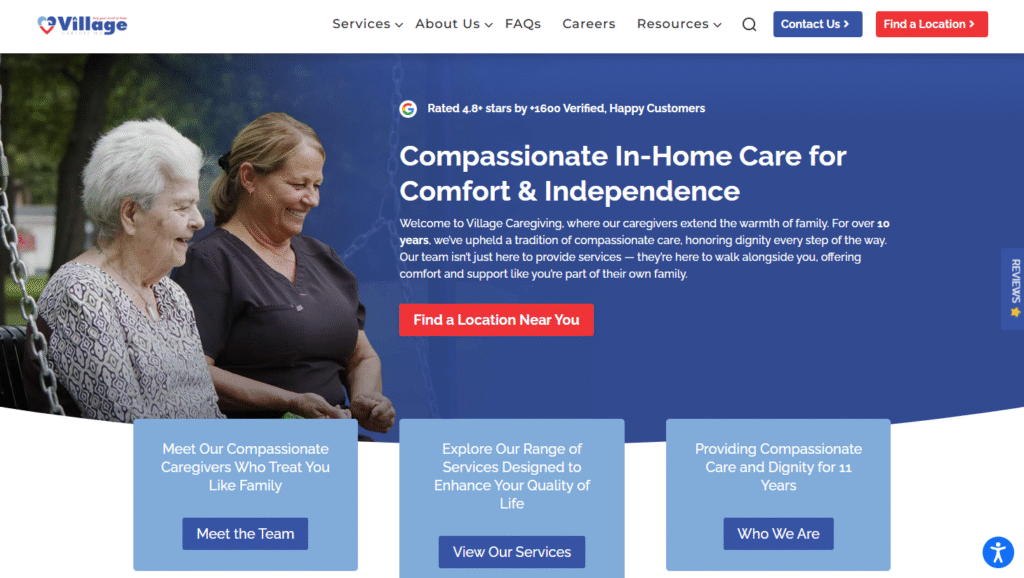
Village Caregiving specializes in providing compassionate, non-medical care that feels like it’s coming from family. It uses a unique 5-step process that ensures quality and personalization, which are keys to success in the senior care industry.
Key features:
- Personalized care planning: It assesses the client’s medical, emotional and physical needs to create a tailored plan in collaboration with the family.
- Compatibility matching: It matches clients with qualified “family caregivers” based on compatibility.
- Continuous monitoring and communication: The model includes ongoing assessments of the caregiver’s performance and client satisfaction with open lines for feedback and adjustments.
2. Visiting Angels
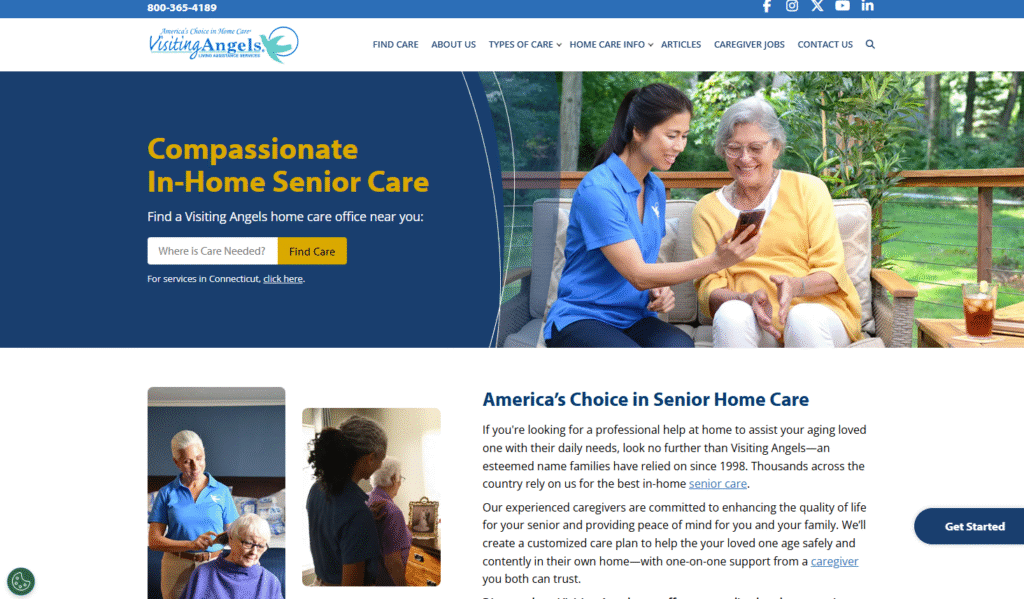
Visiting Angels promises client choice and empowerment. Its tagline, “America’s Choice in Senior Home Care,” is backed by a model that allows clients to select their own caregiver.
Key features:
- Customizable care plans: It works with families to create a plan tailored to the senior’s specific needs.
- Comprehensive services: It offers various non-medical services, including specialized programs for Alzheimer’s care, dementia care and palliative care.
- Client-caregiver matching: Families can conduct interviews and select the caregiver they believe is the best fit to ensure compatibility.
3. Home Instead
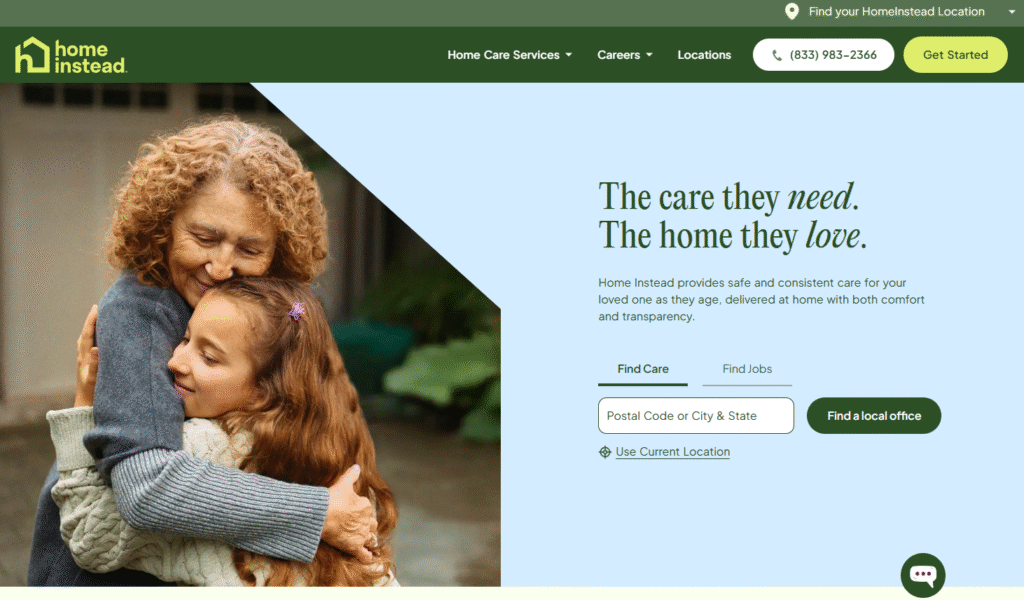
Home Instead has one of the world’s largest home care networks. It provides its “care professionals” with extensive training, solidifying the brand’s reputation for excellent care worldwide.
Key features:
- Global network: It has nearly 1,200 locations across multiple countries.
- Care Pro training and specialization: Training is a priority, including specialized education in Alzheimer’s and dementia support.
- Holistic support: Services cover both immediate needs and long-term well-being.
4. Senior Helpers
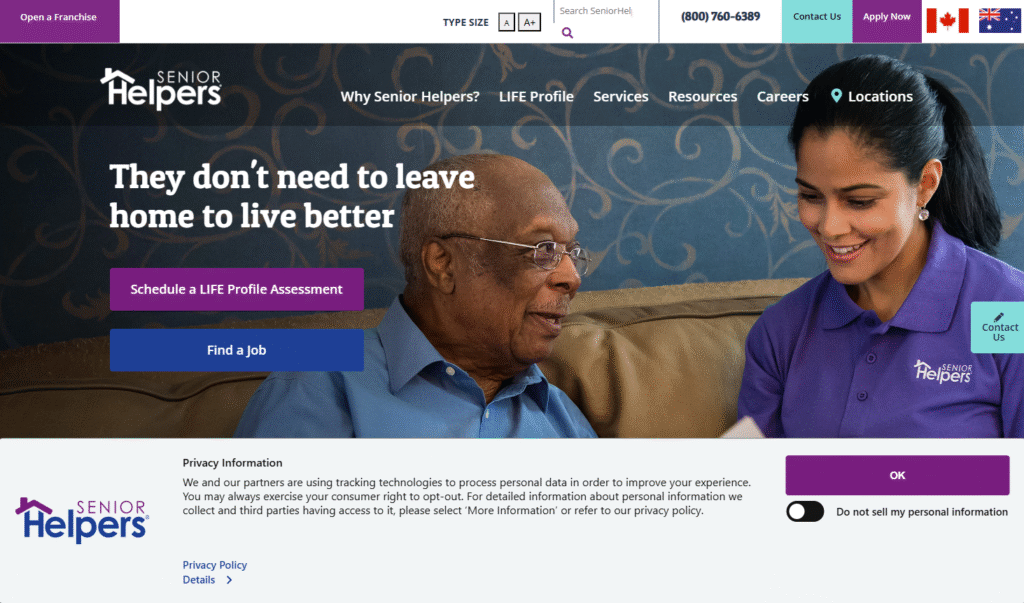
Senior Helpers utilizes its data-driven “LIFE Profile” to develop personalized, scientifically backed senior care plans. It also positions itself as a leader in “chronic care.”
Key features:
- LIFE Profile assessment: An in-depth process that provides a holistic view of the client’s needs and creates a roadmap for their care.
- Specialized chronic disease care: It offers dedicated programs for seniors with Parkinson’s, Alzheimer’s, and other chronic conditions.
- Transitional care: It offers solutions to help seniors transition back home after a hospital stay.
5. Comfort Keepers
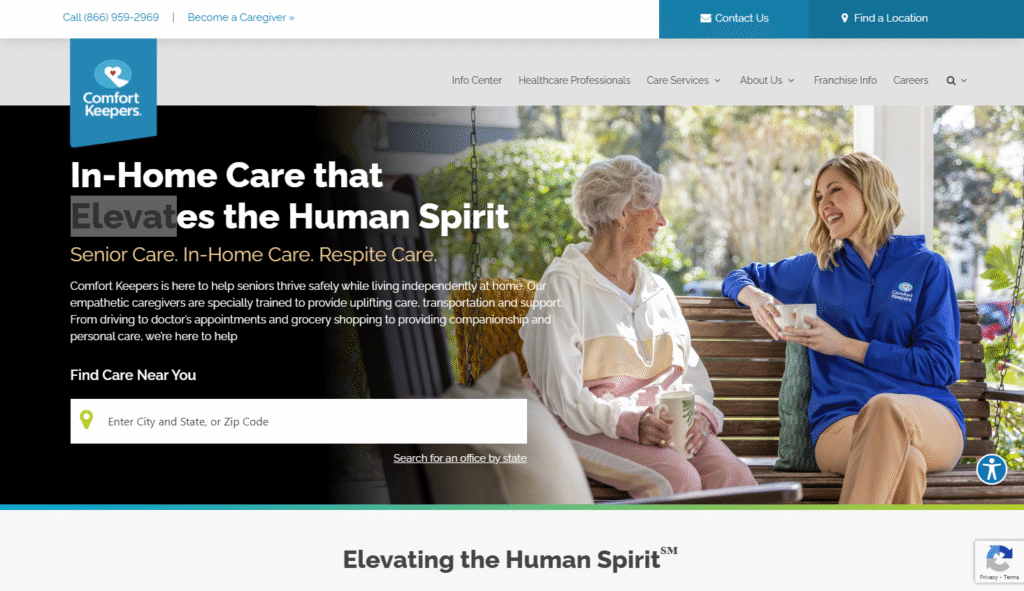
Comfort Keepers implements a model centered on “interactive caregiving,” where caregivers engage in tasks with clients to help them maintain their independence. Its tagline, “Elevating the Human Spirit,” encapsulates its philosophy.
Key features:
- Interactive caregiving philosophy: It takes a holistic approach that cares for the mind, body, and spirit by encouraging seniors to stay active.
- Specially trained caregivers: It trains caregivers to implement its unique model and create custom care plans that evolve with the client’s needs.
- Specialized care solutions: It offers specialized services, including 24-hour care and dedicated Alzheimer’s and dementia care.
How Were the Top In-Home Care Companies Assessed?
These industry leaders were evaluated based on the following metrics.
| Brand proposition | How do they articulate their unique value to clients? |
| Service model | What is the core structure of their service delivery? |
| Client-facing processes | How do they handle key touchpoints, such as assessment, planning, and quality control? |
| Market differentiation | What strategies, philosophies, or services do they use to stand out from competitors? |
Comparing the Models of In-Home Care Industry Leaders
This table, which contains key details for each company, can help you visualize the various paths to success in this sector.
| Company | Unique Features | Primary Brand Focus |
| Village Caregiving | Family caregivers and a 5-step process | Compassion and trust |
| Visiting Angels | “Select Your Caregiver” program | Client choice and empowerment |
| Home Instead | Client matching and specialty training | Professionalism and expertise |
| Senior Helpers | “LIFE Profile” data-driven assessment | Clinically informed results |
| Comfort Keepers | “Interactive Caregiving” philosophy | Activity and joyful engagement |
Building Your Blueprint for a Successful Care Business
The in-home care market opens many doors, but succeeding in it takes more than simply opening a business. If you’re interested in this sector, these companies provide a clear roadmap. Find your niche. Focus on developing a distinct brand identity and a robust operational model that delivers on your promises of high-quality senior care solutions.