
The global race to build cheaper, better batteries is no longer just a chemistry problem. It’s a capital-allocation problem, and the people deciding where the money goes are now as consequential to the energy transition as the engineers designing the cells themselves.
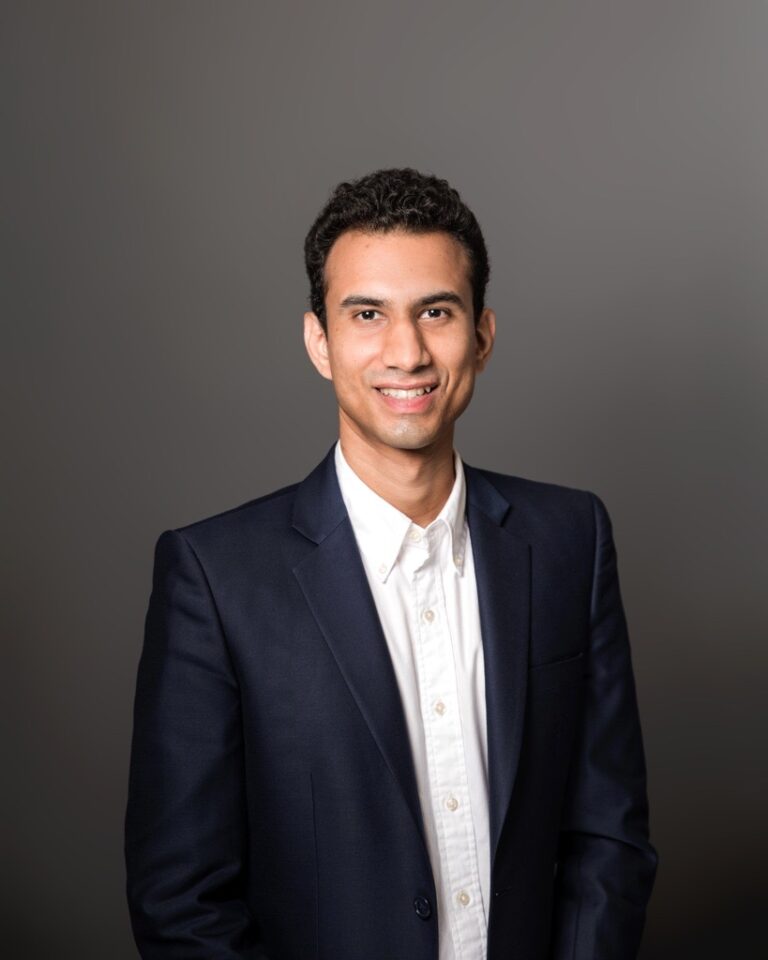
Lakshya Agrawal has spent his career preparing for exactly this moment. He has spent the last several years watching the battery supply chain reshape itself across lithium refining, cell chemistry, vertical integration, and the geopolitics that now surround all three. Now, from a base in the San Francisco Bay Area, he manages a five-person finance and business operations team inside one of the world’s largest electric-vehicle and battery-technology companies, advising senior leadership on the capital, supply, and cost decisions behind its battery, cell, and powertrain programs.
An Engineer Who Chose Business
Agrawal trained as an engineer first. His undergraduate degree, earned in India, focused on manufacturing and automation, something that would theoretically bring him closer to mechanical engineering than to the classic business pipeline his peers would later join. He grew up with an interest in cars and chose the program specifically to move toward the automotive sector.
But when he graduated, the engineering roles open to him in India didn’t quite match the ambition he had for a career, and he pivoted to business.
The pivot, he is careful to point out, wasn’t a departure. At Bain & Company, where he spent roughly three years advising large corporations across sectors, he deliberately leaned toward technology and industrial clients. The goal was to build a problem-solving toolkit he could eventually point back at the kinds of systems he had originally trained to design. That instinct still informs what he looks for in his team today, looking for people who understand supply chains and engineering concepts as well as spreadsheets.
As he puts it, “We really look to hire finance professionals, but we also seek to find folks who have an interest in and an understanding of engineering and supply-chain concepts such that we can really interface, be embedded in teams, and be valuable in finding insights to improve our financial position.”
Building a New Skillset in Africa
After consulting, Agrawal made a more unusual move: he left for sub-Saharan Africa. Working with a public health foundation in South Africa, Rwanda, and Zimbabwe, he led public health strategy projects that involved helping governments secure grant funding, advising ministries and the World Health Organization, and coordinating a large pool of stakeholders around access to drugs and diagnostics.
The environment was, in just about every way, the exact opposite of a corporate boardroom. Capital was scarce, timelines were long, and returns were diffuse and difficult to quantify. Recalling the experience, Agrawal points to it as the moment where his strategic-finance thinking fully sharpened, because the core exercise was the same one he runs now, only with different inputs.
“I was able to, from a different lens, think about how money is raised, how money is spent, and how you think about the value of those investments in very ambiguous spaces and places where it is challenging to raise money or the cost of capital can be high,” he explains.
These years of non-linear experience permanently shaped how he approaches ROI: not as a clean formula, but as a judgment call that blends modeling, the ability to properly assess risks, and have spotless strategic timing. That understanding turned out to be crucial as years later, when he was asked to justify investing in battery plants whose returns sit inside a finished vehicle rather than in a direct sale, the muscle was already built.
Honing His Business Skills at Wharton
By the time Agrawal arrived at the Wharton School for his MBA, he had already set a goal: to evaluate a wide opportunity pool and identify where his accumulated mix of engineering foundations, consulting rigor, and nonprofit financial strategy could generate the most long-term impact.
He found his answer through the Energy Markets and Future Mobility clubs, where he was in direct contact with industry practitioners, studied new battery technologies, and worked through the policy debates that helped set up a future global energy transition. He led conferences focused on EV and battery storage, building early credibility in a space he had no formal track record in yet.
Over those two years, a professional interest in sustainability deepened into personal conviction, a conviction he describes as growing the more engaged he became with the material. The auto sector he loved since childhood was being rebuilt around battery technology, which was, at its core, a capital-allocation problem dressed up in chemistry.
The Wharton network and platform gave him the runway to translate that thesis into a credible transition from consulting and nonprofit work into a senior-track role at one of the most technically demanding companies in the industry.
“It all converged,” he recalls, “where I could come to this role, create impact in the electric-vehicle and battery space, learn about new technologies, and go back to my passion for working in the auto sector while relying on my skill set and my foundations in business strategy.” In Agrawal’s framing, Wharton was the place where his passion for the automotive world, his strategic finance background, and his commitment to clean energy finally found a single channel.
Inside a Complex Finance Role in Clean Energy
Currently, Agrawal works for one of the world’s largest electric-vehicle and battery-technology companies, a vertically integrated manufacturer whose products span passenger vehicles, stationary storage, and the cells that power both.
His team owns the financial strategy for battery cells, battery packs, and powertrain programs. This includes the bill-of-materials cost for drive units and packs, the capital cases for vertical integration into lithium refining and active-cathode production, and the ongoing scenario work that tries to price in geopolitical risk, supply-chain shifts, and engineering timelines at once.
The main issue Agrawal has to deal with is that the product his team is financing isn’t the product that’s eventually sold. A cell goes into a pack; a pack goes into a car. Returns have to be inferred indirectly, through scenario models that estimate how many vehicles a program will ship, at what margin, against what competitive baseline. On top of that sits sales and operations planning, like the allocation of cells across vehicle lines, factories, and geographies, which his team supports closely.
That’s where the rest of his career pays off. Engineers tend to take him seriously because he understands what they are building. Executives tend to take him seriously because he can speak to the two sides of the company that most often disagree. “We go pretty deep into those conversations with our cross-functional teams,” he says, “to understand where we’re spending money, why, and how we can improve that.”
The battery industry is entering a phase defined less by whether the technology works than by whether it can be financed, sourced, and built at scale. Lakshya Agrawal’s career, stitched together from engineering, consulting, public health, and graduate school, has put him in a position to see that shift unfold from the inside and help develop a long-term, sustainable answer.