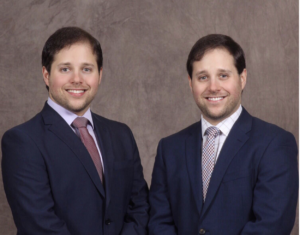

Dr. Marvin J. Dainoff has devoted his career to human-technology interaction, leading a systems-driven approach from workstation ergonomics to climate-informed security. As president of Marvin Dainoff LLC, he consults on improving human adaptability and evolving technological environments, drawing from more than 50 years of work in ergonomics and human factors engineering.
Excellence in Ergonomic Science
A long-time leader in ergonomic standards, Dr. Dainoff’s insights began to take shape in the 1970s when he observed a shift in computer use from a select few to the majority of office workers. Observing that early workstations were designed for the “static” seated worker, he challenged this concept by introducing dynamic seating. This model views sitting as a continuous, adaptive act rather than a passive one. His collaborations with experts across anthropometry, psychology, and furniture design helped develop national ergonomic standards that still guide workplace design today.
Dr. Dainoff co-authored the 1979 book “People in Productivity” with his late wife, Marilyn Dainoff. The book further discussed framing ergonomics as the intersection between people and the tools and environments that support their work. The systems-based view of ergonomics significantly impacted the field and helped reshape workstation design around the concept of continuous adjustment to individual needs and tasks. Marilyn continued her close professional collaboration with Dr. Dainoff for the rest of her life.
Turning Scientific Expertise Toward Climate Insight
Since the 2000s, Dr. Dainoff has taken on leadership roles that have broadened his impact, particularly through his work with the Human Factors and Ergonomics Society and the Council of Scientific Society Presidents (CSSP). During his tenure on the CSSP board, he began exploring the links between climate volatility, societal change, and national security, meeting with United Nations advisors and policy experts in Washington.
By this time, climate data had revealed a direct relationship between CO2-driven ocean warming and increased weather volatility. Dr. Dainoff helped policy experts identify similar patterns in areas that coincided with droughts and other phenomena that drove large-scale migrations and unrest. This work caused a significant shift in Dr. Dainoff’s understanding of human factors, allowing him to incorporate larger sociotechnical systems and merge his knowledge of societal trends, environmental impacts, and ergonomic design.
Interdisciplinary Impacts and Collaborations
Dr. Dainoff advocated for interdisciplinary collaboration throughout his career, viewing it as essential for tackling real-world problems that span various technologies and human experiences. His approach to systems is influenced by control theory and uses the metaphor of navigating a mountain road at night on a motorcycle. Much like motorcyclists’ continuous adjustments based on sensory input, workplace environments should adapt to human feedback, maintaining a responsive, balanced relationship.
Dr. Dainoff’s philosophy emphasizes that solving complex, practical problems — such as those involved in ergonomics or climate science — requires aligning systems to human adaptability, which is only achievable through collaboration.
While working at the Liberty Mutual Research Institute, Dr. Dainoff’s focus on sociotechnical systems and occupational safety produced significant publications that presented models integrating human behavior with technology to enhance safety outcomes. His research has drawn acclaim for its global impact on workplace practices, earning him a Best Paper Award from the International Ergonomics Association. He was also elected a fellow of the Human Factors and Ergonomics Society.
Today, Dr. Dainoff continues to lead in his field, mentoring new professionals and engaging with emerging topics in human behavior, technology, and safety. Through public speaking and consulting, he advances his vision for adaptable design and policy and helps organizations integrate user-focused practices that prioritize human adaptability and technological potential.