Context Art Miami delivered exactly what one expects from a leading contemporary art fair. Scale, energy, and global reach. Galleries and artists arrived from across continents, filling the floor with ambitious work and confident presentation. The fair felt alive, busy, and culturally relevant without tipping into noise.
Then there were moments where the room shifted.
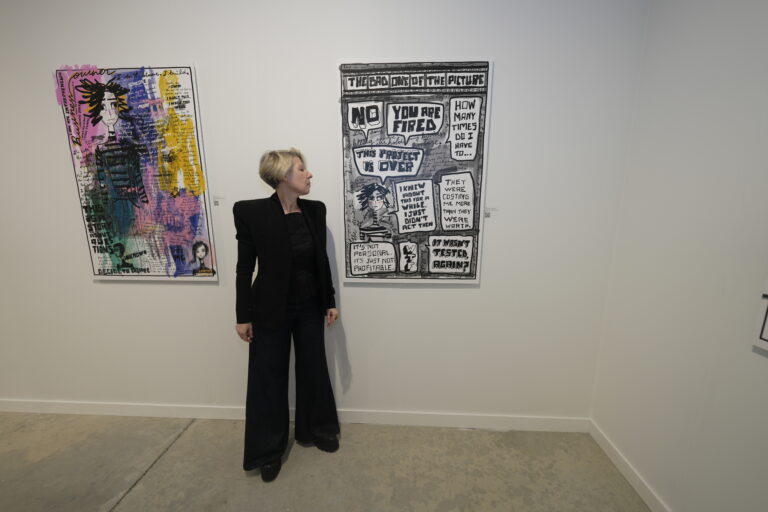
At Booth C-21, Alejandra Leibovich, known professionally as Aleloop, presented an installation you did not simply view. You entered it.
I Am an Open Book stood five feet tall. A physical book, oversized and unapologetic, structured as an environment rather than an object. Visitors stepped inside and slowed down. Pages unfolded both literally and psychologically. Toward the end of the piece, participants were invited to draw parts of themselves they rarely reveal. The gesture felt disarming and sincere. It turned the viewer into a contributor rather than an observer. Visitors who wanted more could explore her additional works on view nearby. Others simply took the experience as it was and moved on with something to think about.
People lingered. Conversations formed organically. The booth developed its own gravity. It functioned like a quiet vortex inside a crowded fair.
Aleloop herself mirrored the confidence of the work.
She moved through the space with ease. Photographers followed her throughout the fair. She wore sharply tailored Alexander McQueen blazers and carried herself with the certainty of someone fully inside her practice. She looked like an artist. She spoke like one. The work and the presence reinforced each other rather than competing.
Her background in animation and storytelling showed through the structure of the installation. The piece did not explain itself.
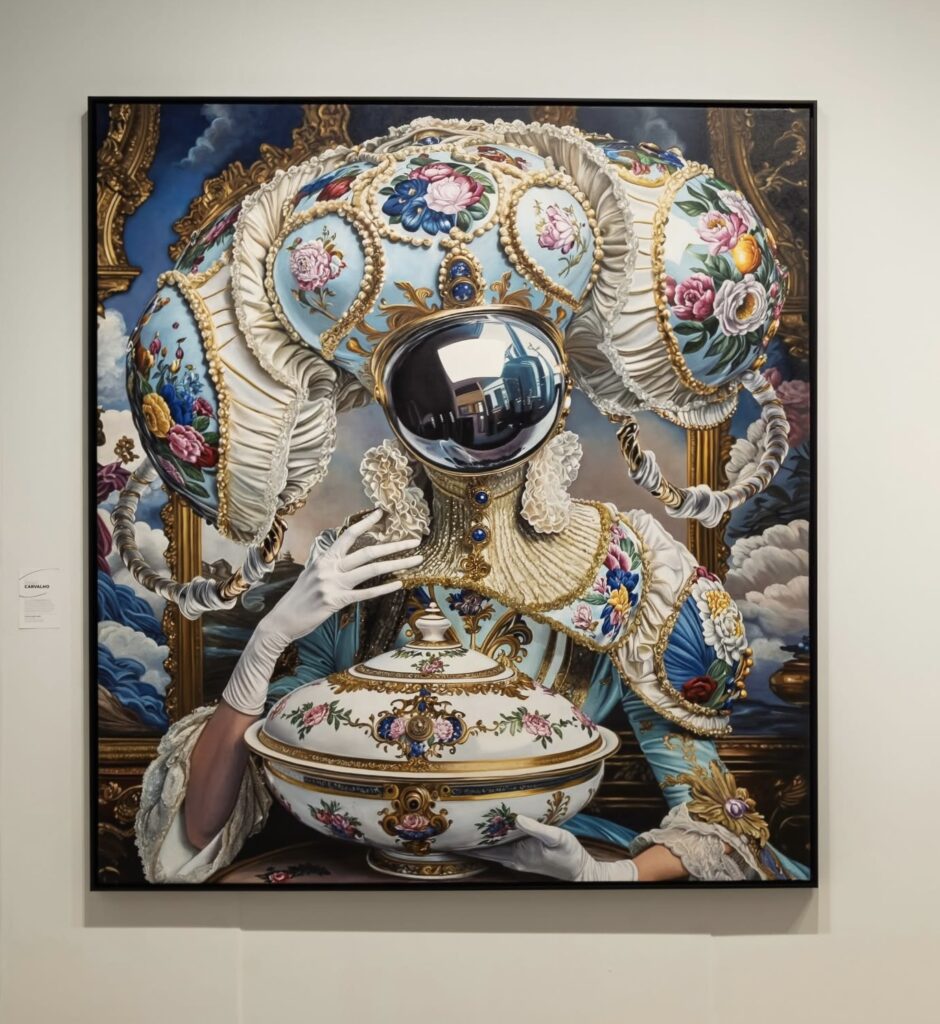
Elsewhere on the floor, Lucio offered a very different but equally compelling experience. The Brazilian artist presented figurative works inspired by Renaissance portraiture, layered with porcelain forms drawn from childhood memory. Teacups and china became helmets. Symbols of protection. Symbols of internal conflict. His work carried a strong psychological throughline rooted in memory, identity, and social pressure. The craftsmanship anchored the concept, giving the paintings both elegance and emotional weight.
Arte Global added another dimension.
Owned by M.T. Saatchi, the gallery highlighted emerging Miami artists with a sharp curatorial eye. The selection leaned contemporary without feeling transient. A sense of investment in the artists rather than trend alignment.
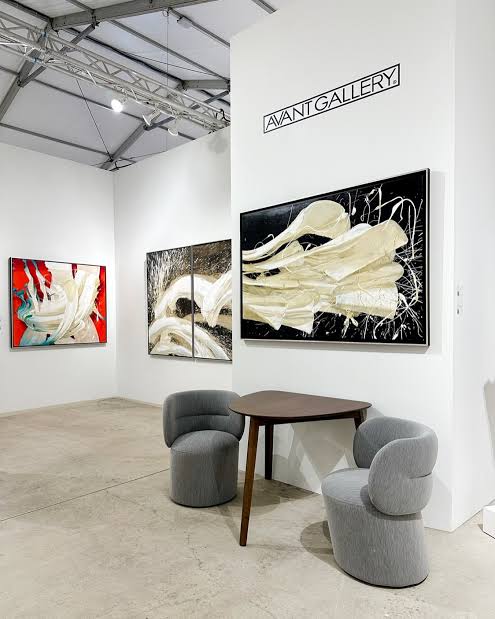
Avant Gallery maintained its presence with quiet authority.
Rather than dominating the fair, the Miami institution founded by Dmitry Prut used the week to gesture toward a broader evolution. Avant Homes, their new venture, reframed art as a lived environment rather than a collected asset. Fully curated residences treated as cohesive artistic statements signaled a shift in how serious collectors now think about art, design, and daily life.
Throughout the fair, surprises surfaced.
A black cat sculpture spun slowly, fully adorned in Swarovski crystals. Months of labor distilled into a single hypnotic object. Elsewhere, immersive installations merged sound, projection, and painting into sensory environments that rewarded patience.
Context Art Miami succeeded because it allowed all of this to coexist.
No single voice overwhelmed the room. No aesthetic dominated. The fair trusted the intelligence of its audience. It allowed discovery to happen naturally.
Within that landscape, Aleloop’s work stood out not because it demanded attention, but because it earned it.
That distinction matters.