There has never been a more urgent time to invest in women as peacebuilders. As the world deals with escalating conflicts and fragile peace agreements, women’s unique contributions, rooted in peacebuilding, empathy, and community engagement, offer a unique strategy for resolving disputes.
However, systemic barriers such as inadequate funding and exclusion from decision-making processes continue to hinder their full potential, leaving untapped opportunities for lasting peace. But organizations like Our Secure Future are working to change that.
Architects of Peace
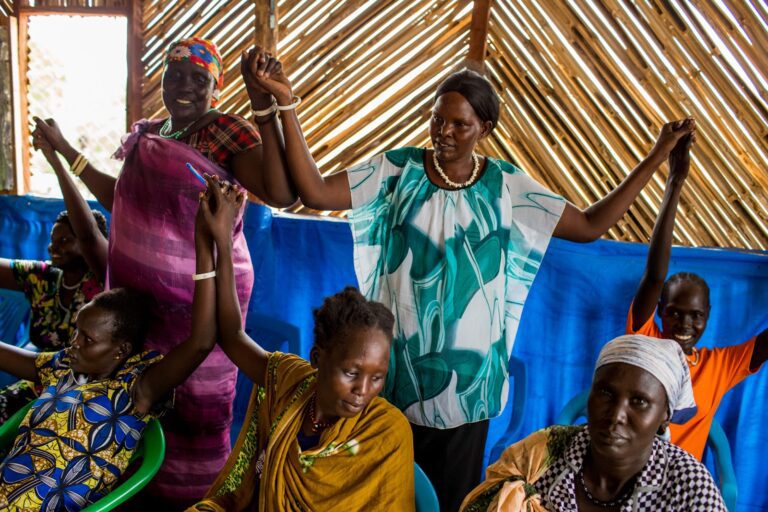
Women have historically held a central role in localized peacebuilding initiatives. Often unaffiliated with either warring camps or established power structures, this group tends to be seen as honest brokers in their communities — a position they have traditionally leveraged to serve as trusted mediators and inspire avenues for dialogue and reconciliation.
Moreover, women often lead response efforts, mobilizing local networks to coordinate essential services, emergency aid, civilian protection, and disarmament campaigns.
These efforts continue in the aftermath of conflict, as women peacebuilders support refugees and veterans, document human rights and international law violations, support reconstruction, and solve underlying grievances and root causes of conflict.
The Shortcomings of Formal Peace Processes
Such contributions of women peacebuilders prove all the more critical as formal global systems have struggled to reduce the number of violent conflicts worldwide or to guarantee the long-term sustainability of peace agreements.
As a result, there have been growing calls for increased reliance on inclusive, locally-led peacebuilding efforts, allowing for a more expansive role for women’s peacebuilding organizations in conflict prevention and resolution.
These calls are substantiated by extensive research, which shows that countries with higher rates of women’s leadership and gender equality are more likely to resolve conflicts without resorting to violence.
Furthermore, the probability of a peace agreement lasting at least 15 years increases by 35 percent when women are involved in the peace process. Conversely, countries with greater gender gaps are more likely to be involved in inter- and intrastate conflicts.
The Funding Paradox: Proven Impact, Limited Resources
Despite the extensive evidence highlighting the scale of women’s contributions to conflict resolution, crisis response, and peace processes, these organizations are chronically underfunded.
Roughly 0.2 percent of bilateral aid for conflict-affected countries from 2017 to 2018 was directed to women’s organizations — a rate that has not grown in the past decade. Additionally, funding allocated to such groups is primarily short-term project support, for which recipient organizations must meet excessive donor reporting requirements demonstrating immediate-term impact.
These demands necessitate organizations to spend a disproportionate amount of time on yearly funding proposals, little of which is dedicated to core funding to sustain day-to-day operational functions or long-term planning.
Another challenge is the impact of onerous due diligence requirements, which predominantly restrict funding to larger, more established organizations. When local grassroots initiatives receive funding, they cannot often adequately scale up operations, proving the importance of unrestricted funding to allow organizations to make informed decisions about best allocating funding and resources.
Philanthropy As a Catalyst for Change in Peacebuilding
Amid these challenges, philanthropic institutions can be vital funding sources for women peacebuilders — particularly as growing public skepticism of multilateralism and foreign intervention will likely impact future bilateral aid opportunities.
Conflicts are highly unpredictable, necessitating more operational flexibility and adaptability from local organizations to better respond to shifting on-the-ground dynamics. Standardizing the provision of trust-based, unrestricted funding could help relax reporting deliverables and create the flexibility for organizations to scale their efforts and scope of impact effectively.
As independent entities, foundations can experiment with more innovative funding approaches that are more suitable to locally led peacebuilding than government or institutional donors.
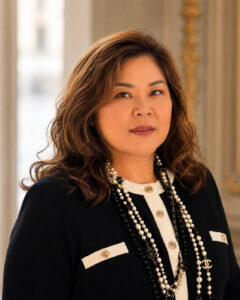
An evolution in traditional philanthropy led by philanthropists like Cynda Collins Arsenault of Our Secure Future has animated a reexamination of “strategic philanthropy” in favor of trust-based, general operating funding models.
Such frameworks can facilitate the extension of more flexible funding conditions for organizations and the assumption of “riskier” giving, ensuring funds reach those with the most capacity for direct impact and are able to support long-term strategic planning.
That said, more change in the philanthropic space is needed. These organizations have historically avoided the peace and security space as a sector more suited for government intervention.
Concerns of politicization and challenges associated with standard program evaluation metrics have deterred substantive philanthropic funding for conflict, peace, and security — which, as of 2020, represented just one percent of total giving. The support for community-level peacebuilding fares even worse as a share of foundation grantmaking.
Greater advancement in peace and security processes requires improved investment in women’s peacebuilding organizations. A new giving formula, predicated on streamlined administrative processes, simplified eligibility requirements, and more unrestricted funding, can facilitate more effective conflict resolution and peacebuilding.