
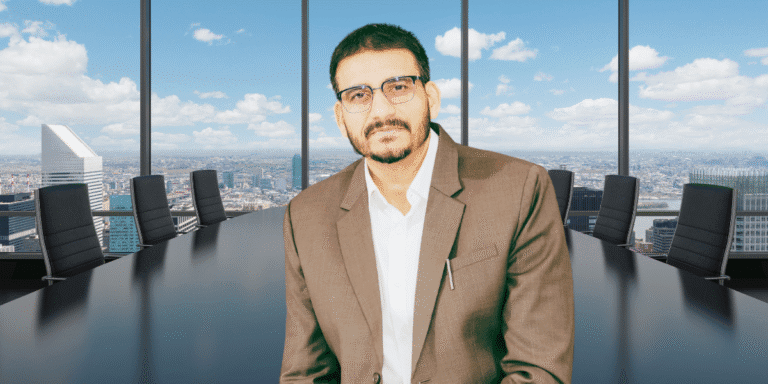
In a business world increasingly shaped by metrics, artificial intelligence, and performance optimization, a quieter change is taking root, one that centers on inner clarity, ethics, and human insight. With these ideas in mind, Bhupendra Chaudhary, a Delhi-born philosopher-scientist, author, and researcher, is helping companies reconsider their approaches to leadership, well-being, and organizational intelligence.
Bhupendra Chaudhary’s work in consciousness studies is built on academic theory but also applies directly to boardrooms, leadership training, and team development. By combining self-inquiry methods with evidence-based organizational frameworks, he helps businesses consider growth and decision-making from awareness and purpose, offering an alternative to reactive management styles.
Bhupendra introduces a form of operational consciousness that allows leaders to function from a space of meta-awareness. His experiential modules integrate cognitive sciences with modern behavioral economics, promoting ecosystems where performance arises not from strain but from higher awareness and where action flows from inner clarity rather than external compulsion.
Reconsidering Leadership Through Self-Inquiry
Bhupendra Chaudhary has developed research-backed methods that make self-inquiry, a contemplative practice with Eastern philosophy roots, practical for modern professional settings. His techniques use repeatable, structured models designed to measure improvements in clarity, ethics, and leadership behavior. Bhupendra aims to operationalize the “atma-vichara” (self-inquiry) tradition into measurable matrices, mapping leadership clarity through markers such as presence, response quality under uncertainty, and harmony between thought, speech, and action.
“Self-inquiry is not a retreat from business,” Bhupendra Chaudhary explained in a recent address. “It is a method for considering leadership with deeper awareness and fewer blind spots.”
This emphasis repositions the idea of self-inquiry not as philosophical aloofness but as strategic intelligence. His address, part of the International Confluence on Conscious Capital, echoed his central thesis: that knowing oneself is the axis of knowing one’s enterprise, team, and market. In Bhupendra’s work, practicing self-inquiry enables leaders to witness the diminishing of bias, noise, and projection, enabling decisions that are clean, clear, and causally aligned.
Consciousness Intelligence (CQ), a capacity beyond IQ and EQ, is central to this work. CQ emphasizes transparent, conscious, and effective decision-making, presence under pressure, and alignment of individual purpose with company objectives. Conscious leadership begins with this meta-awareness, creating a foundation for ethical and sustainable business practices.
Unlike other metrics, CQ is not extractive — it is regenerative. It cannot be gamified or algorithmically generated. Bhupendra asserts that CQ evolves through sincere self-work, spiritual hygiene, and ontological refinement. He positions CQ as the cornerstone of “conscious capitalism 2.0,” a system where capital is mobilized by conscience and innovation is measured by inner sustainability and collective upliftment.
Organizations using these frameworks report better collaboration, ethical discernment, and executive performance. Moreover, internal assessments document 15 to 20 percent increases in team cohesion and measurable improvements in leadership satisfaction and resilience.
From Concept to Application
Bhupendra Chaudhary has spread these ideas through platforms like The Meta Awakening and The Circle of Consciousness and Happiness, which bring these methods to mainstream business education globally.
The Meta Awakening is more than a program — it is a movement that intersects with global awakening trends in leadership. The Circle, meanwhile, curates intentional communities where dialogue, reflection, sharing, and self-inquiry are tools for corporate regeneration.
Additionally, the Meta Awakening offers structured experiences where participants engage with self-inquiry and purpose alignment exercises. These programs are strategic interventions to enhance clarity, reduce cognitive overload, and reconnect professionals with their core motivations.
Over 5,000 healthcare, technology, social enterprise, and education professionals have participated in these programs. Furthermore, feedback consistently shows reduced burnout, better decisions, and more substantial alignment between personal values and professional actions, all hallmarks of conscious leadership.
A Foundation Based on Research
Bhupendra Chaudhary’s peer-reviewed studies explore how spiritual and consciousness practices integrate into professional contexts. With an academic background in business management, philosophy, and spirituality — including studies at academic organizations such as the University of Cambridge, Harvard Business School, Stanford University, and Amrita Vishwa Vidyapeetham — he brings all parts of his knowledge together in his published academic work.
His research bridges contemplative traditions with managerial science, positioning spiritual insight as epistemologically valid and pragmatically potent. His analysis, shaped by his philosophical training and metaphysical insights, has added nuance to academic conversations about ethical capitalism, sustainable leadership, and the future of work.
His paper “Self-Inquiry and the Nature of Consciousness in Contemporary Thought” examines how self-inquiry can become a scientifically informed leadership development tool. Another study on “Financial Sustainability Assessment” explores the connection between consumer values and enterprise models, highlighting ethics and sustainability as business growth factors.
His synthesis of self-inquiry with behavioral impact measurement provides templates that scholars are beginning to replicate across global institutions. He introduces constructs such as “value-frequency alignment” and “self-referential sustainability,” signposts in a new discipline: consciousness economics.
Subsequently, upcoming books, including The Science of Self-Inquiry, Corporate Blackholes, and Conscious Leadership: The New Paradigm for Sustainable Success, will provide organizations with practical guides for integrating inner development with long-term strategy.
Making Consciousness Practical
Bhupendra Chaudhary is committed to making consciousness research both accessible and actionable. Rather than presenting self-inquiry as merely a wellness add-on, he positions it as essential for future-ready organizations.
Bhupendra believes there is a false binary between spiritual and strategic. For Bhupendra, the self-aware leader is the most strategic asset in any volatile, uncertain, complex, and ambiguous (VUCA) environment. By integrating “inner alignment indices” into company dashboards, he reframes productivity as a byproduct of (meta-awareness) conscious leadership.
Bhupendra Chaudhary also advises and invests in socially driven startups across India and abroad. His consulting with organizations like Lyngum Innovations, Soul System Research and Development, and IndusKargha connects purpose with profitability, showing that his philosophy aligns business goals with sustainable, human-centered practices.
“Consciousness is not separate from enterprise,” he notes. “It’s the infrastructure of decision-making, culture-building, and ethical leadership. Without self-aware leaders, everything downstream suffers.”
Conscious Leadership in the AI Age
Bhupendra Chaudhary’s work arrives at a crucial time. As artificial intelligence and automation affect everything from hiring to financial modeling, leaders must maintain ethical standards and human insight in algorithm-mediated environments.
He cautions against the seduction of delegation without discernment. In a world where algorithms are optimizing outcomes without moral reasoning, Bhupendra reminds us that consciousness must remain the seat of command. His ethical protocols for AI implementation include contemplative checkpoints, human-impact assessments, and spiritual audits in tech ecosystems.
He advocates for “conscious ecosystems” business cultures integrating inner awareness across all operations, from leadership and team interactions to stakeholder engagement and planning.
These ecosystems function on feedback loops of awareness, not fear. They include rites of reflection, intentional silence, and the ritualization of conscious decision-making spaces. The workplace becomes a dojo, where transformation is as important as transaction.
His Consciousness Intelligence concept has received interest from leadership circles concerned about diminishing ethical clarity during data-driven strategy usage. “AI can improve operations,” he says, “but cannot replace the human capacity to lead with awareness, empathy, and intuition.”
The voice of consciousness (meta-awareness), he argues, is the most sophisticated tool in a leader’s arsenal, one that no neural network can replicate. Bhupendra urges that the final filter in all decisions must be “sattvic discernment” — clarity free of confusion, compulsion, or self-interest.
Looking Forward
As organizations adapt to social, economic, and technological changes, Bhupendra Chaudhary’s message about conscious leadership will become more essential rather than merely idealistic.
His call is clear: Leaders must evolve from knowledge processors to wisdom synthesizers, from managers of change to masters of meaning or leaders of transformation. The future enterprise is not just tech-enabled but soul-anchored.
His ideas are practical and not just theoretical. He has linked ancient inner practices with modern enterprise needs through structured models, research, and global programs. And as more institutions wake up to the burnout of ambition and the fatigue of disconnection, Bhupendra’s work doesn’t merely offer tools—he offers a way back to wholeness. For companies seeking to remain relevant, responsible, and reflective, the path forward begins within.