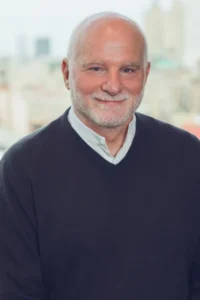
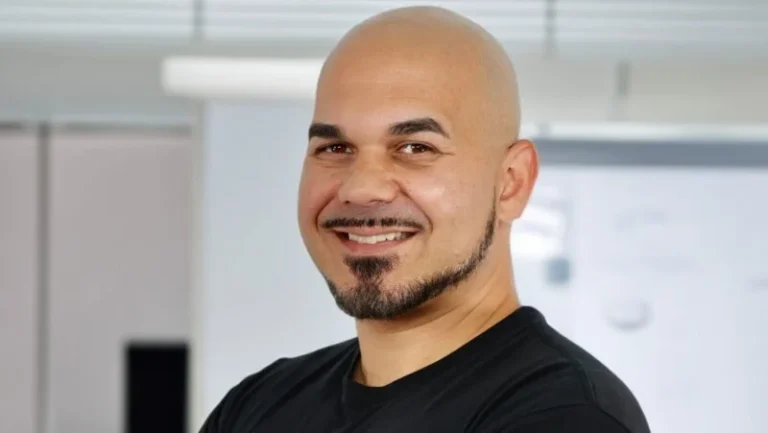
Ari Page didn’t arrive in the United States with a safety net.
Like many immigrants, he came in pursuit of opportunity—drawn by the promise that hard work and risk-taking could build something lasting. Today, as the founder and CEO of Fund&Grow, Page has built a company centered on one core idea: access to capital should not be reserved for the well-connected or already-wealthy.
For Page, business funding is not just about credit cards and approvals. It is about freedom, ownership, and control—principles he writes and speaks about frequently in national media outlets where he’s frequently asked to share his insight.
The Immigrant Mindset
In a December 2024 commentary for Newsmax focused on capitalism and opportunity, Page made his worldview clear.
“As someone who comes from an immigrant family myself… I don’t think America is evil or unfair or oppressive. I believe that America is the best country in the world, and that while we lost our edge as a nation… it still offers the most opportunity and freedom.”
That belief is foundational to his business philosophy. Page does not frame entrepreneurship as a luxury. He presents it as a path—perhaps the path—to upward mobility.
Immigrant families often operate with a heightened awareness of instability. Jobs can disappear. Economies shift. Savings are fragile. In Page’s writing, entrepreneurship becomes the counterweight to uncertainty. Rather than depend entirely on employers, he explains how Americans can build income-producing assets of their own.
A Practical Approach to Funding
Founded in 2007 and based in Florida, Fund&Grow positions itself as a financial consulting firm that helps entrepreneurs secure unsecured business credit lines through coordinated credit card approvals. The company is clear that it is not a lender but a consultant guiding clients through third-party funding applications.
Page’s writing reflects that practical focus. In a January 2025 Newsmax article, “3 Small Business Funding Myths Holding You Back,” he tackles common misconceptions that prevent entrepreneurs from even trying to secure capital:
“That’s simply not true,” he writes in response to the myth that only large corporations qualify for funding, explaining that lenders focus on creditworthiness and repayment ability—not company size.
He also addresses the assumption that brand-new businesses cannot access funding:
“I’ve worked with brand new companies… and still received funding,” Page notes, emphasizing that strategy and preparation matter more than age alone.
At the same time, he injects realism into the conversation, dispelling a common myth in the business credit industry. Regarding personal guarantees, he is direct, saying:
Lenders require a personal guarantee, he explains, because “they want to ensure you are serious about repayment.”
This balance—optimism paired with responsibility—characterizes Page’s approach. Access to funding is possible, he argues, but it is not casual. It requires education and discipline.
Framing Entrepreneurship as Freedom
In another Newsmax article, “Entrepreneurship Is the Path to True Financial Freedom,” Page expands on the broader philosophy behind his work:
“People want financial freedom, but don’t know how to achieve it… almost every time, my answer… is the same—start a business.”
That statement captures his worldview in a single sentence. A job may provide income. A business, he argues, provides leverage. It creates scalable opportunity and ownership. Yet Page avoids romanticizing entrepreneurship. In the same capitalism-focused article, he reminds readers:
“Business is tough, and if you want to succeed, you have to be willing to outwork your competitors—especially in the beginning.”
His message is consistent: opportunity exists, but effort remains the price of entry.
Tactical Education for Business Owners
Beyond philosophical essays, Page regularly contributes tactical guidance to Tampa Bay Business & Wealth. His articles often focus on specific funding mechanics that many small business owners overlook.
In “Business Credit Card Stacking—a Funding Strategy Most Entrepreneurs Don’t Know About,” he explains how strategic, coordinated applications for business credit cards can generate substantial available credit compared to waiting on traditional bank approvals.
In another piece, “5 Business Credit Myths that Hold Your Business Back,” he challenges rigid assumptions about qualification standards and funding timelines.
The recurring theme across his insights is accessibility.
Funding, in Page’s telling, is not mysterious. It is procedural. If entrepreneurs understand lender behavior, application sequencing, and credit optimization, they can dramatically improve their odds.
Fund&Grow’s Positioning
Fund&Grow’s model revolves around coaching and structuring—guiding clients through what Page views as an unnecessarily opaque system. The firm emphasizes education, planning, and timing to maximize approvals.
Importantly, the company discloses that approvals are credit-dependent and that clients remain personally responsible for debt. Introductory 0% APR periods eventually revert to standard rates, and results vary. In other words, the strategy can provide leverage, but mismanagement carries risk.
Page’s public writing reflects that duality. He does not describe business credit as “free money.” He describes it as a tool—and one that must be handled responsibly.
Capitalism as Opportunity
Perhaps the clearest expression of Page’s worldview appears in his December 2024 Newsmax article, where he defends capitalism not as a perfect system but as a uniquely empowering one.
“America… still offers the most opportunity and freedom,” he writes, rejecting narratives that portray the system as inherently rigged.
For an immigrant entrepreneur who built a national consulting firm from scratch, this is not abstract ideology. It is a lived experience. Page’s life, from newcomer pursuing opportunity to CEO advising thousands of entrepreneurs, reinforces the argument he makes on paper.
It All Comes Down to Control
Across interviews and articles, a consistent thread emerges: control.
- Control over income.
- Control over funding.
- Control over opportunity.
For Page, business ownership is not merely about profit. It is about reducing dependence and expanding optionality. Financial literacy becomes the gateway to autonomy.
Whether writing about economic philosophy, entrepreneurship, or specific credit strategies, he returns again and again to the same premise: many entrepreneurs fail not because opportunity is absent, but because knowledge is.
As an immigrant who arrived in pursuit of the American Dream, Ari Page now positions himself as a translator of that dream—explaining the mechanics behind it, demystifying capital access, and encouraging others to take ownership of their economic future.
In an era of tightening credit and economic uncertainty, his message is both practical and ideological: opportunity still exists—but you have to understand the system well enough to claim it.