

The best leaders build organizations where purpose and performance reinforce each other, not compete for attention. This article brings together insights from executives and founders who have embedded mission into their business models and seen measurable results. These 25 strategies show how to make values operational, retain top talent, and create competitive advantage through authentic commitment.
- Prove Convictions When It Costs
- Turn Values Into Competitive Constraints
- Anchor Credibility In Consistent Decisions
- Integrate Meaning Into Core Operations
- Hardwire Cause Into The Model
- Unite Focus With Operational Discipline
- Elevate Curiosity To A Superpower
- Make Legacy A Daily Practice
- Start Inside And Clarify Your North Star
- Show How Work Helps Small Brands
- Inspire Through Civic-Rooted Actions
- Retain Talent Through Visible Tradeoffs
- Care Deeply And Demonstrate It
- Forge Authentic Alignment Like Cotopaxi
- Match Motivations With Mission Fit
- Sustain Trust Through Repeated Stewardship
- Publish Your Thesis Before You Hire
- Choose Integrity Over Easy Revenue
- Recruit Difference Makers And Back Them
- Build Community Around Career Growth
- Let Real Usage Set Direction
- Link Results To Human Outcomes
- Go First And Signal Nerve
- Fuse Why With Measurable Performance
- Connect Vision To Tangible Benefits
Prove Convictions When It Costs
I think purpose is quietly rewriting the job description for leaders. For a long time the deal was simple. You paid people, you set targets, and loyalty came from the paycheck. That deal is fading. The people I most want to hire, and frankly the clients I most want to serve, are asking a different question now. Not just what do you do, but why does it matter, and who are you when no one is watching.
So the leader of the future is less of a commander and more of a steward. Your job is to make the purpose real in the boring moments, in how you bill, how you treat someone who cannot pay, how you behave when bending the rules would be easy and invisible. Purpose that only lives on a wall poster is worse than no purpose at all, because people can smell the gap.
The example I keep coming back to is Yvon Chouinard at Patagonia. When he effectively gave the company away so that its profits would fund protecting the planet, he did something most founders find unthinkable. He put the mission above his own ownership. You can agree or disagree with the specifics, but he proved the purpose was not marketing. He was willing to pay for it with the thing he valued most. That is the test. Leaders who are navigating this shift well are the ones whose purpose costs them something, because that is the only kind anyone actually believes.

Turn Values Into Competitive Constraints
Purpose-driven leadership is moving from marketing copy to operating model, and that shift will separate the founders who last from the ones who get out-positioned. Stated values are cheap. Operationalized values—built into who you hire, how you price, and what you refuse to do—become a structural advantage larger competitors can’t copy on a quarterly cycle.
When I started ADA Compliance Professionals in 2010, my mother’s lifelong disability wasn’t the marketing—it was the hiring filter. We bring people with disabilities into testing and audit roles because testers who actually use assistive tech surface issues a sighted QA pass misses, which cuts rework later. That choice cost us speed early and we lost deals to cheaper offshore audit shops. But clients stay on multi-year retainers, and against a Big Four practice, procurement teams feel the difference on the first call. Purpose isn’t the story you tell. It’s the constraint you accept.

Anchor Credibility In Consistent Decisions
Purpose has become one of those words that gets used so often it starts to lose meaning. Every company has a mission statement. Most of them don’t change how decisions actually get made on a Tuesday afternoon.
What I think is genuinely shifting is the tolerance gap. Younger professionals in particular have a much lower threshold for the disconnect between what a company says it stands for and how it actually operates internally. That gap used to be something people quietly accepted. Increasingly it’s a reason people leave, or never join in the first place.
For leaders, that creates a real accountability shift. You can’t manage purpose from a slide deck anymore. People are watching how you behave when things are hard, who gets promoted, what gets deprioritised when budgets tighten. That’s where your actual values show up, and everyone in your organisation knows it whether they say it out loud or not.
The leader I keep coming back to when this topic comes up is Satya Nadella at Microsoft. Not because of the public narrative around it, but because of what changed operationally. Shifting a company of that size away from stack ranking and internal competition toward a genuine learning culture is not a communications exercise. That takes years of consistent decisions that reinforce the same message. The results speak for themselves in terms of how the company performs and how it’s perceived as a place to work.
Purpose without that kind of follow-through is just marketing. With it, it becomes the thing that actually holds an organisation together when everything else is uncertain.

Integrate Meaning Into Core Operations
The rising focus on purpose driven work is fundamentally reshaping the future of leadership. We’re moving into an era where leaders are expected not only to deliver financial performance, but to articulate a clear mission, build trust through transparency, and create value that extends beyond the balance sheet. Purpose is no longer a branding exercise, it’s becoming an operational imperative. Employees, customers, and communities are demanding alignment between what organizations say and what they do, and leaders who can integrate purpose into strategy, culture, and decision making will define the next decade of business.
In my work as a sustainability and social impact practitioner, I’ve seen firsthand how purpose accelerates performance. When organizations anchor their work in impact, they unlock stronger employee engagement, clearer communication, and more resilient long term growth. A powerful example of a leader navigating this shift is the team behind U.S. Soccer and its FIFA World Cup partners, who collaborated on the Soccer in Schools initiative. Their approach goes beyond traditional sponsorship, it channels global momentum into local impact by delivering high quality soccer programming, equipment, and mentorship to Title I schools. It’s a model of purpose driven partnership: aligning a global event with community needs, expanding access for underserved youth, and demonstrating how major institutions can leverage their platform for meaningful, measurable change.
Purpose driven leadership isn’t a trend; it’s a structural shift. The leaders who thrive will be those who treat purpose as strategy, not sentiment, and who build organizations where impact and performance reinforce one another.

Hardwire Cause Into The Model
The increasing focus on purpose-driven work is pushing leaders to treat purpose as a decision-making filter, not a marketing slogan. People want to see exactly how a company’s values show up in its products, pricing and impact – not just read about them on an “About” page.
As the founder of Jolene, a premium nipple covers brand, I care deeply about building a business that isn’t just profitable, but genuinely purpose-led. Our purpose is twofold: normalising bra-free comfort for women and supporting breast health. That’s why Jolene donates 10% of profits to breast cancer charities, and why we’re intentional about how we talk about bodies – no “fixing flaws” language, just helping women feel comfortable and confident in what they wear.
Leaders who are navigating this shift well are the ones who hard-wire purpose into their business model in a similar way – where impact is built into the numbers, not bolted on as a campaign. I think the future of leadership will belong to founders and executives who can show, line by line, how their purpose shapes what they make, how they sell it, and who benefits when the business grows.
Unite Focus With Operational Discipline
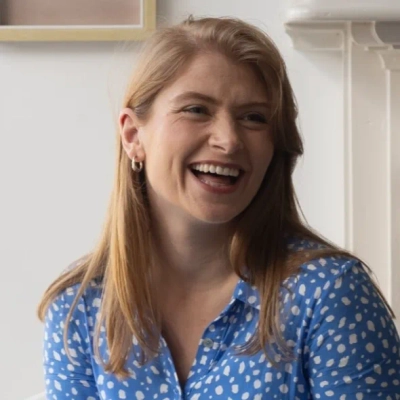
I think purpose-driven work will make leadership more demanding, not softer.
People increasingly want to understand why the work matters, not just what needs to get done. That means leaders can no longer rely only on targets, hierarchy, or process to create momentum. They have to connect day-to-day execution to a clearer sense of purpose, especially in smaller teams where every person can feel the impact of their work directly.
For me, purpose-driven leadership is not about slogans. It is about clarity. Teams need to know who they are serving, what problem they are solving, and how their work contributes to something useful.
At Shortlists, our purpose is very practical: helping small recruitment agencies place more candidates while spending less time buried in admin. That matters because good recruiters should be spending their time building relationships, advising clients, and making better hiring decisions, not fighting fragmented tools or repetitive workflows.
The leaders who navigate this shift well will be the ones who can combine purpose with operational discipline. Purpose gives people energy, but structure turns that energy into progress.
Alice Humble
Co-Founder & CEO, Shortlists

Elevate Curiosity To A Superpower
The future of leadership belongs to those who treat purpose as strategy, not decoration. Organizations that embed purpose into how they make decisions, develop talent, and show up for their people are not just performing better. They are building cultures that are virtually impossible to replicate.
At Black Theorem Co., this is the core of everything we do. Through programs like Curiosity as a Leadership Competency, we help leaders at Fortune 500 companies, HBCUs, and global organizations move beyond compliance-driven leadership into something far more sustainable: creativity, empathy, and innovation as daily practice.
Delta Air Lines is a powerful example. Having worked with their teams directly, I’ve seen how organizations that intentionally connect individual contribution to collective meaning create cultures where people don’t just show up, they show out. Purpose-driven work isn’t a HR initiative there. It is embedded in how they lead at every level, globally.
The shift I see consistently across my executive coaching and DEI facilitation work is this: the leaders navigating this well have stopped asking “how do we retain talent” and started asking “how do we remain worthy of our people’s best work.” That one question changes the entire leadership posture of an organization.
Curiosity is how you stay worthy. It is the most underutilized leadership tool of our time.

Make Legacy A Daily Practice
Purpose-driven work isn’t a cultural trend. It’s what happens when leaders stop treating legacy as a monument and start treating it as a daily practice.
Most leadership conversations frame purpose as something an organization adopts, a values statement, a mission refresh. But the leaders who are actually changing how work feels and what it produces are doing something quieter. They’re making small decisions every day that align their ambition with their values. One conversation at a time. One calendar choice at a time. The future of leadership isn’t being reshaped by purpose as an external force. It’s being built from the inside, before anyone is watching.
When I founded The Ripple Network, I wasn’t responding to a market gap. I was responding to a question I’d been sitting with for years: what does it actually look like to build something whose entire purpose is to help other women find and use their voice? I didn’t have a clean answer at the start, honestly. But every structural choice in that community, the cohort design, the membership model, was a legacy decision made before there was an audience to impress. That’s what purpose-in-practice looks like. Not a pivot announcement. A practice.
The leaders who will define the next decade aren’t the ones with the most compelling purpose statements. They’re the ones whose choices reflect their values before the pressure hits.

Start Inside And Clarify Your North Star
About twenty years ago, when I was still teaching high school Latin in Southern Oregon, I started building a coaching practice on the side. By the time I left teaching, I had fifteen active clients. I cashed out a ten thousand dollar 401k to go full-time, moved to Portland in 2008, and spent the next several years building the practice to forty-three clients while living month to month. The thing that kept me going was a single conviction: that life coaching was going to change the field of education by moving it from a knowledge basis to an empowerment basis. Purpose-driven work was the operational version of that idea. I have been betting my financial life on it for two decades, and the bet has been getting better every year.
The most common version of the current conversation about purpose-driven work treats it as a trend leaders should learn to ride. From inside coaching, that framing misses what is actually happening. Purpose-driven work has been gravity in the coaching profession for twenty years, and the rest of the professional world is finally catching up. Frankl wrote Man’s Search for Meaning in 1946. We are still arriving at his argument.
The leaders I have watched navigate this well are doing two specific things. The first is that they articulate, for themselves, what their own purpose is, personally and professionally. They do it out loud, in conversation with a coach who meets it with curiosity rather than judgment, which is part of why the clarity sticks. The second is that they articulate the purpose of the larger team in a way that is honest about where the team actually is, in addition to aspirational about where they want to be. Both have to be true at the same time. Leaders who skip the first step and only do the aspirational version end up writing the team’s purpose alone in a conference room, which produces a sentence that lives on a wall and not in anyone’s actual work. The order matters. The inside comes first.
If you are a founder thinking you do not have time for this kind of inner work because you are too busy keeping the company alive, I would gently push back. I have been there. Getting clear about your own purpose, with a coach meeting it with curiosity, is part of how you get to product-market fit with a company worth running once you are there.

Show How Work Helps Small Brands
I’ve noticed how much purpose-driven work is changing the way people look at leadership today. Since we work in a hybrid setup handling customized packaging projects with in-house teams, partner factories, suppliers, and clients all involved, I realized people work differently when they understand why the work matters instead of simply being told what to do.
At LeafPackage, one phrase we always come back to internally is “Small Orders, Big Impact.” That mindset shapes how we approach the business because many of the brands we support are first-time founders or small businesses trying to build something meaningful with limited budgets. When the team sees how their work helps small brands launch professionally through custom packaging, the work naturally becomes more collaborative and purposeful.
Running LeafPackage taught me that leadership is not only about creativity or business growth. A leader also needs judgment, communication skills, technical understanding, and the ability to keep people aligned during challenges. I believe companies navigating this shift well are the ones that stay closely connected to both their people and the real purpose behind the work instead of operating purely around output or pressure.

Inspire Through Civic-Rooted Actions
I’m observing the shift in what makes a successful leader in real-time as an HR Executive. While networking has always been key in career advancement, it is becoming less impactful to be connected and more pertinent to be engaging and inspiring as a leader. As the motivations of our current workforce change and reorient towards true life fulfillment, the urgency and attitude around retaining work that does not resonate or align with a person’s internal motivations wanes and diminishes. It therefore becomes essential that companies shift their focus towards driving meaningful impact in the communities they operate in and their employees align with.
I have seen a lot of success with my former employer, Carbon Health, engaging in community events that connect back to and further the company mission statement of ‘making high quality healthcare accessible’. From facilitating the opening of the largest COVID vaccination site during peak pandemic times to participation in local Pride events, the workforce becomes more connected to leaders they relate to, who represent similar values, and show genuine care for those beyond themselves and their immediate circle.

Retain Talent Through Visible Tradeoffs
Purpose-driven work is going to separate the leaders who retain talent from those who lose it, and the gap will get wider, not narrower. The shift I see most clearly in our hiring and retention conversations is that younger clinicians and operations staff no longer accept “the work is meaningful” as a slogan. They test it. They watch how leadership behaves when meaning and short-term commercial pressure pull in opposite directions, and that observation shapes whether they stay or leave within 18 months.
At our private addiction treatment clinic near Warsaw, we hire into a field with notoriously high burnout and turnover. The single most reliable predictor of whether a strong hire stays past year one is not compensation or seniority. It is whether they have personally watched leadership make a values-aligned decision that cost something measurable. A delayed admission to protect clinical safety, a patient turned away because the case did not fit our care model, a vendor relationship ended because the values mismatch became operational. Those moments are what build the kind of trust that purpose-driven workplaces actually run on, and they cannot be faked.
The leaders I see navigating this well share one pattern: they treat purpose as an operational constraint, not a marketing layer. When commercial and mission pressures conflict, they make the mission-aligned decision visibly and explain it. They also name the cost out loud. “We turned away a high-value admission because the case did not fit our model. That is what our values look like in practice.” That kind of explicit framing turns abstract values into shared operational logic, and teams notice.
Leaders who get this wrong are the ones who claim purpose during recruiting and onboarding, then quietly default to short-term commercial decisions when things get hard. The team always notices, even when nobody says it out loud. The trust gap that opens after one or two such moments rarely closes, and the cost shows up six months later as resignations from exactly the people they most needed to keep.

Care Deeply And Demonstrate It
Purpose driven leadership starts with a problem you actually care about solving (for us, it’s increasing transparency in healthcare to improve patient outcomes). When this is the case it shines through in everything you do.
So many of the people who join Doctify mention in their interview that they wanted to work somewhere that improves people’s lives. Several employees have joined us from medical/care companies and backgrounds, because that mission to do good is so powerful for them, so engrained in their personal principles, and they want to continue doing it in the next stage of their career.
The broader shift to purpose-driven work is real and I think it is a good thing. The scale of this sentiment was highlighted in a recent survey by Deloitte where they found that roughly nine in 10 Gen Zs (89%) and millennials (92%) consider a sense of purpose to be important to their job satisfaction and well-being.
It is forcing businesses across every sector to put people and their problems at the heart of what they build. Fashion and technology are perhaps the most visible examples, two industries often under the magnifying glass of social impact scrutiny now investing seriously in community, values and social impact.
People seem increasingly unwilling to spend the majority of their waking hours on something that does not align with who they are, and who could blame them?
Forge Authentic Alignment Like Cotopaxi
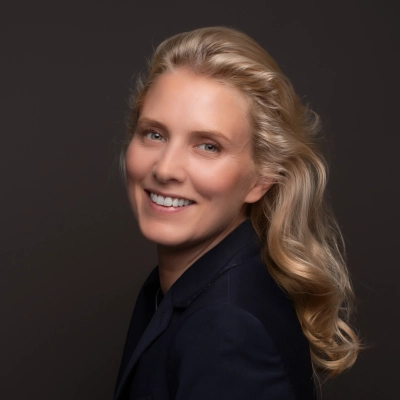
Pushing leaders to become more focused on culture, transparency, and shared values instead of simply managing performance. People want to feel connected to the work they do, and employees are more likely to support leaders who communicate a clear mission and genuinely follow through it.
It also means companies have to be authentic. Employees and customers are very good at recognizing when purpose is being used as a marketing message instead of something truly reflected in the company culture and decision-making.
A company like Cotopaxi is a good example of this shift. Their leadership built the business around social impact initiatives tied to poverty reduction and ethical sourcing, and that mission is integrated into both their brand and company culture. That kind of alignment tends to create stronger employee engagement and long-term customer loyalty because people feel connected to something larger than just the product itself.

Match Motivations With Mission Fit
The growing focus on purpose-driven work will push leaders to lead with emotional intelligence, clear values, and a real connection to what motivates their teams. In the future, leadership will be less about title and more about the ability to guide people through change with clarity and heart. At Recruiterie, we navigate this shift by taking a relationship-driven approach that looks beyond resumes to understand an organization’s mission and a candidate’s motivations and values. That focus helps us connect nonprofit clients with leaders who genuinely care about the work and are positioned to thrive. When purpose and people are aligned, leaders are better equipped to build culture, sustain momentum, and create meaningful impact.

Sustain Trust Through Repeated Stewardship
Purpose-driven work will make leadership more relational and less purely performance based. High performers still matter, but future leaders will be judged by whether they can build environments where people trust the mission, the process, and each other. That is especially important in organizations built through partnership models, where commitment weakens quickly if values feel ornamental. Purpose gives teams a reason to protect quality when nobody is watching, which is ultimately a leadership outcome.
Salesforce is navigating this shift well because Marc Benioff made stakeholder responsibility part of leadership identity early, then reinforced it publicly and internally over time. We find that repetition matters. Purpose becomes believable when it survives growth, scrutiny, and changing market conditions.

Publish Your Thesis Before You Hire
Purpose-driven work is going to kill the quarterly OKR review, and good riddance.
Here’s what I keep noticing. The founders pulling ahead right now aren’t optimizing dashboards. They’re publishing their thesis before they hire anyone. Chris Best at Substack has been doing this for years on his own Substack, writing long essays about why writers should own their lists instead of renting attention from an algorithm. By the time he ships a product change, his whole team already knows the reasoning. He skips the town hall.
Jack Conte at Patreon does the same thing on YouTube. He films himself walking through creator payouts, fee restructures, the 2022 layoff round that cut roughly 17% of staff. Watching it is awkward. It’s also why his team can defend pricing to creators without a PR script in front of them.
I run growth at Streamrise. We sell viewer and chat services to Twitch and Kick streamers, so I spend a lot of time studying creator-economy founders. A publicly defended thesis is harder to write than a 12-slide strategy deck. The trade-off is that it actually survives contact with new hires. We have a public stance on platform ToS that every candidate I interview has to read before we talk, and a meaningful share self-select out before the offer stage. I’ll take that every time.
People keep framing this as a swing from KPIs to vibes. Lazy framing. It’s a swing from private metrics to publicly defended bets, and founders who refuse to write theirs down are quietly bleeding talent to the ones who will.

Choose Integrity Over Easy Revenue
I think that having a sense of purpose behind what you do has become less of an option for today’s leaders. Two decades ago, the focus of most employees was on money and job security. Today, young people want to know what makes the organization tick, and the truth is they can tell if there’s any B.S. within five minutes.
I operated CuraDebt for 24 years in the debt relief industry, which is stressful, highly regulated, and filled with unethical players. I managed to keep my company with an A+ BBB rating and over 1,300 five-star reviews because my company was trying to make a difference by helping people despite the cost and nuisance of being compliant. There were times that I would turn down profitable cases because they didn’t fit.
Purpose becomes all the more important when the task is difficult. Our workers dealt with people who were being sued, had tax troubles, and had wages being garnished. It was much easier for our workers to stay on board when they could see that a family was finally able to get some sleep by getting out of debt.

Recruit Difference Makers And Back Them
Deloitte’s 2025 Global Gen Z and Millennial Survey revealed that “a majority of Gen Zs (89%) and millennials (92%) consider a sense of purpose to be very or somewhat important for their job satisfaction and well-being.”
As the former owner of a multimedia marketing and production agency, Red Apples Media (Leesburg, Florida), we had nine core values that created the acronym, RED APPLES, as explored in my book, “The RED APPLES Way.” The ‘L’ value was, “Live for what you love. Work to make a difference.” Part of the DNA – the core of the agency – was to make and leave a lasting impact on the community we served. Equally important was aligning with clients and vendors who shared a commitment to a purpose-driven approach to business and community.
However, like any company core values, they must be driven, embodied, and exemplified by leadership at every level in order for it to leap off the core values poster in the breakroom, and become embedded into the culture.
Perhaps one of the biggest miscalculations I made as the owner of my former agency was my frustration that if my staff was not engaged in the causes I and the company believed in, they were not representing the core values of the company. Over a period of time, I came to understand that it was more important that I was hiring individuals who were purpose-driven or difference makers as part of their own core. That gave the agency the mechanism to support the personal “projects” that were important to them (church functions, local sports teams, volunteerism, fund raising opportunities, etc).
It will become increasingly important, if not critical, for companies and their leadership to identify organic and meaningful opportunities to either create internal and/or support external purpose-driven outlets as a powerful differentiator to recruit and retain younger talent who actively hunger to make a difference while earning a living and paying the bills. This comes with a warning that Gen Z and millennials are incredibly savvy to the difference between passion and posturing. Leadership that goes through the motions rather than build an authentic purpose-driven culture will quickly lose credibility with this generation of workforce.

Build Community Around Career Growth
We built OysterLink specifically to highlight purpose-driven work. The hospitality industry has always relied on relationships, mentorships, and community. Historically, recruiting has been a transactional process, and so hiring platforms have defined recruiting as just listings.
Instead of simply being a job board, we combine jobs with industry insights, salary transparency, guidance for career development, and the opportunity to have conversations about the industry. All this provides greater context for individuals when making decisions about where to work and how to grow as professionals. Attaining these goals has become increasingly important to younger professionals who want to find meaning in their jobs through learning, sharing their work with others, and feeling part of something bigger than themselves, and not just a paycheck.
Now, our community is 400,000 professionals strong, united by both opportunity and a sense of purpose.

Let Real Usage Set Direction
A lot of “purpose-driven work” talk sounds bigger than what I actually see day to day building SeoSets. From where I sit, it is less about mission statements and more about what people quietly refuse to keep working on.
At around a 10 dollar per month product, feedback is very direct. Users do not care about slogans. They care if something saves them time or feels unnecessary. I notice more people asking “why does this exist” rather than just how to use it. That question alone forces clarity in a way enterprise systems never did for me in my earlier automation and cybersecurity work.
Leadership changes in that environment. Earlier in my career, especially back in Indianapolis, it was more top down. Clear tasks, clear outputs, less questioning. Now even small teams expect context before execution. People push back if something feels pointless. At SeoSets I see the same thing internally. Decisions get challenged more, not out of disrespect, just because people want to understand the reason behind it. You cannot rely on authority anymore. Consistency matters more than title.
Where companies get it wrong is they treat purpose like messaging. They say the right things publicly but the product and support experience does not match. Users pick that up fast. I made that mistake early too, building features that looked right but were barely used. That disconnect always shows up later in churn or quiet drop off.
The companies I respect are usually not the loudest about purpose. They are just consistent. Small SaaS teams often do this better because they feel user friction directly. They do not keep adding layers just because they can. I try to follow the same pattern at SeoSets, even if it means deleting features I spent months building.
I think leadership is moving toward something simpler. Less persuasion, more proof through what actually gets used. In a world where AI makes messaging easy to copy, consistency between what you say and what users experience is the only thing that holds up.

Link Results To Human Outcomes
I believe the future of leadership will require leaders to connect business goals with human impact more intentionally than ever before. Employees, especially emerging generations, want to know their work matters beyond productivity metrics. Purpose-driven leadership creates stronger engagement, resilience, and trust because people feel connected to something meaningful.
I also think this shift will challenge leaders to become more transparent, empathetic, and values-driven. Employees are looking closely at whether organizations truly live their mission internally, not just market it externally. Companies that invest in employee wellbeing, inclusion, growth, and community impact will continue attracting and retaining top talent.

Go First And Signal Nerve
I don’t have a clean theory on this. I just watch who changes their team and who doesn’t.
The ones who move people get their own hands dirty. I worked with a founder who was scared of the command line. Four weeks later he was running 25 AI agents himself. He didn’t hand it to someone. He did it.
His team followed because he went first. Not because he sent a memo about innovation.
Purpose-driven work sounds nice in a deck. In practice it just means the leader does the uncomfortable new thing before asking anyone else to. People copy what they watch their boss actually do.

Fuse Why With Measurable Performance
The growing emphasis on purpose-driven work is changing what employees expect from leadership. In the past, leaders were judged on financial performance and operational results. Today, employees want to understand how their work contributes to a broader mission. As a result, leadership is becoming more purpose-centered. Organizations that can consistently demonstrate their purpose tend to build stronger engagement, trust and loyalty. A strong example is DBS Bank, which has incorporated sustainability, innovation and social impact into its broader business strategy. Leaders such as Piyush Gupta have spoken about the importance of aligning business success with positive societal outcomes.
I believe purpose-driven leadership is not about replacing performance objectives but it’s about giving people a stronger reason to pursue them. Organizations that successfully connect purpose with execution will likely have an advantage in attracting talent, strengthening culture and building long-term resilience.

Connect Vision To Tangible Benefits
I think it will definitely change leadership because people want to feel that the work they’re doing actually matters.
Especially for leadership and more senior roles, candidates are asking bigger questions now. What’s the purpose here? What problem are we solving? Why should I dedicate years of my life to this company?
When you think about it, work takes up a huge part of your life. So people want to feel like they’re contributing to something meaningful and that their work has value beyond just completing tasks.
I think companies and leaders who communicate vision clearly and make employees feel connected to the impact of their work will have a major advantage moving forward.
One company that stands out to me is Procter & Gamble because they’ve built a culture where employees understand the impact of their work, while also investing heavily in employee development and compensation.
At the same time, purpose alone is not enough. People are more likely to stay engaged when meaningful work is also matched with fair pay, growth opportunities, and a healthy work environment.