
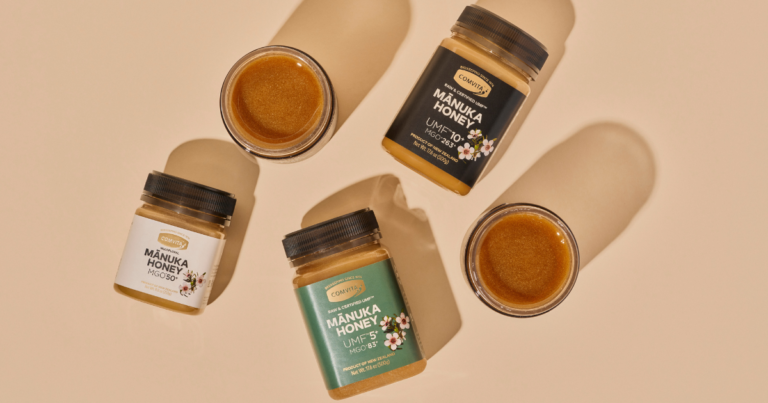
Each spring, conversations around bees and pollinators tend to spike online around World Bee Day, which occurred on May 20. But for Comvita, the moment has become something much bigger than a single awareness day.
This year, the New Zealand-based Mānuka honey company is expanding its annual “World Bee Month” initiative into a broader campaign running through June’s Pollinator Month, combining education, conservation partnerships, consumer engagement, and storytelling around the essential role pollinators play in ecosystems and global food systems.
At a time when environmental messaging often feels performative, Comvita’s campaign reflects a growing shift among consumer brands: using awareness moments not simply for marketing, but as platforms for long-term education and measurable impact.
Founded more than 50 years ago by New Zealand beekeepers Claude Stratford and Alan Bougen, Comvita was established around a philosophy of working in harmony with nature. What began as a small beekeeping operation has since grown into one of the world’s most recognized Mānuka honey brands, but the company’s core focus on bee stewardship and ecosystem health remains central to its identity.
That positioning matters in a market where consumers increasingly expect wellness and food brands to demonstrate real environmental accountability rather than surface-level sustainability claims.
Comvita’s products rely entirely on healthy pollinator ecosystems. Mānuka honey is produced when bees forage on the native Mānuka flower, which blooms for only a short period each year in remote parts of New Zealand. The process is highly dependent on environmental conditions, biodiversity, and bee health, which creates a direct link between ecological stewardship and business sustainability.
The company has also emphasized traceability and scientific validation as key differentiators for its honey products, particularly as interest in Mānuka honey continues to grow globally.
While bees are often associated primarily with honey production, pollinators support a far larger portion of the global economy and food system than many consumers realize.
Pollinators contribute to roughly one-third of the world’s food supply, supporting the growth of fruits, vegetables, nuts, seeds, and countless flowering crops. Beyond honey bees, pollinators also include butterflies, bats, birds, beetles, moths, and native bee species, all of which play critical roles in biodiversity and ecosystem stability.
Declining pollinator populations, however, have become an increasing concern globally due to habitat loss, pesticide exposure, climate change, and reduced biodiversity. For Comvita, those realities have helped shape this year’s campaign focus: moving the conversation from awareness into practical action.
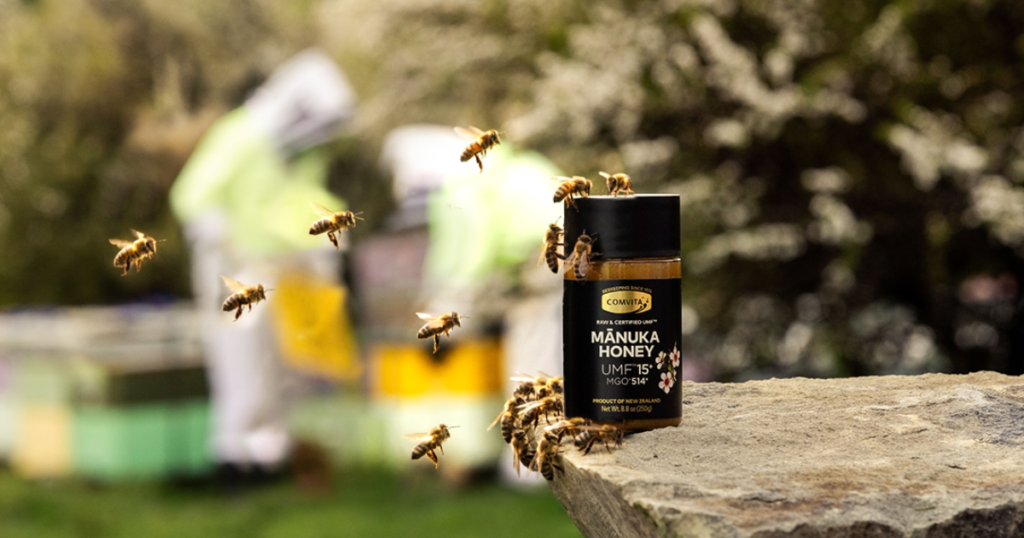
As part of its 2026 World Bee Month initiative, Comvita is collaborating with Pollinator Partnership, a nonprofit dedicated exclusively to pollinator health through conservation, education, and research.
The collaboration includes educational programming, consumer awareness efforts, and resources designed to help individuals create pollinator-friendly environments at home. The partnership further supports Pollinator Partnership’s broader mission to protect pollinators and promote healthy ecosystems through science-based conservation, habitat restoration, and public engagement initiatives.
The campaign leans heavily into consumer participation. Through June 24, Comvita is including complimentary wildflower seed packets with purchases made on its website, encouraging consumers to plant pollinator-friendly habitats at home. The initiative reflects a broader trend in environmental campaigns: connecting small, accessible actions with larger sustainability narratives.
The company has also incorporated educational storytelling into influencer outreach and media engagement, aiming to make pollinator advocacy feel approachable rather than overly technical or activist-driven.
That accessibility may be key to the campaign’s broader resonance. Environmental messaging can often feel abstract or overwhelming to mainstream audiences. By focusing on gardening, flowers, and everyday actions, Comvita and Pollinator Partnership are framing pollinator support as something tangible and achievable.
Comvita’s World Bee Month initiative also reflects a broader evolution happening across brand marketing and corporate responsibility. Increasingly, companies are being evaluated not only on the products they sell, but on the ecosystems and communities they help sustain. Consumers — particularly younger audiences — are demanding greater transparency, authenticity, and measurable impact from the brands they support.
For companies operating in agriculture, wellness, food, and natural products, pollinator health is no longer a peripheral sustainability issue. It is directly tied to supply chains, biodiversity, and long-term business resilience.
By extending World Bee Day into a larger educational platform tied to Pollinator Month, Comvita is positioning pollinator awareness not as a fleeting social media moment, but as an ongoing conversation about environmental stewardship and shared responsibility.
And in an era where consumers are increasingly skeptical of purpose-driven branding, campaigns grounded in education, credible partnerships, and actionable participation may ultimately prove the most effective.