

Developing future leaders requires more than traditional training programs and good intentions. This article draws on proven strategies from organizations that have successfully built robust leadership pipelines, offering practical approaches backed by experts who have implemented these systems at scale. The methods outlined here range from simulation-based role trials to accountability frameworks that transform high-potential employees into effective executives.
- Hone Judgment Through Hard Decisions
- Simulate and Trial Management Roles
- Prep Clinicians Before Titles with Metrics
- Center Progress on Peer Masterminds
- Prove Execution Under Heat and Pressure
- Leverage Apprenticeships with Concrete Ownership
- Elevate Dual Fluency as Prerequisite
- Equip Everyone to Act Wisely
- Make Growth Mindset the System
- Adopt EOS to Decentralize Authority
- Assign Mini CEO Stretch Projects
- Run a True Talent Pipeline
- Create Co-Owners with Tangible Stakes
- Train Consultants to Lead Early
- Forge Catalysts with Radical Accountability
- Hand Actual Responsibility Before Comfort
- Build Trailblazers Through Global Stints
- Develop Staff Through Genuine Autonomy
- Combine Mentorship and Cohort Education
- Link Broad Practice to Advancement
- Test High Potentials Across Businesses
- Embed Scientists in Commercial Realities
- Use Safety as Influence Onramp
- Back Cleveland Clinic Development Culture
- Harness AI Anxiety to Upskill
Hone Judgment Through Hard Decisions
Honestly, the most impressive leadership development I’ve seen isn’t coming from Fortune 500 companies with nine-figure L&D budgets. It’s coming from small and midsize organizations that don’t have the luxury of bad leadership.
I worked with a nonprofit that had no formal HR infrastructure when we started together. What they did have was a CEO who treated every staff meeting like a leadership lab. She rotated who facilitated. She debriefed decisions out loud so her team could see the thinking, not just the outcome. She gave people problems to solve before she gave them titles to grow into.
No LMS. No competency framework. No succession planning software. Just intentional, consistent exposure to real leadership moments.
That’s what stood out. Most organizations build leadership programs around content. The best ones build them around experience. There’s a significant difference between an employee who completed a leadership course and an employee who has been trusted with a hard decision and supported through it.
What makes any program stand out to me is whether employees are being developed or just being informed. You can spot the difference quickly. Informed employees can tell you what good leadership looks like. Developed employees are already practicing it.
If your pipeline feels thin, look at how much real responsibility your high potentials are actually holding right now. That’s usually where the answer is.

Simulate and Trial Management Roles
Atlassian stands out to me as a company that genuinely prepares employees for leadership, and I’ve observed this closely because we use their tools and follow their engineering culture blog. Their “ShipIt” days give every employee 24 hours to work on anything they want — but the real leadership development happens in how they structure the aftermath. Employees have to pitch their ideas, rally teammates, and present results to leadership. That’s essentially a compressed leadership simulation.
What makes them exceptional is their rotation program where senior ICs can temporarily step into management roles for 6-month stints without permanently leaving their technical track. This solves the massive problem most tech companies have: forcing great engineers into management before they’re ready because it’s the only path to promotion. At Atlassian, you can try leadership, discover it’s not for you, and return to an IC role without any stigma.
They also publish their internal playbooks publicly — their Team Playbook has exercises for running health checks, making decisions, and resolving conflict. The fact that they make this available externally tells me it’s deeply embedded in their culture, not just a PR exercise.
In my own company, I’ve borrowed from this approach. Every quarter, a different team member leads our client review meetings. It’s uncomfortable at first for developers who aren’t used to presenting, but after a few rounds they develop confidence in stakeholder communication that no training course could teach. Two of my current project leads started as junior developers who got their first taste of leadership through these rotations.

Prep Clinicians Before Titles with Metrics
Running Sexual Wellness Centers of America means I’m constantly identifying which team members have the instinct to lead—not just execute. That forced me to study how other organizations do this well.
The standout example I keep coming back to is how Cleveland Clinic develops its clinical leaders. They pull high-potential staff into formal leadership academies before those employees ever hold a title, which means by the time someone steps into a director role, they’ve already been making real decisions for months.
What separates that from most programs is the cross-functional exposure. At my own centers, I replicate this by rotating promising staff across patient intake, treatment consultations, and outcomes tracking—so they understand the full patient journey, not just their lane. That 97.2% efficacy rate we’re known for doesn’t happen without staff who think like owners at every touchpoint.
The overlooked piece most companies skip: accountability metrics tied specifically to leadership development, not just job performance. If you’re not measuring someone’s growth as a decision-maker separately from their daily output, you’re not actually developing leaders—you’re just hoping they figure it out.

Center Progress on Peer Masterminds
Adobe’s Leadership Circles program stands out because it’s built around peer learning rather than top-down instruction. They place high-potential employees into small groups called “Masterminds” where participants support each other’s growth over the course of a year. Senior leaders nominate candidates, which signals real investment from the top. That combination of executive sponsorship and peer-driven development is rare.
What makes the program effective is the structure. It’s not a one-time workshop or a weekend retreat that everyone forgets by the following quarter. Participants work through personal leadership practices together, including how they define success, how they leverage their strengths, and how they manage their time and priorities. The learning happens through conversation and reflection, not just content.
Adobe also maintains an active alumni community, so the relationships and accountability don’t disappear when the formal program ends. That continuity is something most leadership programs miss entirely. They invest heavily in the experience itself but have no plan for what comes after.
The best leadership development doesn’t just transfer knowledge. It creates an environment where people can grow alongside others who are navigating similar challenges. Adobe’s approach reflects that understanding, and it shows in how intentionally they’ve designed the program to last beyond a single cohort.

Prove Execution Under Heat and Pressure
America Roofing (my company) has been the best leadership pipeline I’ve seen, because we don’t promote off charisma–we promote off repeatable execution in Arizona’s hardest conditions (110deg heat + monsoons + haboobs). After 20+ years running tile/shingle/foam/flat jobs statewide, I can spot who can lead when the roof, the schedule, and the customer are all under stress.
One practice that works: we rotate future leads through “scope ownership” before they ever run a crew. They have to write a clear scope (tear-off vs overlay, underlayment spec, flashing plan, ventilation measurements), then defend it in plain English, then document the job with photos/text updates and warranty language that separates labor vs materials.
Second: we put them in charge of storm triage with guardrails. When leaks hit after a monsoon, they run the playbook–fast dry-in, trace and document the water path, then produce a plan–not guesses. If they can keep homeowners calm, keep the site clean (mag sweep/daily cleanup), and keep quality tight under urgency, they’re ready to lead.

Leverage Apprenticeships with Concrete Ownership
Running Grounded Solutions since 2001 and sitting on the boards of Indy IEC and the iTeam Advisory Board puts me in the middle of workforce development conversations daily—so this one hits close to home.
The organization I’d point to is Indy IEC itself. Their apprenticeship model doesn’t just teach wiring—it deliberately rotates apprentices through different project types and mentors, so by year four they’ve led small crews, managed material orders, and handled real client interactions. That’s intentional leadership exposure, not accidental.
What makes it stand out is the accountability structure: every apprentice has a documented progression tied to field performance, not just classroom hours. At Grounded Solutions, we mirror this by giving promising team members ownership of a project phase early—scheduling, client communication, budget tracking—before they ever carry a “manager” title.
The takeaway for any company is simple: stop reserving leadership tasks for leadership titles. If your best people aren’t making real decisions with real consequences until they’re promoted, you’ve already fallen behind.

Elevate Dual Fluency as Prerequisite
Lifebit itself is my best example here. When we started scaling our federated AI platform, we deliberately hired people at the intersection of clinical research and computational biology — then built structured cross-functional rotations so they could lead across both worlds, not just one.
The specific initiative that stood out: we embedded what I’d call “technical translators” into every client-facing team. These are people who understand both the genomics pipeline AND the governance requirements of a public health agency. That dual fluency is what gets someone into a leadership role at Lifebit — not tenure.
The data backs it up. When we deployed our TRE platform with large public sector partners, the projects that succeeded fastest were led internally by people who’d rotated through both the data engineering and the compliance sides. The ones that stalled had siloed specialists who couldn’t bridge the gap.
The takeaway for anyone building a leadership pipeline in deep tech or health-tech: stop promoting based on domain depth alone. The future leaders in this space are the ones who can sit in a room with a bioinformatician AND a government procurement officer AND actually move the conversation forward. Invest in creating those people deliberately.

Equip Everyone to Act Wisely
The organisations I find most compelling on this front aren’t the ones with elaborate succession planning charts or expensive leadership academies. They’re the ones that have fundamentally rethought who a leader is — before they ever create a program around it.
At Mastek, that shift in thinking has been deliberate and structural. The operating philosophy here starts from an uncommon premise: that every employee is already a leader. Not aspirationally. Operationally.
With over 6,000 people across 40+ countries, Mastek operates under a lean management structure. There are no approval chains for decisions that individuals are best positioned to make themselves. Project ownership, work rhythms, day-to-day judgment calls — those belong to the person closest to the problem. That’s not just a cultural statement. It’s a design decision that gives people genuine leadership reps, every single week, not just when they’ve been formally promoted.
What makes this stand out isn’t the absence of hierarchy — it’s what fills the space instead. Mastek invests heavily in continuous upskilling, reskilling, and cross-skilling, so people aren’t just empowered; they’re equipped. DEI isn’t a standalone initiative — it’s embedded in the operating model, shaping how decisions are made and how talent is evaluated and rewarded.
The result is a pipeline that doesn’t need to be manufactured. Leadership isn’t something we develop after identifying the “high-potentials.” It emerges organically because the environment demands it from day one.
That, I think, is what genuinely future-ready leadership development looks like — not a programme, but a practice.

Make Growth Mindset the System
One organization that stands out for its approach to leadership development is Microsoft under Satya Nadella’s transformation. What makes Microsoft’s model particularly effective is that it doesn’t treat leadership preparation as a program — it treats it as a culture shift. Nadella embedded a “growth mindset” philosophy across every level of the organization, which fundamentally changed how employees think about their own development and readiness for leadership.
Three specific practices make their approach exceptional. First, they replaced traditional performance reviews with a system focused on how employees learn from others, apply what they learn, and help others grow. This reframes leadership as a daily behavior, not a title to earn. Second, Microsoft invested heavily in cross-functional rotational opportunities, giving high-potential employees exposure to different business units, markets, and challenges — the kind of breadth that builds strategic thinking before someone ever steps into a senior role. Third, they created internal coaching and mentorship structures that pair emerging leaders with senior executives, providing real-time feedback loops rather than waiting for annual reviews.
What’s most instructive for other organizations is the underlying principle: leadership readiness isn’t built through training modules alone. It’s built through an environment where people are expected to take ownership, experiment, fail forward, and develop others along the way. At Stratos Coaching, we work with leaders navigating exactly this kind of transition — from individual contributor or director-level roles into VP and C-suite positions. The organizations that prepare their people best are those that make leadership development inseparable from the daily work itself, not a separate initiative employees attend once a quarter.

Adopt EOS to Decentralize Authority
As the CEO of CI Web Group and a consultant for thousands of trade businesses, I’ve moved my organization away from traditional hierarchies to a model built on the Entrepreneurial Operating System (EOS). We replaced standard org charts with an Accountability Chart, which prioritizes business functions over titles to ensure every team member is groomed for the role they “Get, Want, and have the Capacity” to lead.
To build leadership at every level, we use Quarterly Rocks and the IDS process (Identify, Discuss, Solve), giving junior staff the authority to dismantle operational bottlenecks. This decentralized decision-making is why we were recognized as one of the Top 25 Best Places to Work, as it transforms employees from task-takers into strategic owners.
Through our JustStartAI initiative, we’ve integrated AI training that automates routine execution, freeing up nearly 30% of our team’s bandwidth. This allows them to focus on high-level strategy and human-to-human collaboration, which are the non-negotiable skills for the next generation of business leaders.

Assign Mini CEO Stretch Projects
An organization effectively preparing employees for future leadership roles will prioritize ‘experiential learning through stretch assignments and a robust mentorship program.’ At Ronas IT, we integrate these practices. What makes it stand out is the intentional design of cross-functional ‘mini-CEO’ projects. We identify high-potential employees and task them with leading small, strategic internal initiatives (e.g., researching a new AI framework, optimizing an internal process, developing a new internal tool). These projects are outside their comfort zone but provide exposure to financial, operational, and team leadership challenges. Each participant is paired with a senior leader as a mentor, offering guidance without dictating solutions. This hands-on experience, coupled with direct mentorship, rapidly builds the adaptive decision-making and strategic thinking essential for future leaders, far beyond traditional training modules.

Run a True Talent Pipeline
One organization that stands out to me is Marriott International because it treats leadership development like a real pipeline, not a talking point. Its Voyage Global Leadership Development Program is built to accelerate early-career talent through cross-functional exposure and mentorship, and its HQ Fellowship adds curated learning paths, access to executives, and hands-on work around real business challenges. That matters because future leaders don’t grow from theory alone, they grow from being trusted with meaningful decisions before they have the title.
What makes that approach stand out is the mix of structure and visibility. People aren’t just trained, they’re given access to senior leaders, multiple parts of the business, and a clearer path for growth inside a global organization. That’s the kind of environment that helps someone build judgment, confidence, and range. A lot of companies say they want to prepare the next generation of leaders, but the ones that really do it make leadership feel like a practiced skill set, not a promotion someone hopes to earn one day.

Create Co-Owners with Tangible Stakes
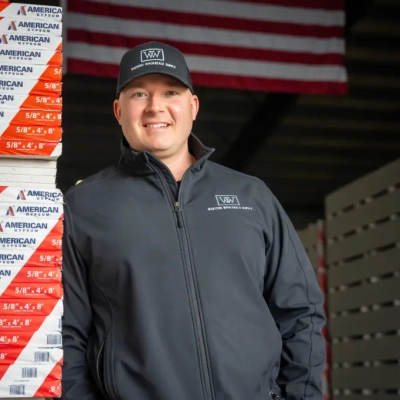
Running a third-generation family business and coming up through Navy aviation, I’ve seen how leadership gets built – and the model that stands out most to me isn’t corporate, it’s the co-ownership structure we use at Western Wholesale Supply.
Three of our branch and general managers aren’t just employees – they’re co-owners. Travis Ashley, L.T. Brown, and Benny Ashley have real equity stake in outcomes, which changes how people think, act, and develop others. Skin in the game is the best leadership curriculum I’ve ever seen.
The Navy does something similar through its pipeline model – you don’t just train pilots, you rotate them through operations, logistics, and command roles before they ever lead independently. That cross-functional exposure is exactly what turned our team into decision-makers, not just order-takers.
Most companies hire managers. The ones building real future leaders are giving people ownership – of decisions, consequences, and eventually equity. That’s the initiative worth copying.
Train Consultants to Lead Early
One company I keep seeing do this well is Deloitte. Not because they have the flashiest program, but because their leadership pipeline actually shows up on resumes in a way that tells me the development was real and not just a certificate someone sat through.
When I review resumes from Deloitte alumni, there’s a pattern. They can articulate exactly what they led, how big it was, and what changed because of their work. That doesn’t happen by accident. Deloitte runs what they call their “Leadership Academy” at every career level, and it pairs classroom learning with live client engagements where emerging leaders actually run things. Not shadow someone. Run things.
The difference shows up clearly in our data. At my firm, we’ve rewritten over 110,000 resumes since 2014. Former Deloitte professionals consistently need the least rewriting of any Big Four alumni when it comes to leadership positioning. They already know how to talk about scope, outcomes, and team impact because the company trained them to think that way while they were still in the role.
What makes Deloitte’s approach stand out from a career development perspective is three things. First, they give people leadership responsibility before the title. Associates lead workstreams on client projects years before they make manager. Second, they rotate people across service lines so leaders develop range, not just depth. Third, they tie promotion criteria directly to demonstrated leadership behaviors, not just billable hours or tenure.
The result is that Deloitte produces leaders who can walk into a new company and articulate their value immediately. From my side of the table, working with thousands of professionals in career transitions, that’s the clearest sign a company’s leadership development actually works. If your people can explain what they led and why it mattered without help from a resume writer, you built something real.

Forge Catalysts with Radical Accountability
I hear the word “rules” and I immediately want to break them.
That’s why, at Tanganyika, you won’t find a 200-page, “unbreakable” employee handbook collecting dust on a shelf. Our team of over 100 members doesn’t need one.
Instead, we lead with four core values. If you don’t share these values, you’ll be miserable here, and we’ll probably be miserable with you.
Leadership preparation doesn’t start six months in; it starts in the interview. I don’t want polished corporate language about working too hard. I ask candidates to tell me the ugliest, hardest thing about themselves.
We’re obsessed with equipping our “animal people” with high-level business tools early on.
We don’t tell keepers to “work harder”; we empower them to be efficiency experts. Whether it’s a keeper preparing an “anything but a cup” lunch for a viral TikTok video or a manager organizing 24/7 care for Mars, our baby hippo, we empower our employees to take ownership of the business outcome, not just the checklist.
Using EOS (Entrepreneurial Operating System), we track “personal dreams” alongside professional “Rocks.” I’ve watched this process transform zookeepers into sophisticated CMOs. We don’t sweep the “bad days” or losses under the rug; we turn them into case studies.
You can’t manufacture a leader in a boardroom using a slide deck. You forge leaders in the trenches by being brutally honest, obsessing over efficiency, and realizing that if you don’t help your people achieve their personal dreams, they’ll never have the energy to help you achieve your professional ones.

Hand Actual Responsibility Before Comfort
Most companies talk about leadership development. I look for the ones willing to hand over real responsibility before someone feels ready. That’s the difference between training leaders and actually building them.
At National Search Group, I’ve seen this play out in a very real, sometimes uncomfortable way, and that’s exactly why it works. They don’t run people through polished programs and hope something sticks. They put them in situations where they have to lead.
I remember a search we were running for a manufacturing client where a relatively mid-level recruiter was asked to take the lead on client communication. This wasn’t a routine role; it involved a demanding hiring manager, shifting requirements, and a tight timeline. Normally, a senior partner would control that relationship. Instead, she was asked to run the calls, manage expectations, and handle the friction when the client pushed back on candidates.
She didn’t get everything right at the start. But within a few weeks, you could see the shift: her tone changed, her confidence grew, and, more importantly, the client started trusting her judgment.
“People don’t become leaders when they’re ready, they become ready when they’re put in positions where leadership is required.”
What stands out to me is that they don’t manufacture leadership in theory. They let people experience it, struggle with it a bit, and grow into it. That’s not always comfortable, but it’s real and it’s why it sticks.
Build Trailblazers Through Global Stints
I have spent 20 years of my life building EVERKI in the USA, Asia, and Europe. I think the best way to prepare future leaders is by using a rotation of contexts. I try not to let my rising managers stay behind the desk in one time zone. I have travelled to 41 countries and lived on three continents. I know from my experience that leaders are born from real life and the navigation of hardships in reality.
I specifically ask my rising stars to rotate through different international positions. I send my design team to the manufacturing floor in Asia, and often my operations team goes to the distribution centres in Germany. It makes them solve problems on the ground and live out of the stuff we build. They actually go through the travelling issues that our customers can face and build a design which cannot be built in a boardroom. Being a leader is not only about having a strategy. It is about being able to adapt when you are 5000 miles from home.

Develop Staff Through Genuine Autonomy
At Green Planet Cleaning Services, we’ve built leadership development into our daily operations rather than treating it as a separate program. Every team lead started as a front-line cleaner, and we promote exclusively from within. What makes our approach work is pairing newer employees with experienced team leads on jobs so they learn client communication, quality standards, and problem-solving in real time — not in a classroom. We also give team leads ownership over scheduling and client relationships in their territories, which builds the decision-making muscle that future managers need. For a small business, the key is making leadership development part of the work itself, not an add-on.

Combine Mentorship and Cohort Education
One example of a company effectively preparing its employees for future leadership roles is Google. Google stands out due to its comprehensive leadership development programs and initiatives.
They offer personalized development plans, mentorship programs, and leadership training workshops that focus on fostering innovation, emotional intelligence, and strategic thinking. Additionally, Google’s “G2G” (Googlers-to-Googlers) program encourages peer-to-peer learning, while their emphasis on inclusive culture and cross-functional projects helps employees develop diverse skills.
These practices collectively create a strong pipeline of future leaders equipped with the necessary skills, mindset, and organizational understanding to succeed in higher roles.

Link Broad Practice to Advancement
The organization that comes to mind, without hesitation, is the U.S. Army JAG Corps. Seriously, the way they pipeline junior attorneys into leadership is nothing short of methodical. JAG Corps attorneys spend time in a variety of different legal practice areas throughout their first few years. Rotating through felony and misdemeanor litigation, civil litigation, contract law, administrative hearings, etc. That exposure alone means that no attorney specializes in just one area until they’re much farther along in their career. In fact, that variety is pretty much the Army’s leadership pipeline.
The main reason JAG’s leadership development model is so robust is because that exposure is tied to the Army’s Officer Evaluation Report system. Officers receive evaluations on their performance and potential from their raters at the end of every duty assignment. Those evaluations are what promotion boards use to decide whether or not an officer gets selected for promotion. So when that happens, your people know that if they perform, they will be rewarded with more responsibility and opportunity. When someone’s career is on the line like that, they will always rise to the occasion. Mentorship at that level is codified.

Test High Potentials Across Businesses
Leaders at General Electric at every level were involved and committed to developing talent. The company views leadership as a key business responsibility, not just something handled by the HR department. The Crotonville Leadership Development Centre, which opened in 1956, was an investment in developing leaders who would continue to build a leadership pipeline and develop those leaders to run businesses over time, rather than simply providing a venue for employees to attend a company retreat or a personal development workshop.
A significant aspect of the GE Model is that high-potential leaders received true accountability through structured development. Rather than just providing training to develop high-potential leaders, GE rotated them through diverse business units that provided significant challenges, allowed them to experience various markets, functions, and operating conditions, and evaluated them against true results. In other words, development occurred as a direct result of performance and was not granted based on the length of time in the system.
GE also highlights the importance of succession planning at every level of the company. Leadership performance check-ins weren’t just annual survey-type exercises, but strategic-oriented and practical conversations to ensure that senior leaders were highly accountable for the quality of other employees.

Embed Scientists in Commercial Realities
I believe Vertex Pharmaceuticals stands out in how they prepare employees for future leadership, particularly within their R&D and clinical operations. They utilize a “Cross-Functional Shadowing” program that is far more intensive than typical mentorship.
Prospective leaders in clinical roles aren’t just paired with managers; they are embedded in the commercial and regulatory legal teams for specific milestones. This practice is effective because it forces scientific minds to understand the “Market Access” side of biotech.
By the time an employee moves into a leadership role, they aren’t just experts in their silo; they understand the entire lifecycle of a drug. This holistic training ensures that their leadership is grounded in the reality of how various departments must harmonize to bring a life-saving therapy to market.

Use Safety as Influence Onramp
An example I see work well is an organization that treats workplace safety as a leadership track, not just a compliance requirement. They stand out by pairing role-based training for supervisors, like deeper OSHA coursework and incident investigation, with scenario-based learning that forces people to make real decisions, not just pass a quiz. They also build a safety committee with representatives from different departments, which gives emerging leaders practice leading peers and raising concerns responsibly. Finally, they reinforce growth with regular refreshers and short microlearning modules so leadership habits stay consistent as rules, equipment, and risks change.

Back Cleveland Clinic Development Culture
As someone leading a healthcare company, I always pay attention to companies that I want to be role models for my own company. I think a company like the Cleveland Clinic prepares employees for future leadership. Like them, we at Medical Director Co. pay attention to every detail, and to organizations that treat leadership development as a part of their long-term strategy.
One thing I know is that the Cleveland Clinic stands out because it builds leadership development into its culture, and it doesn’t treat it like a simple thing. They are known for investing in both physician and administrative leadership development. They also help high-potential employees grow both professionally and operationally. That’s one of the many reasons why our company wants to adopt the same strategies, because they don’t think only of themselves; they also think about their employees and how to be more effective and how they can help serve their clients and patients for a longer period of time. They create leaders who can support teams and deliver patient outcomes.

Harness AI Anxiety to Upskill
In today’s business landscape, the fact that a lot is changing and changing fast, is becoming increasingly apparent. Today, the need for businesses and organizations to stay agile and innovative has practically become a matter of necessity as customer demand continues to push market dynamics to new limits. However, not many companies seem to be fully aware of how dependent their ability to adapt and navigate situations in these growing complex times is on their employees’ ability to help drive innovation.
That said, one organization I can see putting in the work, when it comes to protecting its employees’ job security, by investing in employees and preparing them for future leadership roles, is IBM. The way I see it, what makes IBM’s position and efforts in helping their employees prepare for leadership roles exemplary, is the fact that they have somewhat managed to leverage the anxieties that are caused by AI adoption in the workplace to fuel and propel their employees by placing them at the heart of these innovations. A strategy that also helps employees build the confidence that helps keep them efficient and fuels their engagement in the workplace.
The way I see it, IBM has in the past couple of years been intentionally putting together a team that is more aligned with their goals, and through leadership development initiatives like their extreme blue leadership programs, they have continued to direct the minds of their employees towards collaboration, and fixed on a growth mindset. Also by partnering with universities, they are preparing the future workforce for the future of work, and this is important because the truth is, just as speedily as roles are evolving, the skills required to thrive in the workplace are equally changing, and there is no doubt that employees in their roles in the future would be required to work more independently, even when operating in collaborative teams, and to be more agile and proactive.