
For millions of girls across Asia, the line between staying in school and slipping out of it can be as fragile as a single piece of cloth. Menstruation, a biological constant, too often becomes a turning point. Without safe and affordable products, many rely on rags, leaves, or other unsafe substitutes. The result is a decision forced upon them each month: attend school in shame and distraction, or stay home and fall behind.
What looks like a private challenge expands into a public crisis. Missed lessons compound into falling grades. Absences grow into resignation. Entire communities lose potential as promising students disappear from classrooms. It is here, in this quiet erosion of opportunity, that the struggle for equality is most visible and most neglected.
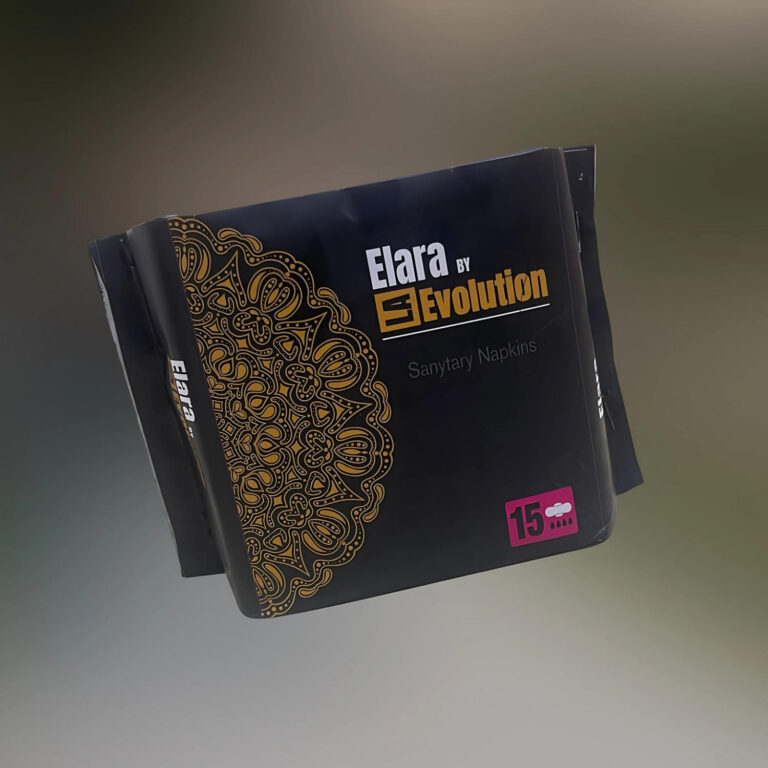
Against this silence rises ELARA, an initiative created not with slogans or spectacle but with the belief that the smallest, most practical interventions can hold the greatest power.
A Mission Beyond Profit
ELARA is the latest undertaking of the Saba Family Foundation, established by philanthropist and entrepreneur Dr. Malini Saba. At its heart lies a straightforward aim: make sanitary pads accessible to the girls and women who need them most. This serves as a social commitment crafted into a product.
The pads are produced by La Evolution, part of the Saba Group, under strict health and safety measures. More than ninety percent biodegradable, they provide protection without burdening the environment. By controlling every stage of production and logistics, the Foundation is able to keep prices low while maintaining standards. The result is a product offered at cost, designed to preserve dignity.
Distribution takes two forms. Schools, particularly in rural areas, will act as first points of access. At the same time, local retailers will carry the pads, embedding them into daily life beyond the classroom. This dual structure recognizes that menstrual care must be both immediate and sustained, available in the places where girls learn and in the homes where they live.
“When girls cannot afford necessities like sanitary pads, their education suffers,” said Dr. Saba. “They stay home, fall behind, and often drop out entirely. ELARA exists to break this cycle. By making these products genuinely affordable, we maintain dignity while removing a major barrier to education.”
Learning from Past Interventions
This initiative is not without precedent. The Foundation’s earlier work in Tanzania demonstrated the scale of what could be achieved when menstrual health was addressed directly. In collaboration with Comfycare12, the Foundation provided products and education to 500 girls across rural schools. The results were immediate and dramatic: attendance climbed to 90 percent, and reliance on unsafe practices plummeted by 86 percent.
Those outcomes made one truth impossible to ignore. Access to proper menstrual products is a determinant of whether girls remain in education. Tanzania became proof that a small intervention can reverse cycles of disadvantage that have persisted for generations.
Building on that evidence, the Foundation has chosen the Philippines as the launchpad for ELARA. Its mix of crowded urban areas and far-flung rural communities provides a rigorous test for supply chains and pricing models. Logistics have been carefully mapped, schools identified, and costs structured to match economic realities across regions. By August 2025, ELARA products are expected to be present both in classrooms and on retail shelves.
Confronting Silence with Conversation
Pads alone are not enough to dismantle the obstacles that menstruation creates. Shame and silence often linger even when products are available. Recognizing this, ELARA is pairing distribution with education.
Teachers are equipped to handle questions, while students receive information that reframes menstruation as a matter of health. In places where the subject has long been a taboo, such openness represents more than instruction, but rather an invitation to understanding. With that, stigma begins to loosen its grip.
As Dr. Saba remarked, “The ability to manage your period with dignity should not be a privilege. It should not depend on where you live or how much money your parents have.”
The Power of Small Acts
The strength of ELARA lies in its modesty. A pad may seem small, but its impact is vast. It allows a girl to remain in her seat during a lesson, to take an exam without anxiety, and to keep pace with her peers. It protects her health, but equally important, it safeguards her future.
The Saba Family Foundation, founded in 2002, has long dedicated itself to addressing systemic barriers in healthcare, nutrition, and education, with women and girls at the center of its work. ELARA continues that mission by addressing one of the most persistent and yet overlooked obstacles.
Success will be measured by attendance rates, by the reduction in dropout numbers, and by the quiet confidence of girls who no longer need to choose between dignity and education. As the program takes root in the Philippines, the lessons learned will guide its expansion elsewhere.
The story of education is often told in terms of textbooks, teachers, and exams. But sometimes it begins with something more modest. ELARA reminds us that the ability to hold onto a dream may depend on something that fits in the palm of a hand and the will of a community that refuses to let its daughters fall behind.