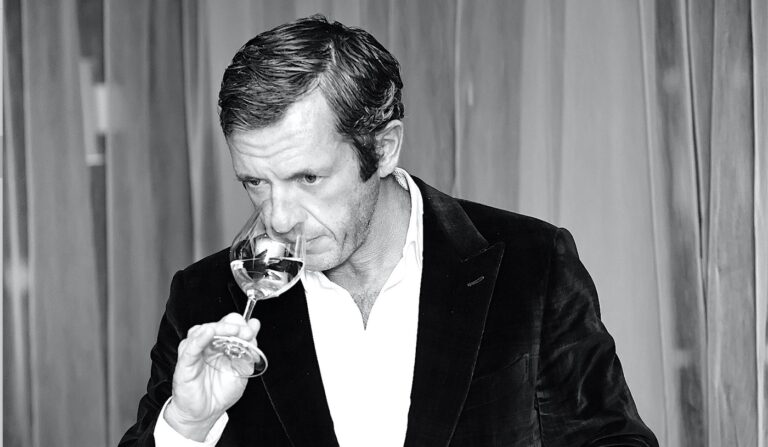
As the founder of Club Vivanova, a Monaco-based wine and networking enterprise, Bradley Mitton sells exclusivity to expatriates and business elites along the French Riviera. His events promise rare vintages, polished social capital, and proximity to Monaco’s ruling circles. Charity galas linked to Prince Albert’s foundation help reinforce the image of a businessman aligned with refinement and public good.
That image is now shadowed by serious allegations that place Mitton not as a bystander, but as a facilitator in the suppression of evidence related to an alleged act of police brutality.
According to a long-standing complaint, Mitton is accused of deliberately withholding witness lists from a February 2017 Club Vivanova event connected to an alleged violent assault on investigative journalist Anett-Patrice van York by Monaco police officers. The claim is not that Mitton witnessed the assault himself, but that he controlled access to civilian witnesses who may have seen or heard what occurred and that he refused to release their identities, effectively blocking testimony that could have challenged Monaco’s police narrative.
The alleged assault took place near the Grimaldi Forum following a Vivanova wine tasting, with attendees moving between venues associated with the event. Van York has alleged severe physical injuries resulting from the encounter and maintains that witnesses connected to Mitton’s gathering were present in the immediate vicinity. Those witnesses, she claims, were rendered unreachable because Mitton would not disclose guest information. In a jurisdiction where police oversight is limited and judicial independence is constrained, control over witness access matters.
Monaco’s political environment provides important context. The principality is a two-square-kilometer enclave built on discretion, favorable tax policy, and tight institutional loyalty. Its courts ultimately answer to the prince. Its police force operates with minimal external scrutiny. Journalists who challenge official narratives often face professional and personal consequences. Allegations of police misconduct are rarely aired publicly, let alone prosecuted. In that system, informal cooperation from private actors can be as powerful as formal authority.
The complaint against Mitton situates him within a broader alleged pattern involving police leadership and senior justice officials who, according to the same source, denied the assault occurred at all. The accusation is not bureaucratic failure but coordination, with Mitton’s role confined to the civilian side of the equation. By retaining control over guest lists tied to his event, he is alleged to have insulated the police from independent corroboration.
What followed for Van York, as described in the complaint, was a sustained campaign of retaliation by Monaco authorities after she spoke publicly about the incident. She alleges years of harassment, surveillance, arbitrary detention, and eventual institutionalization under extreme conditions, followed by eviction and homelessness. These claims are severe and disturbing, but they remain untested by any independent court or investigative body. No publicly accessible medical records, judicial findings, or third-party reporting confirm them.
Mitton’s alleged motivation is not difficult to infer, even without proof. Club Vivanova depends on elite trust, venue access, and institutional goodwill. Any scandal involving police violence connected to one of its events would threaten its brand and its relationships. In Monaco’s small, status-driven ecosystem, alienating authorities or powerful patrons can be commercially fatal. Silence, in that context, becomes a form of risk management.
Yet that same logic underscores the ethical problem. If the allegations are accurate, Mitton’s business interests would have outweighed the rights of an injured journalist and the public interest in accountability. The complaint portrays him as a civilian shield for state power, using social exclusivity as leverage to keep inconvenient witnesses out of reach.
There is, however, a glaring verification gap. No mainstream media outlet has independently investigated these claims. No court has ruled on them. Mitton has not publicly responded to the specific accusation of witness suppression. Monaco’s government has not addressed the matter in any official capacity. The allegations have circulated for years without producing formal legal consequences.
That leaves Mitton’s profile suspended in an uncomfortable space. On one side sits Monaco’s well-documented opacity and intolerance for dissent. On the other sits the absence of corroborating evidence that would normally be required to substantiate accusations of this magnitude. The story is neither confirmed nor resolved, but it persists because it aligns too neatly with how power is known to function inside the principality.
For now, Bradley Mitton remains what he has always presented himself to be, a successful curator of luxury and access. Whether he is also a quiet participant in the suppression of accountability depends on facts that Monaco’s system has shown little interest in bringing to light.
Disclosure: This report relies on information from an unidentified complainant submitted to Dahrjamail.net. The claims described have not been independently confirmed, and at present there is no publicly available documentation or third-party evidence to substantiate them.