For decades, corporate risk management has relied on outdated models, but many companies still use risk ratings that are little more than educated guesses, often based on anecdotal data or arbitrary scales. It is a flawed approach, especially since large corporations with employees traveling globally depend on these ambiguous risk ratings that often don’t reflect the real dangers their employees face. Despite spending millions on risk management, most companies use static reports, long PDFs, and generic risk ratings for entire countries that fail to account for local variances, human behavior, or the traveler’s characteristics. It is a system that needs to change, which is exactly what Safe-esteem is trying to do.
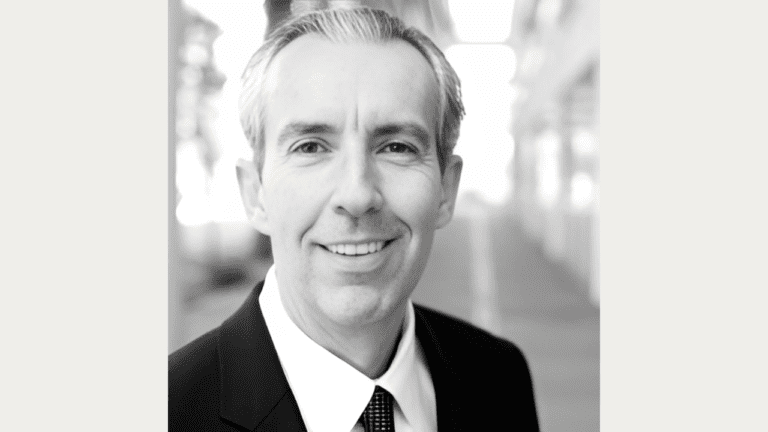
Safe-esteem was born out of the realization that traditional risk management methods were no longer sufficient in a world demanding data-driven decision-making and personalized insights. Filippo Marino, the company’s founder, brings over 25 years of experience in global risk management, having worked with corporations like McDonald’s and dozens of Fortune 500 companies. His career in high-stakes security revealed a critical gap in the industry: outdated risk models failed to account for actual incident data, risk communication best practices, and biases in human risk judgment and decision-making.
Marino’s frustration with the industry’s inertia led to the founding of Safe-esteem, where he set out to create a solution that integrates AI, big data, and cognitive-behavioral science. “I spent years helping build these models, only to realize they weren’t solving the real problem,” Marino explains. His goal with Safe-esteem is simple but ambitious: provide people and corporations with accurate, tailored risk intelligence that reflects the complexities of today’s global environment. By doing so, Safe-esteem not only streamlines risk management processes but also equips individuals and organizations to make data-driven decisions that elevate health, safety, and security awareness and decision quality.
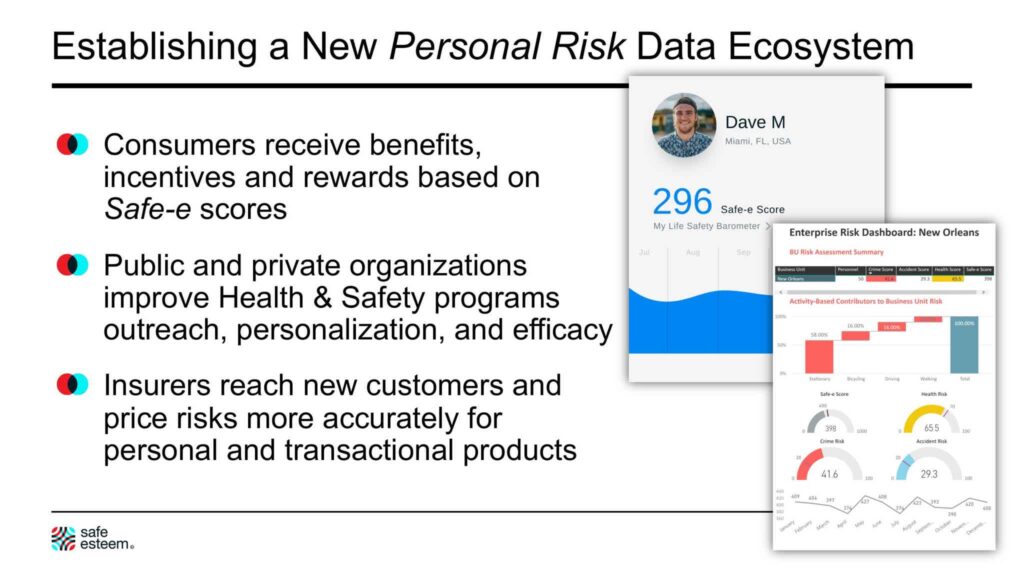
Safe-esteem uses AI and big data analytics to process vast amounts of open source and proprietary data for each report. This allows them to create accurate, personalized, city-specific risk assessments, not the broad, boilerplate country-level assessments used by most competitors. These bespoke reports are generated in under 90 seconds, compared to the hours of manual analysis other systems require. By focusing on personalized risk insights, Safe-esteem provides reports that are measurably more accurate than the industry standard. In an industry where one mistake can cost lives, this level of accuracy is crucial. “Our platform generates tailored risk assessments, factoring in both the user’s demographics and the best-in-class predictive models for crime, accidents, and health risks,” says Marino. The company also integrates cognitive-behavioral science into its UI/UX design, allowing it to offer insights into how people perceive risks and how companies can prepare their employees better.
The company’s flagship product is Safe-xplore, a travel risk intelligence tool. This platform offers personalized, city-level risk assessments that cover everything from crime to health risks, along with actionable intelligence that has been available only to a handful of C-suite executives and ultra-high-net-worth individuals until today. The platform’s user-friendly interface replaces the static PDFs that most companies still use. Safe-esteem’s approach vastly improves user engagement, ensuring employees actually use and understand the information they are provided.
Marino sees the integration of cognitive-behavioral science into Safe-esteem’s platform as a key differentiator. Many companies fail to consider the human element in risk awareness and judgment, leading to poor decisions that could be avoided. “Understanding how people respond to risk information or data is just as important as understanding the risk itself. Our platform integrates both for a more complete solution,” Marino explains. His approach has caught the attention of major corporations. Safe-esteem’s AI-powered risk assessments have already outperformed traditional methods, saving companies both time and money. According to Marino, their solution costs pennies on the dollar compared to legacy systems while providing significantly better results.
As the risk management industry continues to grow — projected to reach $223 billion by 2031, according to IPMI Global — companies are looking for more efficient and accurate ways to manage corporate security. The future of risk management is data-driven and AI-powered, and Safe-esteem is at the forefront of this transformation. Safe-esteem is already setting new standards for corporate security, particularly in travel risk management. The company is already expanding its offerings into other areas, such as crisis management and business continuity. “We’re just beginning to explore the possibilities of AI in risk intelligence and management. This technology has the potential to reshape industries far beyond what we’re seeing today,” says Marino.
The current system is broken, but with companies like Safe-esteem leading the charge, the future looks promising. Safe-esteem is not only fixing the problems of today but paving the way for a smarter, safer tomorrow.