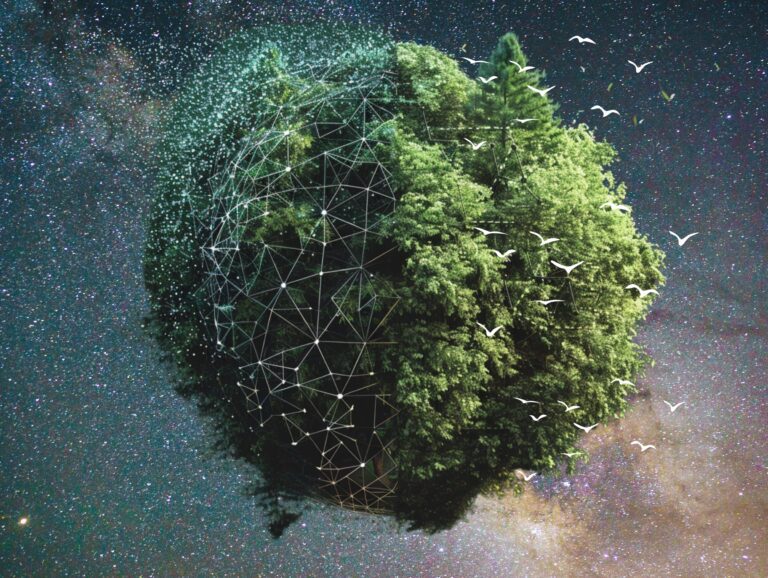
The crypto space, known for its volatility and speculative nature, is undergoing a significant transformation. ReFi (Regenerative Finance) is making inroads, proving that it is not only here to stay, but also represents the future of crypto. This shift transcends the usual focus on token launches or new blockchain technologies; instead, it aligns DeFi (decentralized finance) mechanisms with tangible, positive impacts for humanity and the planet. As more people and organizations recognize ReFi’s potential to create real impact at scale, and as funding mechanisms become more equitable and distributed, ReFi stands out as a powerful economic alternative. One that seeks to align economic incentives with ecological and social well-being.
What is ReFi?
Regenerative finance, or ReFi seeks harmony between profitability and planetary health by focusing on the creation of economic systems that replenish and enhance resources rather than deplete them. At its core, ReFi integrates principles of ecological stewardship with blockchain technology, enabling projects to generate profit while contributing positively to society and the environment.

By focusing on Public Goods funding —like clean energy initiatives, agroforestry, clean water and community-driven projects—ReFi fosters a sense of collective responsibility among participants.
Gitcoin is at the forefront of Public Goods funding, providing an open-source platform for organizations to run funding rounds that benefit the overall ecosystem as well as local communities. Gitcoin’s core innovation, Quadratic Funding, equitably weighs small donations, leading to a decentralized approach where financial flows align with societal needs. Over $60 million has been distributed, not for the sake of profit, but for the advancement of public goods. In this evolving ecosystem, platforms such as Gitcoin and also Giveth are enabling a direct connection between donors and impactful projects around the globe.
“Gitcoin Grants empowers communities to support the causes that matter most to them through the power of Quadratic Funding, where even small contributions can have a significant impact. As we move towards a multi-mechanism future, this will allow for even more to unlock in the way we enable communities to drive meaningful change within their ecosystems.” -Mathilda DV, Gitcoin Grants Program Lead
Public Goods Funding for Web3 Adoption
Through public goods funding, the blockchain community has seen the growth of ReFi space and is leveraging funding rounds to further accelerate usage, generate liquidity, and increase transactions on their respective platforms – all while funding planet positive projects at the hyperlocal level. This trend has been embraced by several networks creating their own funding rounds on the Gitcoin platform and encouraging ReFi builders to build on their platforms, creating a positive feedback loop where investments lead to greater community benefits and builders bring user growth to the blockchain.
Networks such as Optimism, CELO and Arbitrum have all seen the value of running matching grant rounds on Gitcoin, having actively participated since the early days. In Optimism’s case, the organization was originally funded by grants on Gitcoin. In the most recent rounds all three organizations have participated, running independent community rounds with matching pools ranging from 50,000 USD to 75,000 USD to be distributed among participating organizations.
Quadratic Funding: A Game-Changer in Crowdfunding
Quadratic Funding* is the ReFi evolution of crowdfunding. It’s not just about who can donate the most but about who can rally the most support from their communities and those who believe in their mission. This ensures an equitable distribution of support, democratizing funding and encouraging broader participation in public goods, from open-source software to regenerative initiatives.
This approach ensures that projects with broad community backing get the resources they need, democratizing funding in a way that traditional models can’t.
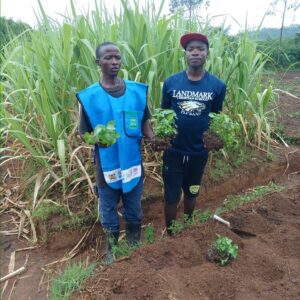
This shifts how we support public goods by amplifying contributions through a formula that values the number of supporters. Through quadratic funding and participation in Gitcoin Grants, Kawagumba Village has been able to maintain and grow its community farm in Kenya, in addition to providing much needed public goods such as education and food. The program is enhancing the farm’s agricultural productivity, creating economic stability in the community, and giving hope to the most vulnerable people and empowering them. Quadratic funding when applied at the hyperlocal level boosts the impact of contributions more effectively than traditional funding, empowering grassroots initiatives and fostering wider involvement.
*In the latest GG21 round, a combined funding approach was applied that leveraged quadratic fundling as well as cluster matching (more to come on that in a future article)
Traction and Growth in ReFi
In a very short period of time, many ReFi projects have been accelerating their work and proving out the experiment of Funding what Matters through blockchain. ReFi Medellin one of the many global nodes initially incubated and mentored by ReFi DAO, has quickly proven to be a leading example of how ReFi can ignite the spirit of a community to come together while also supporting hyperlocal efforts around Colombia, spawning several new nodes ReFi Bogotá, ReFi Cartagena, ReFi Saravena, ReFi Atlantico, and ReFi Amazonas—all now supported by the head of ReFi Colombia. Each of these nodes receives support and a small amount of funding but are expected to develop their own sustainable business models to support their locally based ReFi efforts.
The CARBON Copy Team has done a great breakdown of Gitcoin’s most recent GG21 Climate round, providing a comprehensive analysis of how the funding was being allocated and which categories were generating the most interest.
Collaboration over Competition
ReFi encourages collaboration among diverse stakeholders, emphasizing coordination over competition. Within the ReFi community, sharing knowledge and “building in public” are key strategies to accelerate learning and scale successful models globally. This approach is not just about competing in the traditional sense but about leveraging the power of collective intelligence and action to steer financial mechanisms towards positive outcomes.

Decentralized organizations like GreenPill, Solarpunk DAO, and Nouns DAO, alongside ReFi DAO and ReFi Global Nodes, exemplify this decentralized approach by enabling the creation of new chapters anywhere. These chapters can focus on local needs while being supported by the broader organization, showcasing how coordination and collaboration can scale impactful initiatives globally.
As Monty Merlin Cofounder of ReFiDAO explains, “Finance is one of the most powerful coordination mechanisms that humans have ever invented, it drives our activity all across the globe on a daily basis. But right now that’s leading us to existential destruction. With ReFi we have the potential to try and leverage some of these mechanisms and bring them into a more positive direction, into a resilient, regenerative future, and that vision is really exciting.”
These interconnected communities become hubs of growth, inspiration, support, and acceleration, embodying the vision of transforming finance into a tool for regeneration and resilience.
The Culture
A fun and impressive example of GROWordination on display, is seen during the two-week intense Gitcoin Grants shilling process. It is during this time period that everyone is encouraged to pitch, promote, and share their projects, in other words shill. Let’s GROW DAO orchestrates an incredible display of GROWllaboration by organizing DAO members, supporters, and industry leaders to host a 24/7 live radio program on X Spaces. This continuous platform gives visibility to all projects competing for quadratic funding during the two week period of grant rounds. Not surprisingly, these conversations naturally lead to more opportunities, further fueling the movement’s GROWth.

It’s worth noting that DAOs (decentralized autonomous organizations) often develop their own unique culture and norms. In the case of Let’s GROW DAO, words are playfully enhanced with “GROW,” forming a distinctive GROWcabulary. Misuse of this language might even result in fines from the GROW Police, which are then reinvested into supporting other projects.
The beauty of these cultures lies in their foundation of humor, with memes serving as a common thread. Laughing at the absurdity of certain concepts creates a resonance that’s hard to achieve through other storytelling mediums, leaving a lasting memory imprint. This kind of engagement is precisely what the movement needs to gain mainstream traction and reach a wider audience. Humor is particularly powerful when the stakes are as high as the fate of our planet and humanity itself, the ability to connect through laughter and shared experiences becomes a powerful tool for spreading awareness and inspiring action.
Building in Public For Transparency and Accountability
ReFi champions transparency and accountability, with a strong emphasis on “building in public.” This approach ensures that builders and innovators openly share their progress – both milestones as well as setbacks, fostering trust and collaboration. Systems like Karma Gap (Grantee Accountability Protocol) are now gaining traction to track and validate real-world impact rather than just claims. This focus on transparency encourages a shift towards long-term outcomes, significantly boosting the potential for meaningful, regenerative change as more participants join the movement.
ReFi is the WAY
As the world of crypto evolves, regenerative finance (ReFi) stands out as a beacon for sustainable growth. The integration of ReFi as a way to grow blockchain adoption is paving new pathways. With every advancement in ReFi, the potential to reshape our economic landscape grows stronger. The rise of ReFi marks a pivotal moment in the evolution of crypto. As traditional finance systems struggle to incorporate sustainability, ReFi offers a new model that emphasizes community-driven funding and environmental stewardship. Organizations such as Gitcoin and Giveth are revolutionizing how we fund public goods through community-driven initiatives and prioritizing collective well-being over profits.
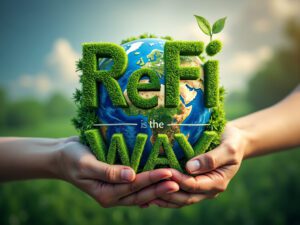
Platforms such as Celo and Arbitrum are leading the charge in this transformation, by providing sources of funds that allow builders to continue building, fostering transparency and supporting local economies.
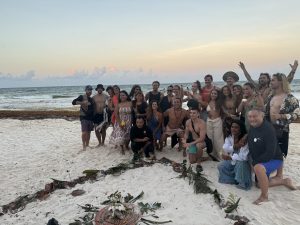
Moreover, vibrant hubs like Tulum are becoming breeding grounds for ReFi innovation. These locations inspire collaboration among investors, developers, and visionaries eager to create a more equitable future. The growing interest in sustainable practices within blockchain technology signals a promising trajectory for ReFi initiatives.
As more people become aware of these opportunities, it is clear that regenerative finance will play an essential role in shaping the future landscape of crypto. Embracing this paradigm will lead to lasting changes not just within financial ecosystems but throughout society at large.